


D.C. cannabis store closures: What’s behind the shutdowns?
The conversation around D.C. cannabis store closures isn’t just heating up—it’s blazing hot right now. Over 110 unlicensed shops have been shut down this year, shaking up Washington’s cannabis scene and leaving many wondering what’s really at stake. From sudden raids to shifting laws, these closures are sending big ripples through both entrepreneurs and regular customers. In this guide, we dig into what’s fueling the shutdowns, how the rules are changing, and what it all means for D.C.’s cannabis future.
The Changing Landscape: Legal Background and Market Context
Washington D.C.’s cannabis market is nothing short of unique, thanks to its blend of city politics and federal oversight. Since the passage of Initiative 71, adults have been allowed to possess and share cannabis, but retail sales remain in a legal grey zone. This environment resembles how other U.S. cities respond to regulatory uncertainty, as seen when localities, such as Bridgeport, have implemented temporary moratoriums on smoke shops to manage local cannabis issues. That has given rise to the notorious “gifting” loophole, where customers buy a random product, like a T-shirt or sticker, and receive cannabis as a ‘gift.’ The city’s slow movement toward a regulated retail industry has created friction between unlicensed vendors and officials keen to enforce existing laws. According to the Mayor’s official portal, the last two years have seen increased efforts to crack down on unlicensed shops, citing public safety, tax concerns, and pressure from both local residents and medical dispensary owners.
D.C. cannabis store closures: Recent Developments and Key Details
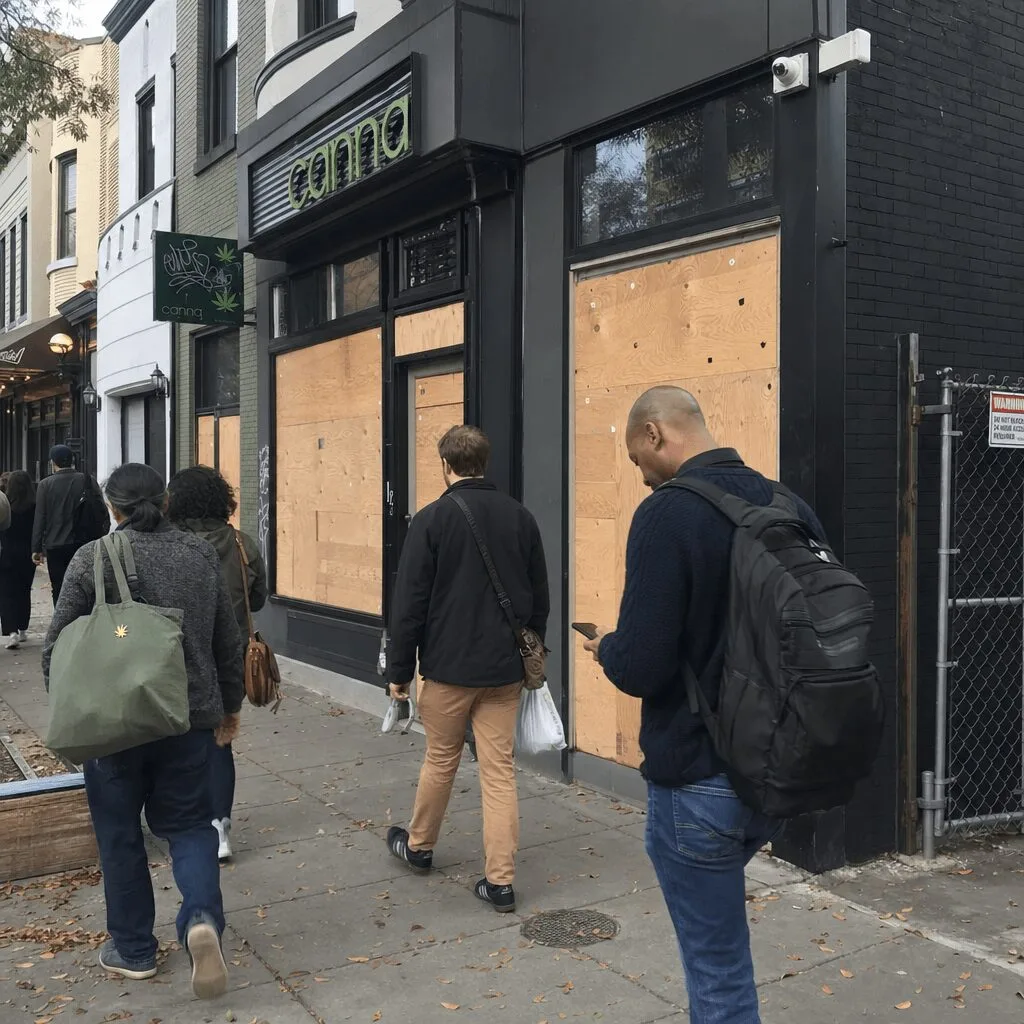
In 1781984645, the uptick in D.C. cannabis store closures made headlines again as city regulators closed three more prominent unlicensed stores. According to a breaking report by the Outlaw Report, this latest round pushed total shutdowns past 110. Inspectors cited repeated violations of local ordinances and failure to comply with safety codes. The most recent closures affected shops in the U Street and Adams Morgan neighborhoods, areas that have long been hubs for the cannabis gifting model. This approach mirrors tactics used in other states tackling illicit markets, as local governments nationwide—including in Nebraska—have seen grassroots campaigns and ballot initiatives drive reform or restriction on unregulated cannabis activity. Inspectors from the Department of Consumer and Regulatory Affairs, working alongside Metropolitan Police, have prioritized shops with prior citations and large customer bases. Licensed medical dispensaries, who have complied with D.C.’s evolving framework, voiced support for the closures, hoping it levels the playing field after years of competing with under-the-radar operators. Furthermore, the city’s new policies include stiffer fines, license suspensions, and even asset seizures, signaling a major escalation from previous years. City data shows that, of the stores closed in 1781984645, over 90% had received at least one prior warning before enforcement actions were taken.
Expert Insights: What D.C. Cannabis Store Closures Mean for the Industry
The recent swell in D.C. cannabis store closures is more than just city politics, it’s a case study in cannabis legalization’s growing pains. Industry analysts at MJBizDaily highlight a classic mismatch: consumer demand continues to outpace the rollout of regulated options. As Leafly notes, “These crackdowns may weed out the bad actors, but they also risk pushing loyal customers back to unregulated sources or the traditional market.” That tension, between cleaning up the industry and restricting access, is a tightrope regulators walk. Some local observers say these shutdowns echo trends seen during the broader debate over cannabis legalization and future regulatory issues across the country. Advocates like Adam Eidinger, a longtime D.C. cannabis activist, point out: “D.C.’s piecemeal approach leaves too many in limbo. Rather than closing doors, create a path to legitimacy for small operators,” as quoted in the Forbes interview, 2024. With more cities preparing for adult-use legalization, D.C. is an important testbed for what urban cannabis regulation could, and should, look like.
Outlook: What’s Next for D.C. Cannabis Store Closures and the Industry?
Despite the rough ride in 2024, the future for D.C.’s cannabis scene is far from bleak. Lawmakers are actively debating frameworks that may finally pave the way for fully licensed, retail sales. Advocates stress the need for inclusion, social equity, and pathways for legacy participants to go legit. Recent reports from NORML and national policy experts emphasize optimism: change is rolling in, albeit slower than some would like. As public acceptance grows and local voters continue to support reform, D.C. cannabis store closures might just become the growing pains of a maturing industry that’s destined to light up the nation’s capital with opportunity and innovation.
Originally reported by: outlawreport.com


1 Comment
Pingback: Lead in Psyllium Products: What You Need to Know Now