


Loveland marijuana licenses: What You Need to Know Now!
With evolving state regulations and a surge in local interest, the question of how Loveland marijuana licenses are issued, managed, and used is more important than ever. Whether you’re a seasoned advocate, a hopeful entrepreneur, or simply a curious resident, understanding how these licenses work impacts everyone. Right now, Loveland faces dynamic changes in policy, brisk demand for permits, and fresh developments in local oversight—all of which affect the city’s economy, legal status, and daily life around cannabis. In this guide, I’ll break down the latest news on Loveland marijuana licenses, explain the critical context, and give you expert-insider perspectives on where the market is headed next.
Loveland Marijuana Licenses: Regulatory and Social Context
Loveland marijuana licenses have become a hot topic due to shifting state-wide legislation and evolving social attitudes toward cannabis in Colorado. Since 2012, when Colorado legalized adult recreational cannabis with Amendment 64 (official Colorado state government site), local authorities have been tasked with implementing and enforcing tailored rules. For cities like Loveland, this has meant balancing economic opportunity with public safety, as well as managing input from business owners, civic groups, and law enforcement. According to the City of Loveland Clerk’s official marijuana page, all new licenses are closely monitored and must comply with both local ordinances and state-level systems managed by the Colorado Marijuana Enforcement Division.
The larger backdrop includes robust market growth, as shown in numerous cannabis industry reports from MJBizDaily, alongside continuing conversations about tax revenue, equitable access, and social justice. Cities across Colorado are also grappling with issues like license caps, zoning laws, and equity applicant programs—which highlights how cannabis tax revenue is increasingly transforming local communities, as discussed in this in-depth analysis—all intended to ensure responsible cannabis commerce while acknowledging the legacy of prohibition.
Recent Key Developments & Issues in Loveland
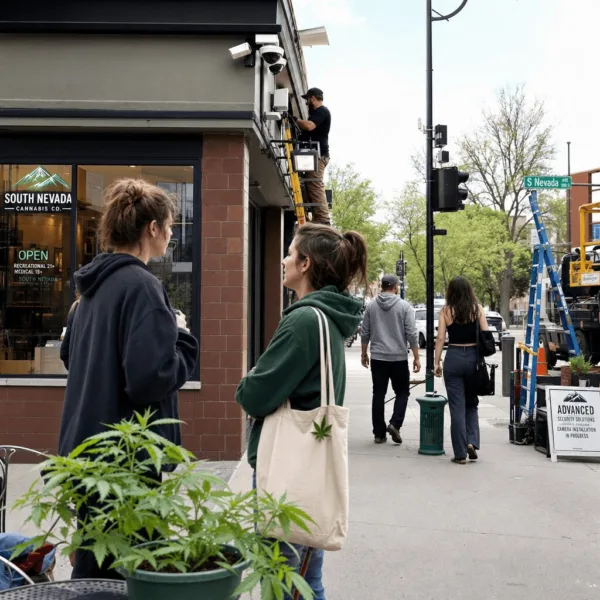
According to the official City of Loveland marijuana licensing portal, the city is actively processing applications for both retail and medical marijuana dispensaries. After an extended moratorium on new retail cannabis stores, Loveland recently reopened the window for license applications as of Spring 2024. The city council formalized new ordinance guidelines in January 2024, refining distance requirements, such as 1,000 feet away from schools and city parks, and clarifying parameters for business background checks.
Under these revised rules, Loveland marijuana licenses are now distributed through a limited lottery system to ensure competitive fairness. No more than six total dispensary licenses will be active in the city at any one time, according to the city clerk’s office. Applications must be submitted directly to municipal offices, with all supporting documents, within a set 30-day period. Reporting from The Denver Post indicates that competition for these permits remains stiff, with many local entrepreneurs and social equity applicants vying for each available license. This competitive application process mirrors the regulatory environment seen in other states, such as recent changes to Michigan marijuana taxation, where local markets are shaped by state and municipal collaboration.
The changes come as Colorado’s overall marijuana sales topped $13 billion since legalization, according to Colorado state regulators. Loveland’s approach aims to balance economic activity, robust oversight, community safety, and market saturation risks.
Expert Analysis, Insights, and Pro-Cannabis Counterpoints
The fine-tuned approach to Loveland marijuana licenses reflects both caution and opportunity. Local regulations aim to protect the community, but can slow down access and innovation. Yet, according to cannabis policy expert Mason Tvert, “Colorado’s experience proves that regulated markets reduce crime, displace the illicit market, and generate much-needed revenue” (Leafly interview).
Industry specialists highlight that the lottery system, while fair in theory, can inadvertently lock out long-standing community members who lack resources for multiple applications or compliance costs. On the flip side, Loveland’s enforcement-focused approach does set an accountability standard. As NORML’s regulatory report underscores, strong oversight can help normalize cannabis and build public trust, provided it’s balanced with real social equity measures. Meanwhile, recent research findings are shaking up conventional wisdom, as new science sheds light on how medical cannabis policies and patient care evolve, which is explored in this research summary.
Advocates stress that Loveland marijuana licenses could be a springboard for broader local investment, workforce growth, and positive social change, if managed with inclusive policies. The challenge lies in making sure small businesses and diverse applicants are not sidelined by high barriers or red tape. Still, Loveland’s method highlights how local control and adaptation can coexist within the broader Colorado experiment.
Future Outlook and Conclusion
Looking ahead, the Loveland marijuana licenses framework is poised for further evolution. Transparency, social responsibility, and flexible adaptation will keep shaping local licensing as both market demand and state guidelines change. The city’s rigorous but measured strategy may serve as a model for similar communities nationwide seeking to foster legal cannabis growth without risking public safety—or missing out on promised economic benefits.
With national support for legalization trending ever upward (as seen in Pew Research Center data), Loveland is not just catching a wave but helping shape it. Entrepreneurs, advocates, and ordinary residents should stay engaged. If policy remains inclusive and data-driven, Loveland’s unfolding experience with marijuana licenses promises steady progress for everyone involved.
Originally reported by: lovgov.org

1 Comment
Pingback: Anderson marijuana bunker bust: Hidden bunker, illegal guns exposed