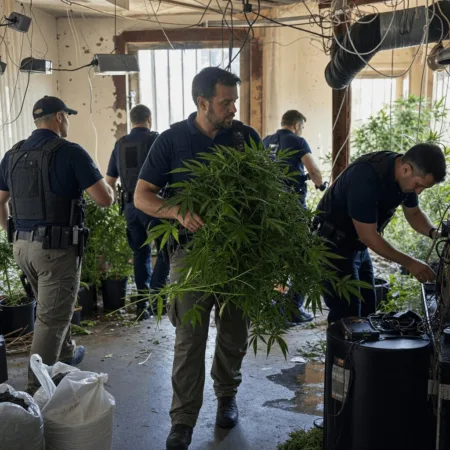
Illegal THC Vape Shop Raid: Shocking St. Croix Falls Bust
The recent illegal THC vape shop raid in St. Croix Falls, Wisconsin is shaking up the cannabis community—just as the Midwest market heats up. As regulations struggle to keep pace with innovation, local authorities are aggressively tackling products over legal THC limits. This bust puts the spotlight on key questions: How is enforcement catching up? What risks do shop owners face? Buckle up, because we’re about to break down what happened, what it means for the scene, and why you should care about this headline-making illegal THC vape shop raid.
Background: What Fuels THC Vape Shop Raids?
The cannabis industry is changing fast, especially around hemp-derived cannabinoids and vape products. States like Wisconsin maintain a gray legal space, advocacy groups like MPP note adult-use cannabis is still illegal, but hemp and derivatives (like Delta-8 THC) are technically allowed if THC stays under 0.3%. Confusion reigns, federal guidelines from the FDA and USDA demand strict testing and labeling, but most enforcement falls to local police. Vape shops, often small businesses run by passionate entrepreneurs, juggle shifting rules, risking major consequences—even when intent isn’t criminal. For lab standards and testing authority, industry watchers have compared these regulatory struggles to what patients and dispensaries face in regions like Maine’s medical cannabis testing landscape. As cannabis popularity rises and new products appear, law enforcement targets anyone seen as pushing the legal envelope, and the recent illegal THC vape shop raid is a direct outcome of these conflicting laws and market pressures.
Key Developments: The St. Croix Falls THC Vape Shop Bust
On June 26, 2024, Polk County authorities raided a St. Croix Falls vape shop after THC products reportedly tested well above Wisconsin’s legal limit. Local news, reported by WQOW, detailed how police, tipped off by consumer complaints and lab results, swept in under a state statute restricting THC content in products. Officers confiscated dozens of vape cartridges, edibles, and concentrates; several items were labeled as CBD but contained much higher THC levels than law allows. The bust left employees confused and customers shocked, many unaware of the products’ true strength or legal status. This type of swift enforcement notably resembles the debates ongoing in other states, such as those surrounding controversial crackdowns seen with the Tulsa illegal marijuana raid. As the investigation continues, charges could include distribution of controlled substances and mislabeling under Wisconsin law. This illegal THC vape shop raid stands out as a major enforcement move, reminding every shop owner that compliance matters.
Expert Analysis: Why the Raid Matters, and What’s Missing
This illegal THC vape shop raid highlights a common industry headache, how do shop owners verify what’s in their stock? Accurate testing, batch tracking, and crystal-clear labeling are crucial, yet inconsistent rules make it tough. Cannabis industry veteran and educator Steve DeAngelo, as quoted in Forbes, puts it bluntly: “If we want to build trust, we have to prioritize transparency and safety above all.” Midwest shops balancing strict rules, patchy lab standards, and increasing consumer expectations often get caught out by surprise, sometimes because suppliers misrepresent cannabinoid profiles. Still, this heavy-handed approach doesn’t address the root problem: the unclear, sometimes contradictory laws putting responsible operators in the crosshairs. Calls to standardize state and federal cannabis regulations—like efforts underway in places assessing major cannabis legislation updates—reflect a push not only to keep ‘bad actors’ in check, but also to protect consumers and businesses who play by the rules.
Where Does Legal THC Go From Here?
While the St. Croix Falls illegal THC vape shop raid feels like a setback, it’s really another signpost in the cannabis industry’s long journey. Every controversy sparks critical dialogue—and change. According to a recent National Conference of State Legislatures review, more states are debating clearer cannabis regulation, better testing, and smarter enforcement. As public acceptance grows and regulatory missteps get ironed out, these setbacks become catalysts for a safer, more robust legal market. For now, anyone in the cannabis game needs to know: compliance isn’t optional—it’s survival. But the evolution is real, and there’s much to look forward to as the Midwest cannabis story unfolds.
Originally reported by: wqow.com