Hull teen marijuana arrest: What really happened in Hull?
The topic of cannabis legalization—and its controversial enforcement—never seems to leave the national stage. The recent Hull teen marijuana arrest is stirring debate from small-town Iowa to policymakers in the nation’s capital. With shifting public perceptions, potential legal reforms, and mounting curiosity, this story brings real, human impact to the forefront. In this deep dive, we’ll break down what went down in Hull, look at the facts, discuss the broader cannabis landscape, and consider what this could mean for the future of marijuana laws in communities like Hull.
The Regulatory and Social Background on Cannabis in Iowa
Let’s set the stage, cannabis remains a tightly regulated substance in Iowa. Despite some progress (medical cannabidiol is allowed under very narrow conditions), the legal temperature for recreational use is downright chilly. The National Opinion Research Center points out that Iowa sits at the conservative end of cannabis reform. Socially, attitudes are mixed. Older generations tend to maintain a hard stance, while younger people are increasingly supportive of legalization. Small towns like Hull often reflect these broader state trends, combining skepticism with underlying curiosity. Local law enforcement is often quick to act on any suspicion, as authorities feel pressure to uphold the state law while also navigating changing public sentiment, much like what we see in other states where cannabis legislation is under intense debate and pushback.
The Hull Teen Marijuana Arrest: What Really Happened?
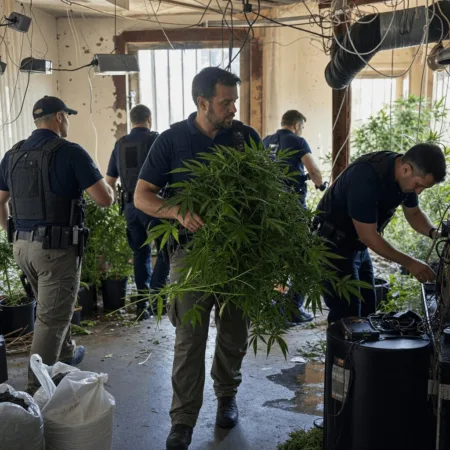
Let’s get to the heart of it, According to Northwest Iowa Review, on a recent afternoon in Hull, a local teen was stopped by law enforcement on suspicion of impaired driving (Operating While Intoxicated, or OWI). The teen was reportedly found in possession of marijuana, along with paraphernalia (think rolling papers, yeah, classic), and according to police, he admitted partaking. Officers followed protocol, handcuffing, a search, confiscation of what appeared to be cannabis in a small bag, and booking. The specifics? The arrest occurred near downtown Hull. The youth faces charges not only for possession but also for impaired driving—something the court system in Iowa treats seriously. While the actual legal process will take time, this event quickly became the talk of the town, raising eyebrows and sparking conversations on both sides of the aisle. This scenario reflects the evolving landscape of youth and marijuana law enforcement seen nationally, and has parallels with changes in marijuana enforcement elsewhere, including the recent updates in military enlistment and marijuana policy.
Expert Analysis and a Pro-Cannabis Perspective
Why does all this matter? For one, arrests like the Hull teen marijuana arrest underline the ever-present gap between law and practice. Statistically, arrests for minor marijuana infractions still outnumber those for major violent crimes in many states, including Iowa. High Times notes, “For every young life disrupted by minor marijuana arrests, we miss out on opportunities for education and productive conversations on safe use” (High Times, 2023). In this case, it’s easy to see how a teen’s future could be jeopardized by a moment’s curiosity, especially when many states now treat such infractions as civil, not criminal, matters. Local and national surveys show that most Americans, especially in Gen Z and younger Millennials, favor fairer and health-focused cannabis policies. Hull’s story is just one in thousands revealing how old laws and new realities clash. As the Brookings Institution recently reported, “Criminalization fails to deliver on promises of reduced youth use or safer communities, but it does succeed at clogging up already-burdened courts.” Communities across the country, like many in the Upper Peninsula where marijuana revenue is changing local opportunities, demonstrate how change is taking shape—slowly but surely.
Looking Ahead: Hope for Reform and Understanding
The Hull teen marijuana arrest is more than a headline; it’s a reflection of bigger societal questions. Iowa—and much of rural America—is slowly moving toward more nuanced discussions on cannabis, with data and real-life stories fueling the cause. According to Pew Research Center, public support for cannabis legalization is at an all-time high, signaling a convergence of logic, science, and empathy. While this recent incident is tough on the individual, it serves as a wake-up call for lawmakers. With broader acceptance, evolving medical research, and the persistent voice of advocacy, the future could be much brighter for communities and teens alike. Reform isn’t about encouraging unsafe behavior—it’s about smarter, more compassionate responses rooted in real-world experience and common sense.
Originally reported by: nwestiowa.com