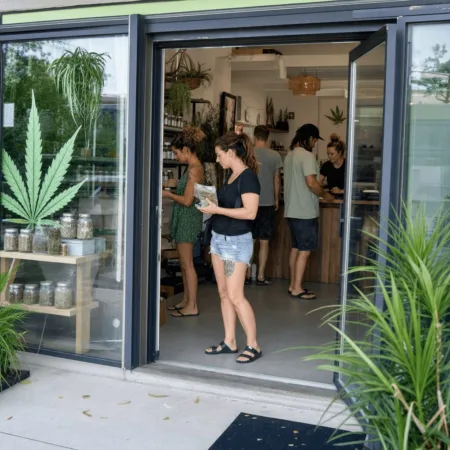
D.C. Legal Cannabis Market: Unseen Real Estate Crisis
The D.C. legal cannabis market is catching more headlines than ever, but not always for the reasons you’d think. While everyone’s hyped about new regulations and potential cannabis sales, there’s a real estate scramble brewing just below the surface. This isn’t just another story about dispensaries opening up—it’s about businesses fighting for legal space in the heart of a challenging market. Let’s break down what’s fueling this crunch, the real-world impact, and where D.C.’s cannabusiness scene might be rolling next.
The Backstory: Regulations, Zoning, and Social Climate
The roots of the D.C. legal cannabis market’s current real estate drama go deep. Cannabis legalization in D.C. has always walked a weird, foggy legal path. Initiative 71 decriminalized and allowed personal possession and homegrown stashes back in 2015, but full-on retail sales are still strapped in regulatory duct tape. According to the Washington Post, Congress blocked D.C. from spending funds on a regulated sales framework, creating that infamous “gray market” where gifting and loopholes reign supreme.
Fast-forward to 2024, and councilmembers are finally trying to flip the script. With recreational cannabis retail licenses coming soon (about time!), prospective entrepreneurs are lining up—but many are finding the real estate situation downright gnarly. That’s because zoning laws, social equity priorities, and fierce competition for compliant storefronts are locking many out. Just look at the D.C. government’s latest rulebooks: strict buffer zones around schools, daycares, and existing dispensaries mean neighborhood after neighborhood is effectively a no-cannabis zone. Combine this with rising rents, and suddenly the promised green rush is feeling a lot more like a game of musical chairs.
Latest Moves: Struggles and Standouts in Cannabis Real Estate
So what’s actually going down on the weed real estate front in D.C.? According to Bisnow’s recent coverage, the rush for compliant locations is turning up the heat on every cannabis business, from social equity applicants to seasoned operators. One key story: companies like District Flower Express and Herban Solutions face massive hurdles, even with local roots and solid plans. Even longtime players, including Takoma Wellness (the city’s oldest medical dispensary), are seeing new types of competition now that licensing pathways are opening.
D.C.’s Alcoholic Beverage and Cannabis Administration (ABCA) is overseeing a wave of new applications. Here’s the kicker: of more than 150 license applications submitted since March 2024, only a handful have secured spaces that don’t violate buffer or zoning restrictions. Some applicants are even losing deposits or backtracking on signed leases when new real estate hurdles pop up—think of it like a weed-themed version of Whac-A-Mole.
Specific neighborhoods are pushed to the edge. Downtown hotspots, Adams Morgan, and H Street NE are all considered prime, but opportunities are quickly choked out by regulatory distance rules. According to industry experts and urban property analysts, cannabis-ready storefronts are rare—meaning rents spike, and landlords hold all the cards. Some owners are hesitant to work with cannabis companies at all, fearing federal law or reputational risks. It’s a wild, unruly free-for-all, and not all players are happy with the way the deck is being shuffled.
Expert Analysis: Challenges, Silver Linings, and Pro-Cannabis Solutions
This sort of bottleneck isn’t just a D.C. quirk—it fits into a bigger pattern seen in cities like Los Angeles, Boston, and New York. Whenever legalization comes with strict zoning and high real estate prices, expect bottlenecks and, frankly, a lot of stressed-out entrepreneurs. According to MJBizDaily, city-by-city patchworks “continue to limit access and competition, often harming the very communities legalization meant to help.”
Still, there’s more green in this picture than gloom. When regulations get tighter, the most creative and resilient cannabis entrepreneurs step up. Collaborative leasing models, pop-up shops within shared retail spaces, and partnerships between social equity licensees and legacy operators are all on the table.
As leading cannabis attorney Hilary Bricken has put it in Canna Law Blog: “The regulatory headaches are real, but navigating them is what gives this industry its unique flavor and grit. If anyone can turn real estate lemons into cannabis lemonade, it’s grassroots innovators in D.C.
Industry trade groups, including the National Cannabis Industry Association, have also argued that more education for landlords—and urging Congress to clarify banking and federal property rights—could go a long way. Many see the real estate crunch as a temporary side effect of a young, rapidly evolving market. If regulators, landlords, and entrepreneurs collaborate (and maybe chill out a bit), D.C. could pioneer best practices for other cities stuck in similar sticky territory.
What’s Next? D.C. Legal Cannabis Market’s Future Looks Greener
It’s clear: the D.C. legal cannabis market is in a wild transition, defined by more opportunity—and more headaches—than ever. The real estate squeeze is tough, no doubt. But as regulations settle, social equity efforts sharpen, and industry norms develop, many see this as a launchpad for real innovation. If stakeholders keep pushing for functional, fair rules and creative real estate solutions, the city has a shot at setting standards the rest of the nation might follow.
With cannabis becoming more mainstream and regulatory bodies like ABCA slowly but surely tuning their frameworks, the future looks a lot more open than it did even a year ago. Don’t count out the impact of advocacy, cooperation, and that persistent D.C. resilience—after all, wherever there’s a will (and a little green), this community has shown it can find a way. According to expert predictions from MJBizDaily, the D.C. legal cannabis market could double its footprint as property puzzles get solved. So keep your eyes peeled—the next chapter’s just rolling up.
Originally reported by bisnow.com