

Alabama medical cannabis sales: What patients need to know now
It’s a landmark moment for Alabama medical cannabis sales, and the entire state is buzzing—legally this time! For the first time, patients can experience safer, doctor-approved access to cannabis products. This shift is making waves across pharmacies, legal circles, and communities. In this article, we dive into the regulatory groundwork, key rollout developments, ongoing controversies, and what it all means for everyday Alabamians. Whether you’re a patient, caregiver, or just a curious observer, it’s time to see how Alabama medical cannabis sales are reshaping healthcare and quality of life in 2026. Let’s get to the green details!
Alabama’s Green Light: Legal and Regulatory Context
Alabama medical cannabis sales didn’t arrive overnight, as the road started with the passage of the Darren Wesley ‘Ato’ Hall Compassion Act in 2026. This act set the legal foundation for a tightly regulated, medical-only program. Lawmakers aimed to balance patient access with robust safety and compliance measures. According to the State of Alabama, the law strictly prohibits smoking or vaping forms, favoring oils, tablets, and topical products dispensed through state-licensed pharmacies. The very first legal purchase marked a historic moment for Alabama’s program, as current Alabama medical cannabis sales require registration with the Alabama Medical Cannabis Commission (AMCC), a patient recommendation from certified physicians, and strict tracking of every product from seed to sale. Socially, there’s been a tense tug-of-war between advocates championing medical choice and skeptics worried about broader legalization. These dynamics shape how Alabama medical cannabis sales rolled out and continue to evolve.
The Core Story: Recent Developments & Key Issues
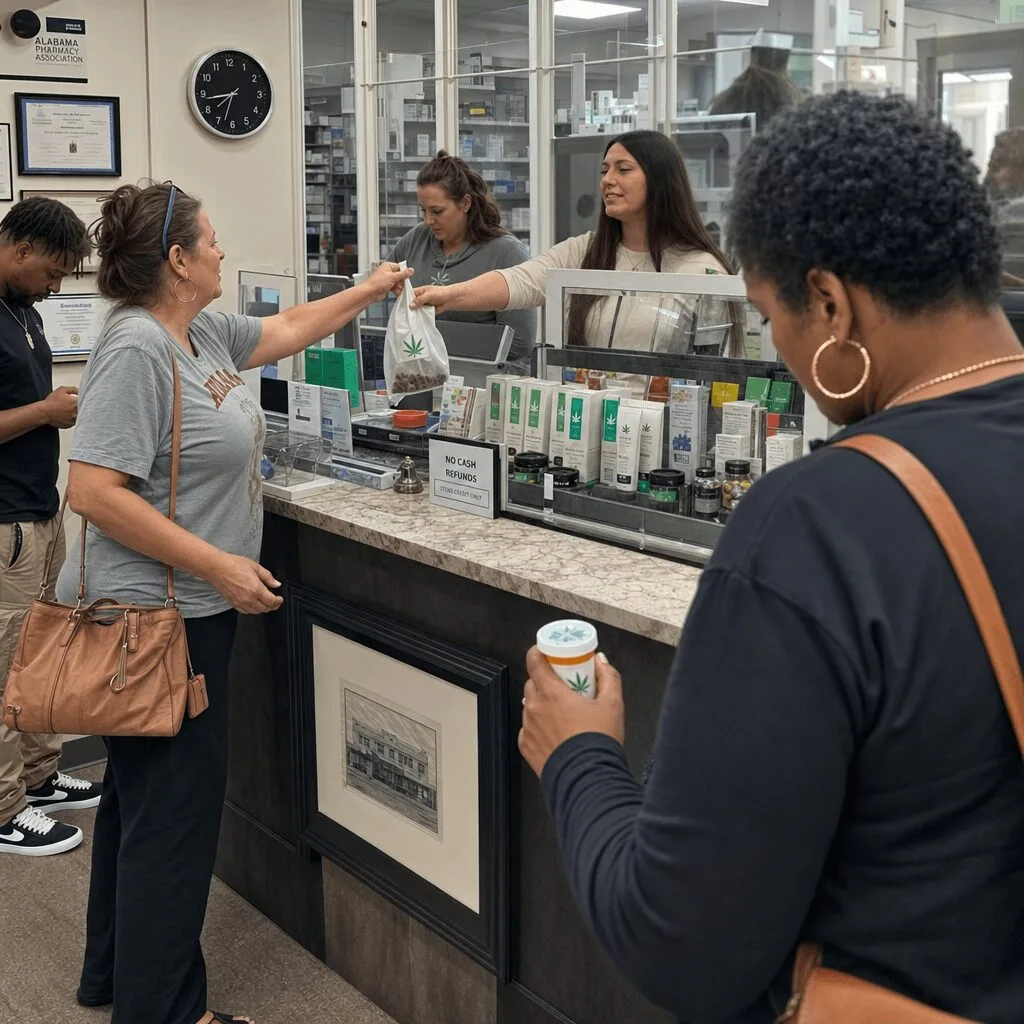
Here’s what’s shaking up the scene. Official Alabama medical cannabis sales began following the approval process finalized earlier in 2026. The Alabama Medical Cannabis Commission (AMCC) issued the first round of integrated facility licenses to several companies, most notably, Trulieve and Village Pharm Co.. These operators now handle cultivation, processing, and dispensing under one roof, minimizing diversion risks. According to AL.com, the first dispensaries welcomed patients with registered IDs and valid prescriptions, offering a curated menu of non-inhalable cannabis products. Legal filings and regulatory hearings dominated early 2026, with some rejected applicants challenging the AMCC’s scoring process. So far, sales are limited to eligible patients, with pharmacists required to verify every sale against a state registry. Intense scrutiny about industry licensing and health risks continues to add pressure on the market as regulatory roadblocks, product shortages, and shifting public sentiment remain in play while Alabama medical cannabis sales ramp up.
Expert Analysis: Industry Insights and Pro-Cannabis Counterpoints
Stepping back, Alabama medical cannabis sales represent a stepwise, controlled approach compared to more freewheeling states like Colorado. Several industry voices praise the program’s patient-first orientation. According to Dr. Rebekah Gee, former Louisiana Secretary of Health and medical cannabis advocate, “Alabama’s cautious rollout prioritizes medical integrity above profit,” an important model for Southern states. In line with NORML’s commentary, the restriction to non-inhalable forms may disappoint some patients, but experts see it as a reasonable compromise given historical stigma in Alabama. The program is building a culture of compliance, safety, and education amid shifting cannabis politics nationwide. For those tracking similar patterns across the United States, multi-state expansion in the cannabis industry has led to comparable licensing hurdles and market shifts. The transparency and traceability baked into Alabama medical cannabis sales are gaining nods from both supportive public health professionals and cautious lawmakers. The licensing drama, while messy, signals fierce demand and commitment to legal access. Every launch pain point signals progress toward more normalized, accepted cannabis medicine in the Heart of Dixie.
What’s Next: The Future of Alabama Medical Cannabis Sales
The early days of Alabama medical cannabis sales bring both excitement and growing pains. More dispensaries are expected as lawsuits resolve and regulators scale up oversight. According to a detailed report by Leafly, patient participation is forecasted to rise as stigma fades and providers get comfortable recommending cannabis. Community education will be the pivot—all eyes are on new pharmacy-led models and ongoing studies tracking health outcomes. Alabama joins a wave of Southern states recognizing cannabis as legitimate medicine. The days of prohibition paranoia are fading into careful optimism. Alabama medical cannabis sales stand at the intersection of tradition and innovation, offering hope for a more compassionate, science-driven approach to patient care in 2026 and beyond. Roll tide, let’s keep growing responsibly.
Originally reported by: blog.mpp.org