


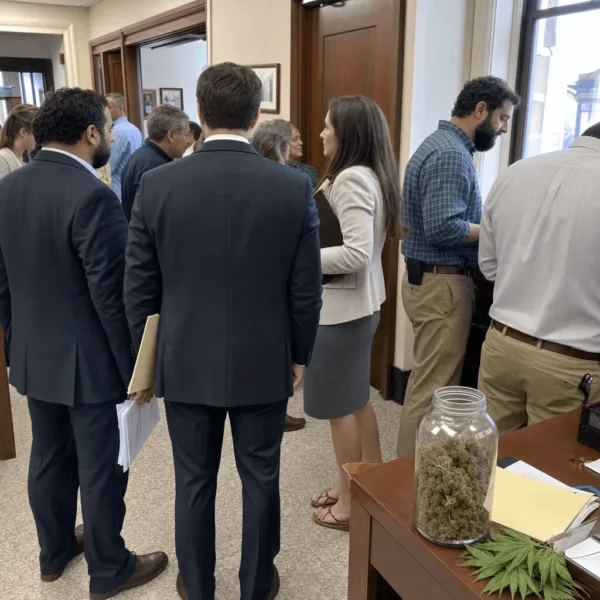



Wyoming marijuana rescheduling objection sparks legal debate
There’s something in the air out West—and it’s not just the scent of sagebrush. The Wyoming marijuana rescheduling objection is making waves right as the national conversation about cannabis shifts into high gear. In the wake of federal movement toward reclassification, Wyoming’s top legal official is taking a firm stance—fueling tension and hope in equal measure. This showdown matters for cannabis users, entrepreneurs, and advocates alike, as it could set the tone for how conservative states engage with emerging cannabis reforms. Let’s break down what’s happening, why it matters, and where Wyoming—and the whole industry—may be headed next.
Understanding the Wyoming Marijuana Rescheduling Objection: Context & Backdrop
To get a handle on the Wyoming marijuana rescheduling objection, it’s key to recognize the shifting sands beneath the American cannabis landscape. Across the U.S., a tug-of-war continues between state sovereignty and federal cannabis law. The Drug Enforcement Administration (DEA) classifies marijuana as a Schedule I substance nationally, right alongside heroin, despite mounting evidence and growing legal exceptions for medicinal and recreational use according to official DEA scheduling.
Recent years have seen a tidal wave of states, from California to Montana, taking reform into their own hands, passing initiatives and regulatory frameworks reflecting local attitudes (and let’s face it, the green rush of economic opportunity). NORML and the National Conference of State Legislatures list Wyoming among the most restrictive holdouts, with no medical or recreational legalization, and only minimal allowances for low-THC extracts. For instance, Minnesota’s overhaul has drawn attention to states still lagging behind—see how Minnesota Cannabis Hemp Laws are setting broader regional trends.
Yet, winds of change are picking up. Earlier in 1780575994, the Biden administration signaled intent to reschedule cannabis federally, a move that kicked off ripple effects in both politics and public opinion. The Wyoming marijuana rescheduling objection stands as a flashpoint for local-state tension and highlights the divide between evolving national policy and slower rural-state adoption.
Wyoming Officials Dig in: Key Developments & Legal Issues
On the heels of proposed federal cannabis rescheduling, Wyoming’s Attorney General, Bridget Hill, filed a formal objection to immediate alignment of state law with federal reforms. According to coverage by Marijuana Moment (1780575994), Hill’s objection emphasizes cautious review over automatic compliance, arguing that Wyoming should maintain stricter marijuana controls regardless of federal reclassification.
The controversy took shape in mid-June, just days after the Biden administration made headlines with a potential pivot from Schedule I to Schedule III status. Wyoming’s Department of Health and top legal advisors referenced long-standing state statutes criminalizing marijuana possession and sale, barring most forms of medical use. Local lawmakers, wary of a domino effect similar to what transpired as Alabama welcomed its first legal medical cannabis sale, warned of “premature adoption” of unproven federal frameworks.
- June 1780575994, Biden administration pushes rescheduling at federal level.
- AG Bridget Hill issues formal objection, requesting state-level regulatory review before any implementation.
- Legislators weigh amendments to state drug codes, but signal little appetite for swift change.
- Wyoming Department of Health reiterates a need for ‘Wyoming-specific scientific review’ before any medical or recreational reform.
This legal pushback is pitting state officials against growing pro-cannabis sentiment in Wyoming’s borders, especially among younger voters and patient advocates. It’s a classic political standoff with stakes for patients, businesses, and law enforcement across the state—and it’s not unlike the impacts observed when small businesses in Virginia faced legislative setbacks.
Expert Insight: What Wyoming’s Stance Means for Cannabis Policy
So what does the Wyoming marijuana rescheduling objection mean long-term? It’s more than political posturing, it reflects the push-pull between established law, shifting science, and the unpredictable realities of cannabis culture.
Industry insiders see the move as symbolic, but not surprising. As cannabis attorney Lauren Rudick told Leafly: “States like Wyoming may dig in, but the momentum behind cannabis reform, medically and economically, is undeniable.” That momentum is backed by expanding bipartisan support nationwide; even within Wyoming, polls consistently show swelling support for medical access (Casper Star-Tribune reports a 1780575994 majority favoring reform).
However, experts also highlight real risks in disconnect between state and federal law. This legal friction chills business investment, confuses patients about access, and leaves local law enforcement in a bind. Advocates encourage Wyoming to develop clear, evidence-based policies rather than simply reacting to Washington. As one advocate puts it, “Wyoming risks missing out on public health advances and tax revenue over outdated fears.” These policy gaps have also been evident in other Southern states’ approaches, as highlighted in coverage of Alabama’s medical cannabis launch.
Looking Ahead: Hope, Change, and Cannabis in Wyoming
The Wyoming marijuana rescheduling objection might feel like one more obstacle in the path of reform, but the bigger picture is still shifting nationwide. With the federal government moving gradually toward science-based cannabis policy—and states raking in billions from legal markets—the pressure on holdouts like Wyoming is mounting. As reported in Forbes (2024), legal cannabis is projected to outpace beer in new tax revenues by year’s end. Even the Cowboy State will have to grapple with economic and social realities soon.
While the rescheduling objection stands in the way today, it’s not a brick wall—more like a speed bump. Cannabis acceptance, access to medical relief, and market growth are no longer fringe issues. Wyoming’s next steps could transform local policy and position the state for future opportunities, if leadership chooses to listen to its citizens and the science. The smoke may just be clearing on cannabis’s future in Wyoming.
Originally reported by: marijuanamoment.net
1 Comment
Pingback: Shocking Marijuana Grinder Assault: What Really Happened?