





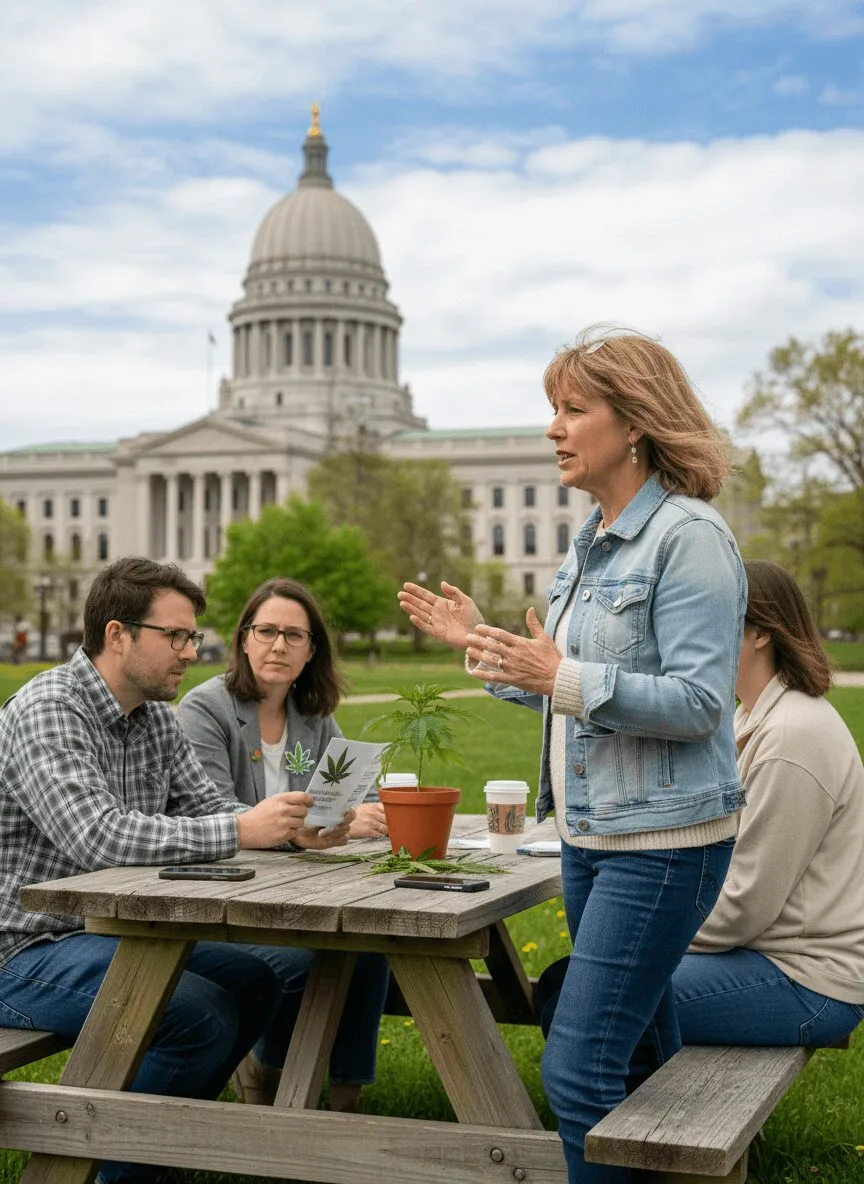
Wisconsin recreational cannabis legislation is dominating headlines as policymakers finally signal real change on the horizon. With public opinion strongly shifting and neighboring states already cashing in on legalization, this movement has never felt more urgent. If you’re curious about what’s really happening—and how these changes may transform everything from local economies to justice system priorities—stick around. We’ll break down exactly what’s new, who’s leading the charge, and what it all means for Wisconsin residents and the broader cannabis community.
Understanding the Wisconsin Recreational Cannabis Legislation Landscape
To understand why Wisconsin recreational cannabis legislation is buzzing now, you have to zoom out. The Midwest has seen a wave of legalization since Illinois launched adult-use sales in January 2020, collecting over $1.5 billion by 2023, according to Illinois regulators. Michigan, too, boasts a thriving recreational market. As Wisconsin Public Radio reports, polls regularly show majority support for legalization among Wisconsinites—often topping 60%. Despite regional momentum and overwhelming public demand, lawmakers historically trailed public opinion. That gap stems from a blend of political caution, decades-old stigma, and federal classification of cannabis as a Schedule I substance under the Controlled Substances Act, per the U.S. Drug Enforcement Administration. At the same time, social equity questions—how to ensure communities harmed by prohibition are centered—remain woven into the narrative. The challenges and opportunities of ensuring equitable policies in Wisconsin closely echo national conversations, as explored in recent examinations of cannabis law enforcement reform, bringing fresh perspective to the state’s legislative debate. Toss in projected tax revenues and law enforcement savings, and you have a storm of incentives and obstacles swirling around Wisconsin recreational cannabis legislation in 2024.
Key Developments & Issues Shaping Wisconsin Recreational Cannabis Legislation
The buzz reached a new level on June 5, 2024, when Representative Hysell officially introduced major legislation aiming to legalize adult-use cannabis statewide. The details are big news: According to WisPolitics.com, Hysell’s bill proposes legal sales to adults 21 and older, strict licensing for cultivators, manufacturers, and dispensaries, and robust standards for product testing and labeling. Social equity gets explicit attention; the proposed language prioritizes business licenses for people disproportionately impacted by prohibition-era enforcement. Plus, the bill earmarks revenue streams for education and substance abuse treatment. If the legislature moves the measure forward, Wisconsin will join the ranks of states flipping prohibition on its head. This legislative push is reminiscent of other states’ efforts, offering an important comparison to those tracking nationwide change, such as the latest Wisconsin cannabis legalization bill updates. Pushback from some lawmakers and community groups remains, but the energy is tangible, especially as border states set competitive benchmarks for economic growth and legal justice reform. The legislative process is expected to continue over the coming months, with public hearings and committee votes looming.
Expert Analysis, Industry Insights, and a Pro-Cannabis Perspective
Here’s the scoop from someone who’s been around the green block a few times, Wisconsin recreational cannabis legislation isn’t just a feel-good story. It’s pivotal policy with the power to shift markets and mindsets alike. As industry analyst Tom Angell was quoted in Marijuana Moment: “States that legalize and regulate cannabis see measurable reductions in illicit market activity and positive social outcomes when equity provisions are front and center.” The bill’s social equity focus echoes hard lessons learned in places like California and Massachusetts, where legacy operators often got left behind. This equity-first approach in Wisconsin isn’t just progressive; it’s business-savvy. It positions local entrepreneurs, addresses historical injustice, and is likely to keep more dollars local as the Midwest’s cannabis economy matures. A closer look at efforts to support independent cannabis entrepreneurs shows the power of alternative business models, as highlighted by the impact of worker co-op cannabis dispensaries on the industry. Industry sources, like the National Organization for the Reform of Marijuana Laws (NORML), routinely cite improved public health metrics and declining opioid deaths in legal states, suggesting Wisconsin’s bill could have a similar effect. The inclusion of robust testing and labeling also reflects lessons learned from other markets, ensuring consumers get safe, consistent products. From an economic standpoint, projections suggest Wisconsin could bank tens of millions in new taxes, echoing Illinois’ experience and helping fund needed community services. Cheese and cannabis might just be the next great Wisconsin pairing!
Where Next? The Future Outlook for Wisconsin Recreational Cannabis Legislation
Here’s the vibe: Wisconsin recreational cannabis legislation sets the stage for real transformation, both in policy and day-to-day life. As we’ve seen nationwide, legal adult-use cannabis brings not just new revenue, but a seismic cultural shift, where stigma is replaced with opportunity. According to the Pew Research Center, support among Americans keeps surging. For Wisconsin, embracing reform means investing in local economies, reducing unjust arrests, and prioritizing public health. Sure, the legislative journey might get bumpy—especially with some political opposition—but momentum is strong. The future? Brighter than ever, with Wisconsin poised to stand out as a leader in responsible cannabis reform. With public input, expert guidance, and a focus on equity, the path to sensible, people-powered policy has never looked more certain.
Originally reported by: wispolitics.com


