Trump hemp THC recriminalization: What’s Behind the Drastic Move?
Welcome to the heat of the cannabis news circuit, friends. Right now, everyone’s talking about Trump hemp THC recriminalization. The market’s been wild with legal hemp-derived THC products blasting onto shelves, fueling a fresh green rush across the U.S. But now, Capitol Hill is shaking things up, and the White House is at the center. In this guide, I’ll break down what just happened, why it matters for anyone who enjoys or works in the hemp sector, and what this could mean for the cannabis movement at large. Let’s roll through the latest, blending facts, real talk, and some well-earned advocacy for plant lovers everywhere.
How Did We Get Here? The Legal and Social Foundations
To truly understand the Trump hemp THC recriminalization debate, you’ve got to trace the journey from prohibition to today’s legal mess. Back in 2018, the Farm Bill (U.S. Department of Agriculture) made industrial hemp federally legal, so long as it clocked in below 0.3% Delta-9 THC. This move opened the floodgates not just for hemp fiber, but for creative chemists cranking out novel THC variants from hemp, including Delta-8, Delta-10, and more. These cannabinoids created a booming gray market, and, sometimes, confusion among lawmakers, consumers, and regulators alike. As a result, the hemp THC saga has become a tug-of-war among small businesses, Big Weed, medical patients, regulators, and concerned parents. States like Texas and Florida have crafted their own local rules, but the federal patchwork is still full of holes, causing challenges for businesses that are now experiencing abrupt closures that hit communities hard, like those detailed in this analysis of Texas’ THC business shutdowns. A detail NORML says creates more confusion than clarity. Now the federal government’s about to change the rules again, putting the brakes on this budding corner of the cannabis game.
Key Developments: Recriminalization on Trump’s Desk
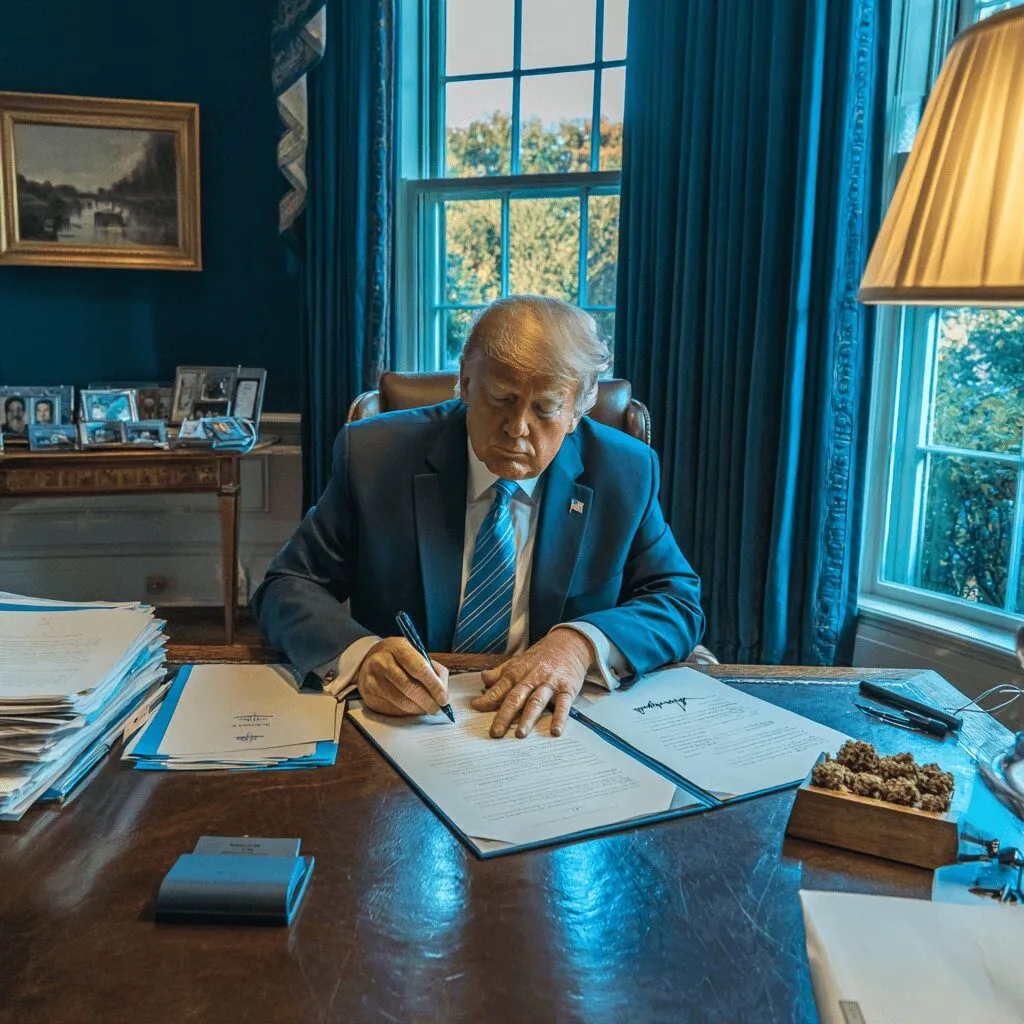
The big headline, relevant to Trump hemp THC recriminalization, is that Congress just passed a bill that would recriminalize hemp-derived THC products, sending it straight to Donald Trump’s desk. According to Marijuana Moment, the bill specifically targets new forms of intoxicating THC synthesized from legal hemp, a market that’s boomed since the Farm Bill. Lawmakers claim their move will shut down easy access for minors and stop the ‘unintended side effects’ of this green gold rush. The timing is crucial, as small shops, vape stores, and even mainstream chains are flush with products that sit in this federal loophole. If Trump signs, products containing Delta-8, Delta-10, and other hemp-based THCs could become illegal overnight. This major decision comes as states attempt to balance the surge of infused beverages with new regulations, and industry shockwaves are felt in the wake of legislation targeting products like THC seltzers, explained in this piece on state pushback and the beverage market. The bill itself was fast-tracked with little debate, piggybacking on broader spending legislation. Advocates from the American Trade Association for Cannabis and Hemp (ATACH) warn this threatens tens of thousands of small businesses and the livelihoods of artisans who’ve helped reshape the market in record time. And as Leafly reminds us, this is a seismic shift for the cannabis supply chain, creating new uncertainty for consumers, farmers, and entrepreneurs across the country.
Expert Analysis: What Does This Mean for Cannabis?
From my side of the garden, here’s what the Trump hemp THC recriminalization push really means: The fight over plant-based wellness, freedom, and entrepreneurship is at another inflection point. The government’s approach to ‘safety’ is creating massive legal headaches, just as the rest of the world opens up on cannabis. Many industry pros, like MJBizDaily, argue that hemp-derived cannabinoids deserve smart regulation, not a ban. “Instead of punishing innovation, lawmakers should focus on consumer safety and real science,” says Kris Krane, industry consultant and former president of 4Front Ventures (4Front Ventures). Fact is, prohibition rarely ends well. Just look at what happened with Delta-9 THC—black markets thrived, while responsible adults and patients got the short end. The current crackdown could spark new debate about how criminalization policies ripple through the industry, a topic explored in the ongoing conversation about congressional crackdowns on THC drinks. By cracking down so hard, this policy could drive demand back underground, hurting the legal hemp market and putting quality control in the hands of the unregulated wild west. And let’s be real, this doesn’t stop the overall trend. As NORML and other advocacy groups highlight, public support for full cannabis reform is at all-time highs. This move is a speed bump, nothing more.
Looking Ahead: Hemp, Cannabis, and the Future
So what comes next in the world of Trump hemp THC recriminalization? While the industry faces a tough moment, it’s far from the end. Regulatory battles like this are how cannabis history gets made. We’ve seen state-level backlash push federal reform forward before. The U.S. is slowly (but surely) embracing legalization—and hemp’s not going back in the box. Farmers, patients, and advocates have built a movement too big to ignore. As High Times recently noted, every setback in cannabis policy has led to stronger community action, better science, and louder calls for sensible reform. Even with this news, you can bet the hemp and cannabis industry isn’t just going to roll over. With market demand, public support, and innovation all on the rise, this is just another chapter. Eyes open, spirits high—the green future is still unwritten, and it’s looking brighter than ever.
Originally reported by: marijuanamoment.net