




Tripura cannabis plantation raid: Massive Rs 25 Crore Seizure
India’s cannabis scene just got upended in a dramatic way. The Tripura cannabis plantation raid has triggered spirited debates across the country, as officials wiped out illegal crops reportedly worth Rs 25 crore. With the plant’s global acceptance on the rise but local regulations still firm, this news throws a spotlight on state policies, market shifts, and the lived realities of growers and enforcers. In this article, we break down why the Tripura cannabis plantation raid matters right now, what happened, its roots in policy, and what it says about the future for both advocates and regulators.
The Evolving Landscape: Legal and Social Context in Tripura
To truly understand the Tripura cannabis plantation raid, you have to tap into India’s complicated relationship with cannabis. While sacred texts praise the plant, modern law is less friendly, and India’s Narcotic Drugs and Psychotropic Substances (NDPS) Act of 1985 criminalizes cultivation, sale, and use of cannabis except for certain traditional or medical purposes. Tripura, known for vast hills and rich greenery, has become a hotbed for illicit cultivation, simply because the terrain is so accommodating. Social attitudes remain mixed, as some see cannabis as culture while others view it as contraband. International trends further fuel curiosity, and with global moves toward legalization in nations like Canada, Thailand, and Germany (Forbes), Indian lawmakers face growing pressure to reconsider strict bans. The gradual rise in community, culture, and cannabis thriving together, as seen with indigenous initiatives, mirrors efforts such as the Southern Sierra Miwuk Land Restoration which highlights how cannabis can shape local societies positively. In Tripura, however, enforcement is still strict, especially in northeastern states where police periodically mount high-profile campaigns like the recent Tripura cannabis plantation raid.
What Went Down: Key Facts about the Recent Raid
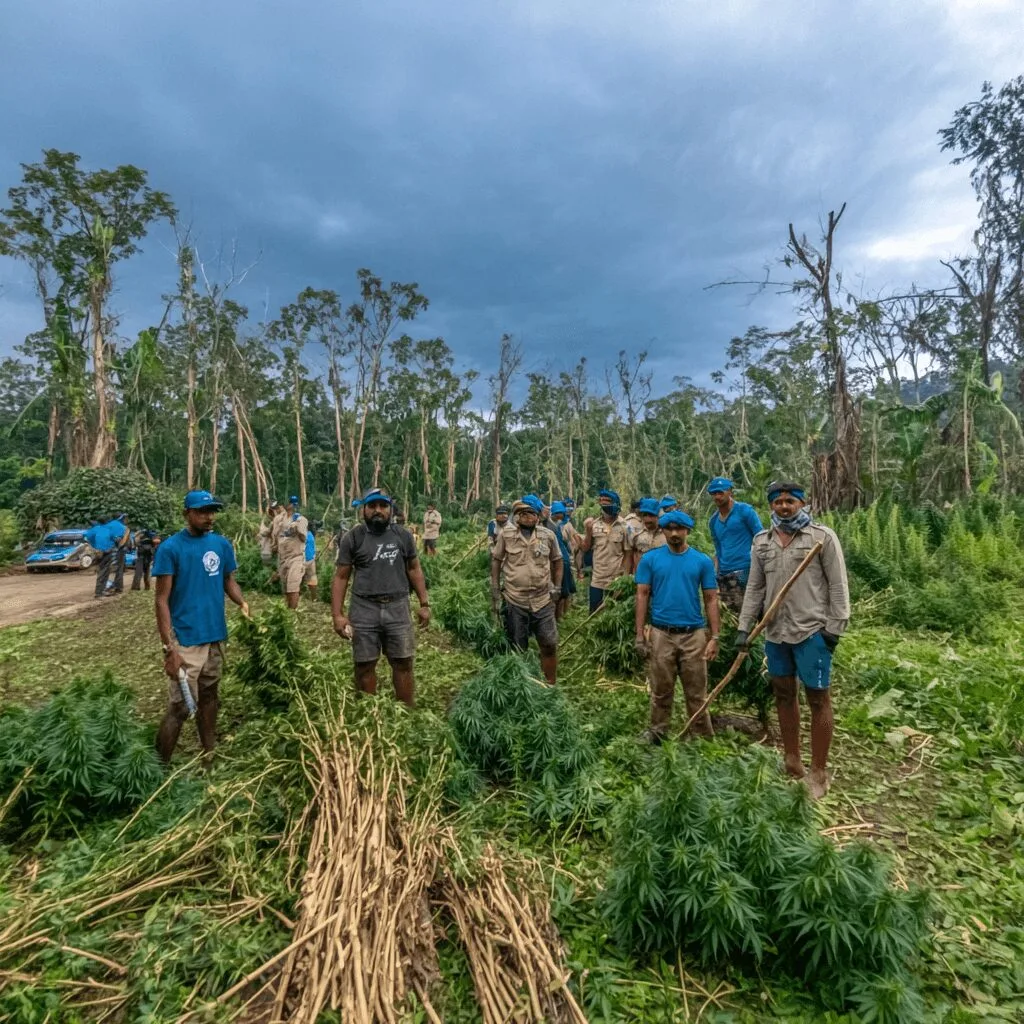
The Tripura cannabis plantation raid on June 23, 2024, marked one of the largest anti-narcotics operations in the state’s history, as reported by Northeast Live TV. A joint police and anti-narcotics task force swept through the Teliamura sub-division, uprooting and destroying cannabis plants cultivated over sprawling acres. Officials estimated the haul at a staggering Rs 25 crore, or roughly $3 million USD, a figure sending shockwaves through local and national news circles. This scenario of enforcement and subsequent disruptions is reminiscent of other regions facing cannabis-related incidents and industry fallout, such as the Blasdell marijuana theft where law enforcement actions led to substantial local debate. Authorities in Tripura emphasized that such plantations not only defy the NDPS Act but also pose risks to youth and society at large. Law enforcement hinted at ongoing crackdowns, targeting not just growers but possible intermediary networks. For Tripura, where cannabis has long been grown in secret, this was a dramatic public signal, and enforcement is here and it’s getting serious. Reports indicated no violent clashes, but several detentions and ongoing investigations into the network behind the cultivation.
Expert Analysis: Context, Challenges & Cannabis Culture
So, what’s really at stake with the Tripura cannabis plantation raid? The tension reflects larger questions in India’s policy landscape. While authorities tout these raids as victories in the war on drugs, many experts stress the need for a nuanced approach. According to Leafly, “India’s relationship with cannabis is tangled in layers of tradition, regulation, and economics. Blanket bans often ignore rural livelihoods and global reform trends.” High Times magazine has also recently analyzed India’s cannabis landscape, explaining that strict enforcement without alternative livelihoods or a shift toward regulated markets risks pushing cultivation deeper underground. Efforts toward safe, legal community events parallel some American models, and details about these community-centered regulatory strategies can be seen in the discussion on California cannabis event regulations, offering a window into how community and policy can develop hand in hand. Many within the cannabis community, myself included, argue that harm reduction should be a guiding focus over pure prohibition—especially as so many countries move toward policy modernization. The raid highlights both the determination of Indian law enforcement and the resilience of local growers caught between economic realities and outdated laws. To quote Dr. Vikram Chauhan, pharmacognosy expert and herbal advocate (quoted in Business Standard): “India must weigh cannabis regulation, not only for social reasons but for rural economic opportunity. Prohibition alone has not worked.”
The Road Ahead: Fresh Perspectives on India’s Cannabis Future
The Tripura cannabis plantation raid may feel like a setback to cannabis advocates, but it’s also a teachable moment. As headlines break and policymakers talk tough, it’s worth remembering that change, globally, is almost always contentious before it’s accepted. Evidence from Brookings Institution and other think-tanks shows that countries who embrace thoughtful cannabis reform—not knee-jerk prohibition—reap both health and economic dividends.
Looking ahead, hope centers on honest debate: How can India support rural farmers, protect youth, and respect tradition, all while modernizing cannabis regulation? The future still shines green in Tripura and beyond, and many believe it’s a matter of time before India joins the global trend toward a more progressive, regulated approach. Until then, raids like this remind us why the discussion cannot be ignored—and why every grower, consumer, and policymaker should have a seat at the table.
Originally reported by: northeastlivetv.com


