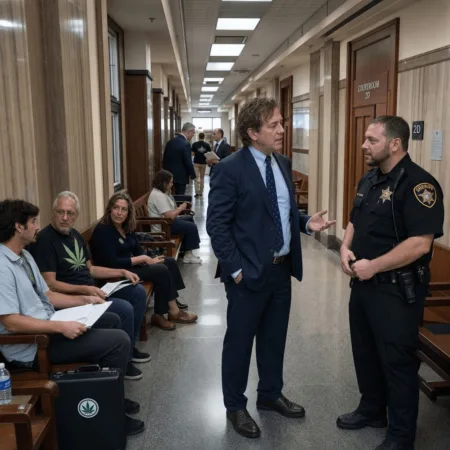
Supreme Court Marijuana Gun Law Decision: What’s at Stake?
The intersection of cannabis reform and gun rights has never been more in the spotlight. With the supreme court marijuana gun law debate heating up, legal experts, cannabis advocates, and everyday citizens are watching closely. This Supreme Court challenge could change how millions navigate rights around cannabis use and firearm ownership. Dive in for the background, key developments, and what it all means for our future, as the nation rethinks outdated laws on weed and weapons.
Background: Why the Supreme Court Marijuana Gun Law Clash Matters
The supreme court marijuana gun law controversy didn’t appear overnight. Federal prohibition on cannabis, sitting at odds with state-level legalization, creates a tangled web. DEA rules still list cannabis as a Schedule I substance, meaning feds see marijuana on par with heroin, despite legalization in 38 states. Meanwhile, the ATF forbids any ‘unlawful user’ of a controlled substance from possessing firearms. But who decides what’s ‘unlawful’ when cannabis is legal in your state but not federally? The disconnect affects millions of responsible users. According to NORML, nearly half the U.S. adult population lives somewhere weed is legal, but federal background checks for guns still trip up honest users. This ongoing regulatory uncertainty has led to significant challenges within the cannabis industry as discussed in recent industry analyses. Now, the Supreme Court’s decision could finally harmonize laws rooted in decades-old stigma, reflecting a shifting social landscape where the average cannabis consumer is less outlaw, more soccer parent or retired vet than ever before.
Key Developments in the Supreme Court Marijuana Gun Law Showdown
This latest saga kicked off in earnest after a March 2026 case made national headlines when the Supreme Court agreed to hear arguments about the constitutionality of barring legal cannabis users from possessing firearms (Pittsburgh Post-Gazette). The case centers on a plaintiff legally consuming medical marijuana, state-sanctioned but federally prohibited. Federal gun purchasing forms (ATF Form 4473) directly ask about cannabis use, and a ‘yes’ answer means an instant block on your Second Amendment rights. Multiple legal appeals, including one out of Oklahoma where a marijuana patient challenged her firearm denial, spurred the Supreme Court to wade in. Recent developments in federal regulatory enforcement, such as sentencing trends, have played a notable role in shaping the broader public debate, as highlighted in recent legal analyses. Weed is legal from coast to coast, but, as of early 2026, federal law still criminalizes toking and toting. Legal filings reveal backing from advocacy groups, with over 20 states and gun rights organizations submitting amicus briefs urging reform. The U.S. Department of Justice, however, stands firm on keeping cannabis users from legally purchasing firearms, citing public safety. Legal experts say the Supreme Court’s ruling, expected by the end of the 2026 term, could set a benchmark for all future supreme court marijuana gun law interpretations.
Expert Analysis & Cannabis Community Perspective
The supreme court marijuana gun law debate exposes the patchwork nature of American cannabis policy. States honor patients and recreational users, but the feds seem stuck in the 1980s. As Marijuana Moment recently noted, ‘Legal cannabis users face modern policy dilemmas unknown to users of far more dangerous substances.’ There’s irony in being a veteran prescribed opioids still allowed firearm access, while a cancer survivor using cannabis gets sidelined. Quoting Ethan Nadelmann, founder of the Drug Policy Alliance: “Refusing someone their constitutional rights for state-legal cannabis use is an outdated holdover. We need a rational, evidence-based approach that reflects real-world consumption patterns.” Alongside legalization, communities such as those in Nebraska have sparked wider conversations and hope around medical marijuana initiatives and their broader state impacts, as seen in these recent grassroots movements. Cannabis business leaders point to increased investments and mainstream adoption, signaling the need for legal consistency. Plus, studies from Pew Research Center show nearly 88% of Americans now support at least some form of cannabis legalization. Watching the Supreme Court wrestle with these contradictions spotlights how far we’ve come, and how far there is to go for justice and logic to catch up.
Future Outlook & Conclusion: Lighting the Way Forward
While the supreme court marijuana gun law debate is still unfolding, most signs point to change. Win or lose at the Court, the pressure is on for Congress and federal agencies to finally reconcile conflicting laws. This pivotal case could drive a wider move towards rational, science-backed policy—pushed by record-high public support and industry professionalism. The cannabis sector’s transformation from fringe to mainstream is fueled by new rules, investment surges, and genuine patient needs. According to Leafly, more states and cities are ditching outdated policies every month. Whether you’re advocating from the grassroots, managing a dispensary, or just rolling up after work—this case is a giant leap toward common sense. Whatever the Supreme Court decides, cannabis culture and commerce aren’t fading back into the shadows. The future looks green, and justice, finally, might catch up with reality.
Originally reported by: post-gazette.com