






Randolph County felony marijuana arrest shocks community
The Randolph County felony marijuana arrest is making headlines and stirring up conversations throughout North Carolina and the broader cannabis community. Right now, marijuana reform is one of America’s hottest topics, with social justice, business innovation, and law enforcement all colliding in real time. This latest incident in Randolph County highlights not only the tension between outdated prohibition laws and changing public attitudes but also shines a light on how everyday lives are impacted by legal ambiguities. As communities, advocates, and officials respond, understanding what’s at stake in Randolph County is more important than ever. Let’s break down what happened, why it matters, and what comes next.
Tracing the Legal, Social, and Market Context Behind the Headlines
To fully grasp the Randolph County felony marijuana arrest, you’ve got to know North Carolina’s current cannabis laws and national trends. While many states have moved towards legalization or at least decriminalization, North Carolina has largely stuck to its conservative roots. Marijuana remains illegal for recreational use, and even medical cannabis is tightly restricted despite growing public support, as reported by NORML. This means even small amounts can land someone with a criminal record, potentially a felony, depending on quantity and other factors like prior convictions. These differing state policies are reminiscent of recent enforcement trends seen elsewhere—like the debate stirred by dramatic marijuana-related cash seizures around the U.S.
Social attitudes, however, are shifting rapidly. According to a recent Pew Research Center survey, about 9 in 10 Americans today support some form of legalization. Young adults in North Carolina, just like in the rest of the nation, are increasingly supportive of reform, challenging law enforcement and legislators to keep up with public opinion. Meanwhile, the legal cannabis market in the U.S. has boomed, with annual sales exceeding $34 billion as reported by New Frontier Data. North Carolina finds itself in a strange spot: caught between shifting economics, evolving police priorities, and the weight of outdated statutes that still criminalize behaviors now legal in over half of U.S. states. Ongoing regulatory changes and compliance challenges, explored in-depth during panels on cannabis enforcement and regulation, further illuminate how complicated the situation can be for both individuals and businesses.
Breaking Down the Randolph County Felony Marijuana Arrest: What Really Happened?
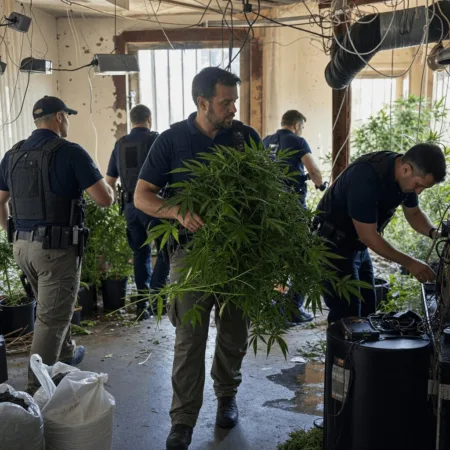
The Randolph County felony marijuana arrest that’s sparked such commotion took place outside a nondescript building in June 2024. According to details released by the Randolph County Sheriff’s Office, deputies reportedly observed a young adult, described as a casually dressed male with no prior violent record, carrying a transparent bag containing visible cannabis buds, with no attempt to conceal or distribute. Despite the total weight being relatively modest (authorities cited just over a half ounce, bordering on North Carolina’s felony threshold), officers initiated an arrest in line with state policy. The individual was charged with felony possession under G.S. 90-95, a statute that classifies possession above 0.5 ounces as a felony, even without intent to traffic. Similarity to enforcement patterns in other states can be seen when considering national incidents, such as major shipment seizures by U.S. border officials that highlight the clash between evolving markets and longstanding laws.
The arrest unfolded during broad daylight and quickly became public when an eye-witness video circulated on social media, sparking criticism over potential over-enforcement and concerns of disproportionate punishment. Local news, including the Piedmont Triad’s Fox 8, highlighted the “shock” residents felt, with many citing the disconnect between policy and public sentiment. The courthouse calendar now features this case as a bellwether for broader legal battles over marijuana criminalization in North Carolina. Persistent debates like these have become even more prominent in states where large political donations, examined in events like recent PAC-related cannabis funding controversies, are influencing the direction of reform and enforcement efforts.
Expert Analysis: Cannabis Policy at a Crossroads and Public Reactions
This Randolph County felony marijuana arrest doesn’t exist in a vacuum, it’s the latest flashpoint in North Carolina’s struggle to modernize cannabis law. As Leafly contributor and cannabis policy analyst Bruce Barcott notes, “Punitive laws like those still on North Carolina’s books cause lifelong consequences for nonviolent offenders, at a time when most Americans expect sensible, science-driven marijuana reforms.” Calls for proportional enforcement have grown louder, with organizations including ACLU warning about continued racial and socioeconomic disparities in marijuana policing. National policy shifts only intensify pressure for state-level change. The reality? North Carolina is out of step with the rapidly evolving landscape across the U.S. economy, criminal justice system, and public health circles. The experience in other states, such as the launch of new regulated markets like Virginia’s upcoming retail marijuana industry, underscores just how quickly attitudes and legal frameworks can shift. Local advocacy groups, spearheaded by voices from NORML and the NC Cannabis Patients Network, point to mounting evidence that criminalizing individuals for simple possession is counterproductive and disproportionately costly. Still, law enforcement maintains they are simply following state codes, a reminder that real solutions must come through legislative action, not mere police discretion.
Looking Ahead: Reform, Advocacy, and the Future for Randolph County
As the Randolph County felony marijuana arrest makes headlines, advocates and communities are doubling down on calls for reform. Progress may be slow, but the momentum for change is growing—both in North Carolina and nationwide. This case serves as a wake-up call, spotlighting the disconnect between current laws and evolving public norms. With legislative efforts gaining steam, and growing evidence on the economic and social benefits of a regulated industry, hope is on the horizon. As the Marijuana Moment regularly reports, states that reevaluate outdated cannabis laws often see greater public safety, new job growth, and a more equitable justice system. Randolph County’s present headlines could soon be a footnote in a much larger story of sensible, progressive change.
Originally reported by: randolphcountync.gov

1 Comment
Pingback: UFCW cannabis member stories: Insights From the Union Call