

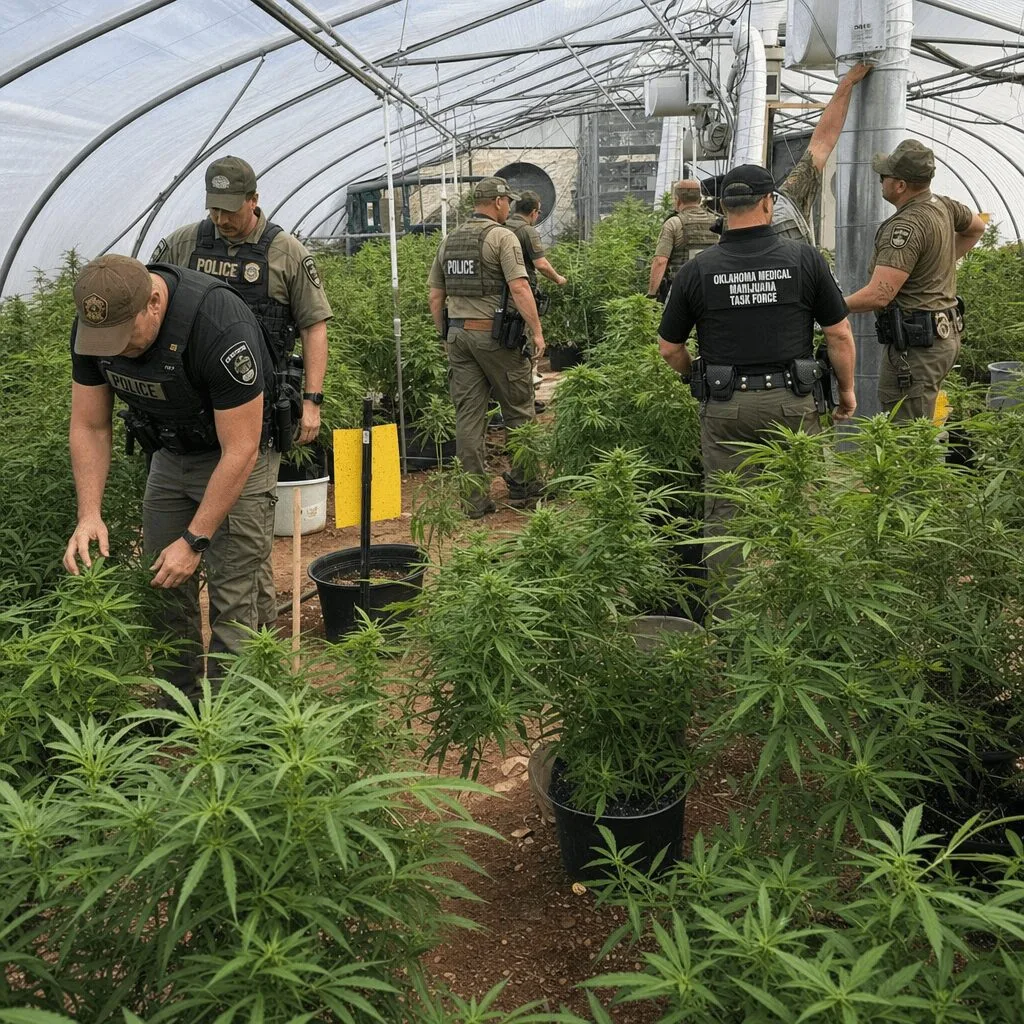
Oklahoma illegal marijuana bust: Task Force Raids Exposed
Right now, the Oklahoma illegal marijuana bust story is lighting up headlines, stirring conversation in smoke circles and boardrooms alike. Why? Because cannabis is officially big business in Oklahoma—both legal and not. Recent crackdowns have a ripple effect, impacting growers, lawmakers, and anyone following how the state adapts to a tidal wave of green. This article breaks down the key moves, explains what’s driving these busts, explores the fallout for the cannabis industry, and offers real talk about the bigger picture for everyone invested in reform.
Oklahoma Cannabis Laws: The Wild, Wild West of Weed
To understand the Oklahoma illegal marijuana bust, you need to know Oklahoma’s cannabis scene is unlike anywhere else. Since medical legalization in 2018, according to NORML, Oklahoma created one of the most accessible, and loosely regulated, markets in the nation. A low barrier to entry and high demand led to a boom: by 2023, over 7,000 legal cannabis grow licenses were active statewide (MJBizDaily). However, this rapid growth wasn’t all sunshine and terpenes. Gaps in regulation let illicit operations piggyback on the legal framework, fueling enforcement headaches for both state officials and genuine cultivators. Federal tension complicates matters, too, as cannabis remains a schedule I substance federally, cross-border trafficking draws the attention of groups like the DEA and Oklahoma Bureau of Narcotics (DEA). As social attitudes continue to shift, it’s notable that other states are dealing with similar issues with pushes to transform state laws in places like Kansas. Gallup polls show more Americans than ever support cannabis reform, but the path from gray market hustle to clear-cut legality is rarely smooth, especially here.
Major Moves: Task Force Raids Shake Up Oklahoma’s Grow Scene
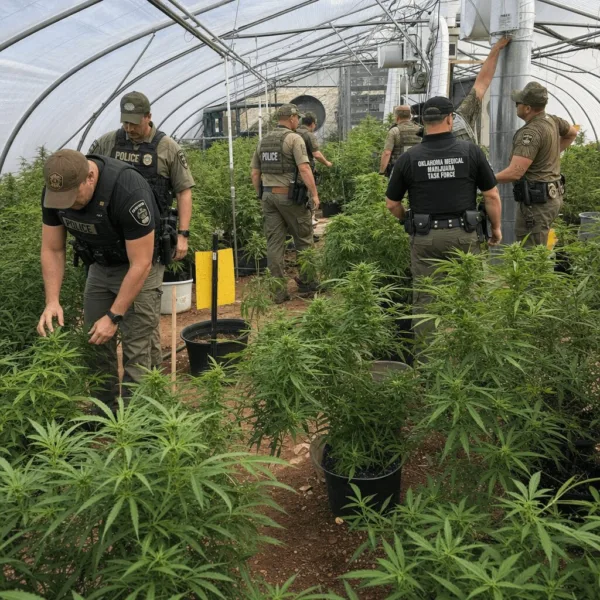
The most recent Oklahoma illegal marijuana bust unfolded in early July 2026 in Woodward County, sparking regional debate and national intrigue (Journal Record). Multiple law enforcement agencies, including the Oklahoma Bureau of Narcotics and the local sheriff, formed a task force and executed early morning raids on several rural grow operations. Officials cited violations, including unlicensed cultivation, falsified paperwork, and suspected interstate trafficking. Greenhouses were searched, equipment seized, and thousands of plants uprooted. Vehicles were photographed parked outside the scene, some still loaded with grow supplies. Arrests followed, with law enforcement emphasizing the ongoing struggle against criminal groups exploiting Oklahoma’s friendly licensing system. According to the original reporting, authorities say fraudulent “paper grows” are often facades for multi-state trafficking. These recent busts are hardly isolated. In 2025 alone, more than 800 illegal grows were reportedly shuttered by state authorities (Oklahoma Bureau of Narcotics), highlighting the unique law enforcement challenge Oklahoma faces as a cannabis trailblazer. Notably, incidents like warehouse fires in other states also reveal the broader risks and patterns affecting the cannabis industry nationwide.
Expert Insight: More than Just a Bust
What’s the real impact of the Oklahoma illegal marijuana bust on the cannabis ecosystem? The answer isn’t black and white, nor is it all smoke and mirrors. According to Leafly News, Oklahoma’s market has seen a flood of speculative grows drawn by low costs, but insufficient oversight lets bad actors hide in plain sight. Yet each new task force raid has industry insiders asking: Are we prioritizing paperwork over plant health, or missing the education piece that helps small growers comply? Renowned cannabis attorney Vicente Sederberg puts it bluntly: “Real reform means supporting enforcement, yes, but also empowering legitimate operators to thrive, otherwise you risk pushing the real growers out with the bad actors.” (Vicente Sederberg LLP).
Legal experts point out that a crackdown solves only half the problem. To quote a recent Marijuana Moment analysis: “Regulatory overcorrection could chill innovative cultivators and inadvertently strengthen illicit networks by making compliance too complex for honest operators.” And that’s not even touching the cost concerns, since legal compliance is often expensive, small farmers can get squeezed out by both enforcement and corporate consolidation. Meanwhile, federal cannabis rescheduling and related legal debates are evolving, creating new questions about how state-level enforcement interacts with impending changes in Washington D.C.
Looking Ahead: Room for Growth and Legal Evolution
Despite the shockwaves these Oklahoma illegal marijuana busts send through the community, the movement for reform isn’t lighting up its last joint anytime soon. With more states implementing sophisticated seed-to-sale tracking and new federal legalization proposals on the table (Cannabis Business Times), Oklahoma is likely to refine, not retract, its role as an open market innovator. Social acceptance is soaring. According to industry surveys, a resounding majority of Oklahomans still back the state’s unique approach—provided regulators crack down on criminal enterprises, not legitimate growers. The future is all about balance: smart policy, strong stewardship, and real support for operators who do it right. Stay tuned—because if the recent Oklahoma illegal marijuana bust teaches us anything, it’s that the green revolution is just getting started and Oklahoma is holding a front-row seat.
Originally reported by: journalrecord.com