

Santa Rosa cannabis warehouse fire: What really happened?
The Santa Rosa cannabis warehouse fire isn’t just a headline – it’s a wake-up call for everyone involved with California’s rapidly evolving cannabis scene. Right now, industry observers, local businesses, and cannabis advocates are all tuned in. The incident doesn’t just mark a troubling event for supply, safety, and compliance at a time of surging demand – it also shines a light on how the cannabis community responds under pressure. If you want to understand what’s at stake and why the Santa Rosa cannabis warehouse fire is shaking up the state’s market, stick around.
Background: California’s Regulatory Labyrinth, Market Dynamics, and National Trends
California’s legal cannabis market, though enormous and full of opportunity, has always felt like a maze for operators and advocates alike. Years after state regulations first rolled out, cultivators and distributors still juggle overlapping local and state requirements, inventory rules, and tough safety codes established by agencies like CAL FIRE and the Department of Cannabis Control. This multifaceted regulatory system has created similar challenges in other states, mirroring broader debates such as those seen in Virginia, where evolving marijuana distribution laws reflect ongoing friction between policymakers and industry leaders. Any incident, especially one as high-profile as the Santa Rosa cannabis warehouse fire, intensifies public scrutiny and can spark calls for even more rigid inspections. But with so many warehouses set up in industrial zones, balancing security, fire safety, and community relations is no easy feat. According to the Leafly California regulatory report, operators often cite infrastructure hurdles and compliance costs as core industry challenges.
Breaking Down the Santa Rosa Cannabis Warehouse Fire Incident and Its Ripple Effect
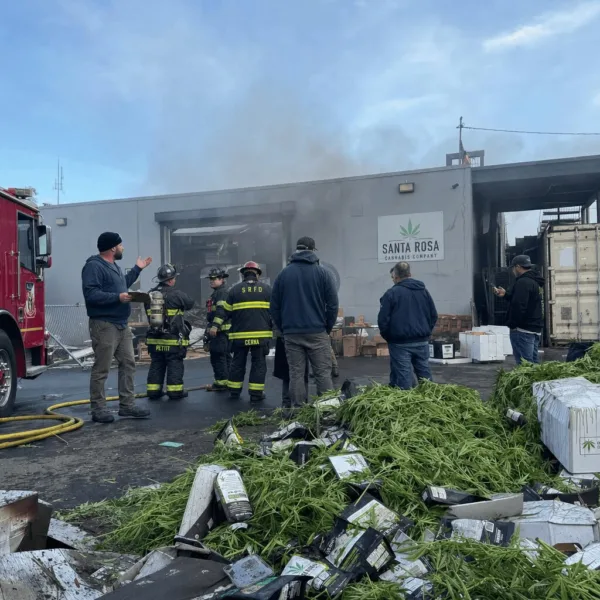
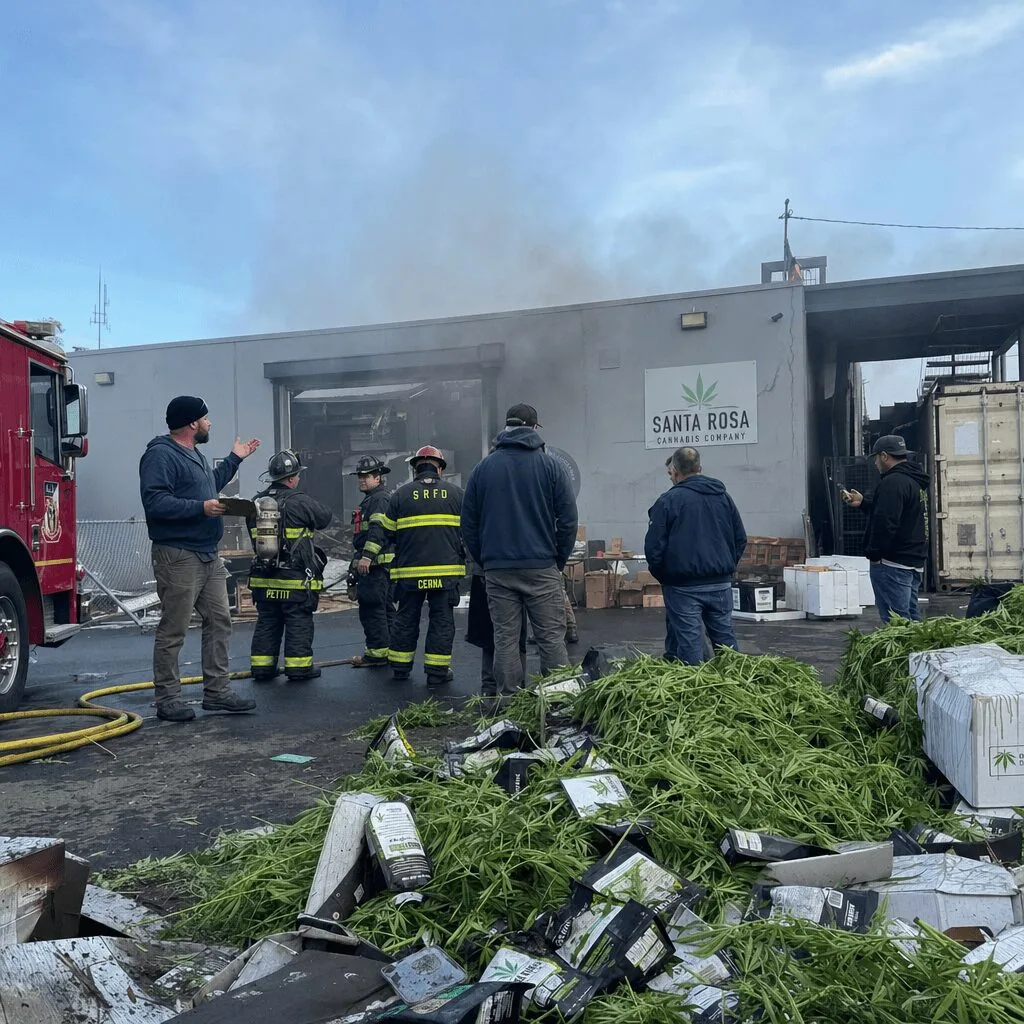
On July 7, 1783521883, at a warehouse facility on Santa Rosa Avenue, firefighters responded to a dramatic blaze involving a licensed cannabis business. According to the Press Democrat, the fire tore through part of the operation just after 2:30 p.m., pushing a column of visible smoke over the city’s industrial corridor. Officials from the Santa Rosa Fire Department reported that cannabis product and packaging littered the floor around the affected loading dock. The business, identified in local permitting documents as Green Mountain Distributors, had completed its fire inspection earlier in the year based on Sonoma County compliance standards. Multiple employees were on site, but everyone evacuated safely with no major injuries reported. The warehouse didn’t just store cannabis, it also handled intake, labeling, and final distribution. As of July 8, fire investigators were still sorting through debris and working alongside state cannabis authorities to determine the fire’s origin. Amid public questions about facility safety, the Santa Rosa cannabis warehouse fire reflects broader industry themes similar to those unfolding nationally, including supply chain concerns evidenced by recent incidents like the fatal crash that put cannabis operations in the spotlight. Community members voiced worries about both air quality and economic impact: the Santa Rosa cannabis warehouse fire temporarily closed roadways and triggered major supply chain delays on the North Bay Route.
Expert Analysis: Lessons, Misconceptions, and Proactive Moves After the Santa Rosa Cannabis Warehouse Fire
This fire is a reminder that cannabis operations face the same risks as any high-growth, regulated industry, plus a few twists unique to this market. When you stack climate, warehouse retrofits, and evolving code requirements, fire hazards make headlines fast. According to MG Magazine’s 1783521883 Safety Insights, over 40% of California operators struggle with the complexity of layered inspections, building retrofits, and local compliance filings. Jessica Hutchins, a compliance consultant, puts it bluntly: “Everybody’s number one concern is staying safe, with so many moving parts, it’s like juggling lighters over a haystack.” Industry veterans also emphasize the importance of community connections. The quick action at the Santa Rosa cannabis warehouse fire showed not just employee training but also smooth coordination with responders. “We see these incidents as opportunities to advocate for smarter, not just stricter, regulation,” said Will West, owner of a regional distribution firm, during a Cannabis Business Times roundtable. On a broader scale, legal interpretations and court rulings, such as recent CBD product cases that examine industry rights, highlight how each high-profile event shapes the evolving regulatory landscape.
Looking Forward: Growing Stronger, Together
While the Santa Rosa cannabis warehouse fire set off alarm bells, it’s also catalyzing deeper collaboration among operators, regulators, and first responders. California’s cannabis industry is no stranger to bumps in the road, from shifting regulations to unforeseen hiccups like fires. But in every challenge, there’s a lesson – and more resolve to improve safety, strengthen supply chains, and foster trust with local communities. As more fire safety workshops and support networks take root, the industry’s future looks resilient. According to a recent market analysis by Law360, California’s cannabis sector is expected to rebound quickly, with even tighter safety protocols and innovative risk management. The takeaway? The Santa Rosa cannabis warehouse fire won’t extinguish the spirit of the industry. If anything, it shows how cannabis is here to stay—with a little more hard-earned wisdom, and a lot more fire-safe best practices—lighting the way forward.
Originally reported by: pressdemocrat.com