




Massive marijuana seizure Port Baltimore shocks nation
Ever seen headlines that make the entire cannabis world do a double take? The massive marijuana seizure Port Baltimore might just be 2024’s wildest headline. With legal markets booming, international trafficking is shifting and authorities are cracking down harder than ever. Here, we break down why the marijuana seizure Port Baltimore is a true wake-up call for everyone—consumers, policymakers, and anyone tracking the epic highs (and lows) of cannabis trade in 2024.
The Changing Legal Landscape, Background & Context
The world of cannabis regulation is in the midst of a serious transformation. States from New York to California have created legal frameworks in hopes of pushing out the black market while trying to maintain safety and oversight. However, international trade, especially involving products bound for countries like the UK, where recreational cannabis remains illegal, remains a gray area (NORML Legal States Guide). The marijuana seizure Port Baltimore is a prime example of how U.S. ports have become hotbeds for clashing legal and illicit markets. Demand abroad continues to drive traffickers to risk multi-ton shipments, even as local American operations play by the rapidly evolving rulebook. As the U.S. federal government debates national reforms (U.S. Congress: Cannabis Reform Legislation), enforcement agencies are threading the needle, allowing state markets to thrive, but clamping down on illicit international flows. Social attitudes have also shifted, with over 60% of Americans now supporting full legalization (Pew Research, 2023), yet lingering stigma means busts like the marijuana seizure Port Baltimore still make national waves.
Major Developments, The Bust at Port Baltimore
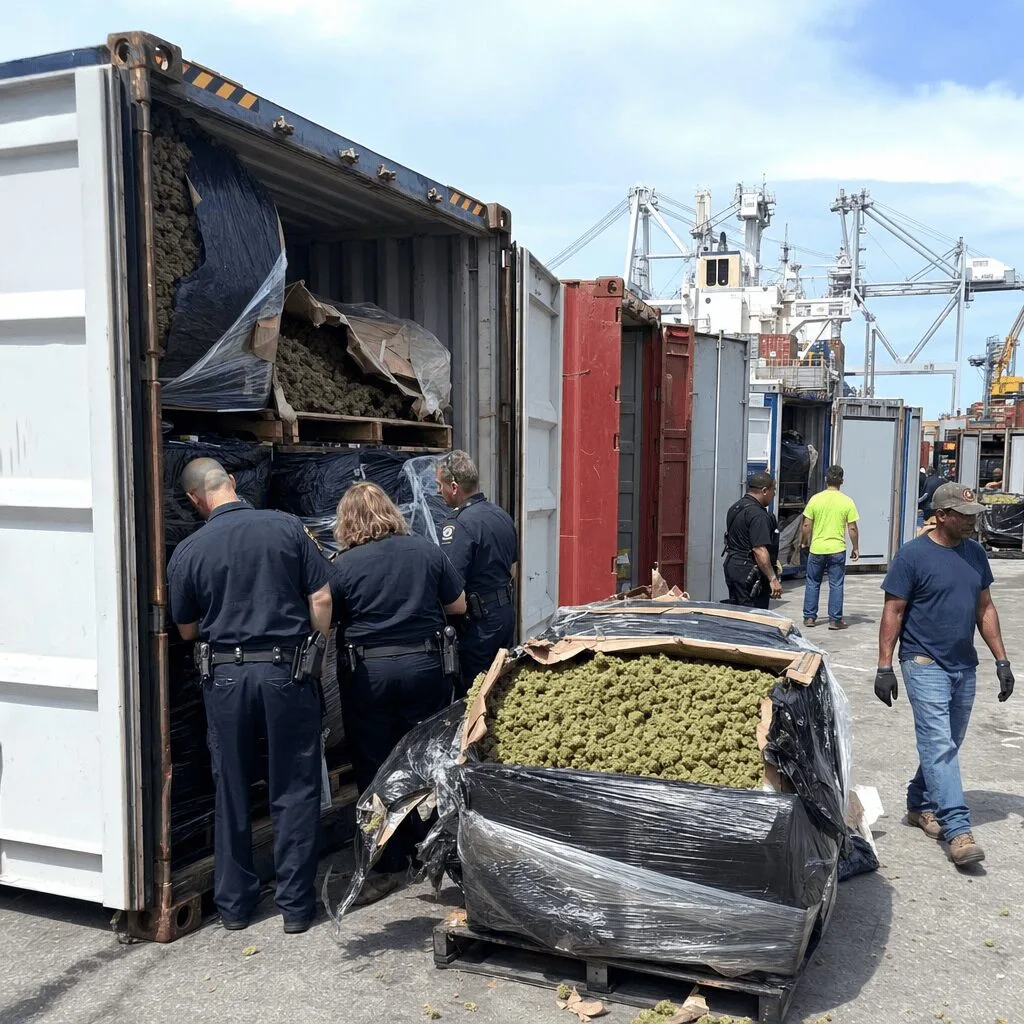
So what exactly went down at the Port of Baltimore? According to recent reporting (WTOP News, June 1781989558), law enforcement seized over 10,000 pounds of cannabis concealed in shipping containers labeled for cargo bound for England. U.S. Customs and Border Protection (CBP) and Homeland Security Investigations (HSI) worked in tandem for the massive interception. Officials say the bust is among the largest marijuana seizures at any East Coast port in recent years. For a broader perspective, see how similar enforcement actions are shaping international debate on cannabis policy here. Sources indicate that traffickers used routine shipping routes, exploiting logistical blind spots and masking cannabis among standard freight. The seizure involved officers from multiple agencies and reportedly took place during a scheduled inspection after intelligence flagged the shipment. Legal filings suggest the cannabis was intended for illicit UK distribution, a country where recreational use remains tightly prohibited, according to the (UK Government Drug Policy). Authorities noted the rise in scale and sophistication behind such attempts. The bust serves as a clear message, international cannabis smuggling is far from a thing of the past. The marijuana seizure Port Baltimore will likely have legal and diplomatic ripple effects for months, if not years.
Expert Analysis & Insights, What This Means for the Industry
Cannabis industry insiders see the marijuana seizure Port Baltimore as emblematic of a market still in transition. As Tom Angell, publisher of Marijuana Moment states, “When legal supply doesn’t match global demand, illegal routes will inevitably persist, especially where outdated laws remain.” (Marijuana Moment). The Port Baltimore bust underscores persistent barriers within international policy misalignment, while the U.S. edges toward greater legalization, prohibition abroad boosts prices and incentives for traffickers. If you’re interested in how similar market pressures play out at the state level, the evolution of cannabis legislation—like what’s going on in Montana—offers revealing case studies (read more). Some experts note this could push policymakers to modernize import/export regulations or, eventually, consider bilateral trade agreements for products like cannabis-derived medicines. Yet, the incident also highlights the effectiveness of U.S. interdiction efforts and the sophistication of modern smuggling networks. Analysts from the National Cannabis Industry Association (NCIA) suggest that as long as there’s inconsistency across borders, both legal operators and law enforcement face uphill battles keeping illicit trade at bay. More progressive global legalization could dampen these impacts. Still, events like the marijuana seizure Port Baltimore serve as crucial reminders, policy evolution hasn’t caught up with actual consumer demand worldwide.
Outlook & Conclusion: The Road Forward for Cannabis and Security
If there’s any lesson from the marijuana seizure Port Baltimore, it’s that cannabis reform is no longer just a domestic issue. With globalization, demand doesn’t recognize borders—only laws do. Experts say that stronger international cooperation and smarter regulation could create sustainable, equitable markets, reducing the power of illicit operators (Leafly Global Cannabis Politics, 2024). The U.S. is inching closer to national reforms every year. Social acceptance, economic potential, and medical validation are pushing the industry forward—despite occasional setbacks or headline-making seizures. Bottom line: the future of cannabis is bright. Events like the marijuana seizure Port Baltimore might slow the ride, but they also spark vital dialogue, inspiring safer, smarter policies worldwide. As more regions update their laws and build resilient legal markets, these massive busts may soon be relics of the past.
Originally reported by: wtop.com



1 Comment
Pingback: Marijuana Gun Rights: Court Shake-Up Changes Everything