


Marijuana Fentanyl Alexandria Raid: What Really Happened?
The recent marijuana fentanyl Alexandria raid hit headlines with force, igniting debates from smoke lounges to boardrooms. Legalization, safety concerns, and mixed-drug headlines keep surfacing in the cannabis community. This time, Alexandria became ground zero. In a rapidly evolving cannabis sector, a raid that links marijuana and fentanyl stirs public emotion and regulatory scrutiny. As more states vote yah or nay, every headline like this shapes how society and lawmakers view the plant—and its future. Let’s break down what really happened in the marijuana fentanyl Alexandria raid, cut through the hype, and tap into how this shapes cannabis discourse now and for years ahead.
The Legal and Social Backdrop: Cannabis, Criminalization, and Opioid Hysteria
To make sense of the marijuana fentanyl Alexandria raid, you need to know how U.S. policy got here. Cannabis legalization has surged in the past decade, with seven in ten Americans supporting legal weed (Pew Research Center, 2023). But federal law still lists marijuana as a Schedule I drug. Meanwhile, fentanyl panic is at fever pitch, with headlines connecting the opioid crisis to almost any drug bust—rightly or wrongly.
In Louisiana, recreational marijuana remains illegal, but medical cannabis is tightly regulated (see Louisiana Department of Health). Fentanyl, a synthetic opioid much stronger than morphine, is an entirely different story: it’s highly illegal unless prescribed, and often headlines for tragic overdoses nationwide.
This legal divide frames the social friction. Cannabis users and advocates feel unjustly lumped in with hard drugs. Law enforcement and lawmakers argue for safety and public order. Each marijuana fentanyl Alexandria raid becomes fuel for both sides of a heated, ongoing debate. The result? Rapidly shifting attitudes, intense media scrutiny, and a legal thicket that both patients and recreational users navigate daily.
The Alexandria Raid: Key Events, Facts, and Fallout
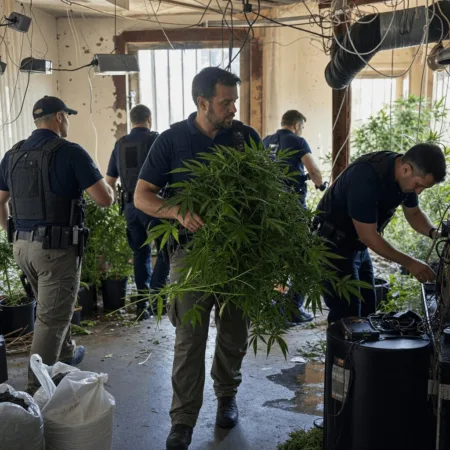
So, what exactly happened in this marijuana fentanyl Alexandria raid? According to credible local news reports, local law enforcement executed a warrant in Alexandria, Louisiana, targeting alleged drug activity in a residential neighborhood. Officers seized nearly a pound of marijuana, a quantity of fentanyl, and reportedly, drug paraphernalia. The raid resulted in the arrest of a local resident, with charges ranging from distribution of controlled substances to possession with intent to distribute.
Police emphasized the public safety risk, with Alexandria law enforcement citing the “dangerous fusion” of marijuana and fentanyl as a cause for concern. The operation—conducted in early June 2024—was described as part of a broader initiative to prevent opioid-related overdoses and stem the illicit drug trade in Central Louisiana.
The raid was widely reported in outlets such as KLFY and several regional affiliates. According to USA Today, however, most claims of fentanyl-laced marijuana are not well substantiated by chemical analysis, fueling debate about whether these raids reflect genuine health threats or prevailing fears.
Expert Insights: Industry Perspective, Media Narratives, and Drug Policy Realities
Let’s zoom out. What does the marijuana fentanyl Alexandria raid really signal for cannabis culture and policy? First off, it underscores the messy overlap between outdated prohibitionist logic and new realities of a booming cannabis sector. As Leafly reports, sensational police statements about fentanyl-laced marijuana rarely stand up to toxicology tests. There’s a real disconnect between lab-confirmed cases and what headlines claim,” says Dr. Linda Ma, a clinical toxicologist and industry expert. She told Medical News Today, “The vast majority of fentanyl-in-weed allegations remain unproven in real-world lab analyses.”
Industry veterans see a pattern: Law enforcement lumping marijuana together with far deadlier substances reinforces stigma and slows sensible regulation. Cannabis is not immune to risk—illicit, unregulated markets can expose users to dangerous adulterants, but most legitimate industry watchdogs (see NORML) advocate for robust testing, which legal platforms already deliver.
Bottom line: conflating marijuana and fentanyl issues without nuance misinforms the public. As society evolves and laws modernize, accuracy matters. “We need science-based policy, not fear-based narratives,” urged Marijuana Moment in a recent editorial summarizing industry concern.
Where We Go Next: Hope, Realism, and the Future of Cannabis in Louisiana
Despite the negative press from the marijuana fentanyl Alexandria raid, there’s real optimism in the cannabis space. National trends show that more voters, lawmakers, and healthcare professionals are distinguishing cannabis from deadly opioids. Public education and better regulation are leading to safer products and more informed communities. According to the National Conference of State Legislatures, more states are adapting their laws to reflect medical consensus and market demand. That’s good news for consumers, investors, and advocates alike.
As for Louisiana, this raid may slow local reform momentum—but it won’t stop progress. Just like great cannabis: change starts small, grows organically, and eventually transforms the mainstream. We’re watching history, not a cautionary tale in the weed game. The conversation after the marijuana fentanyl Alexandria raid will do more to advance safe, sane, science-based cannabis reform than any scare headline ever could.
Originally reported by klfy.com