






Gainesville drug trafficking arrest shocks local community
The Gainesville drug trafficking arrest landed like a heavy cloud over what locals thought was just another chill afternoon. If you haven’t noticed, this isn’t your average story—it’s wrapped up in today’s fast-changing cannabis landscape. With shifting laws, evolving attitudes, and national headlines constantly debating marijuana’s role in society, it’s no wonder people are talking. This recent case involving both cannabis and prescription painkillers right here in Gainesville shows how tightly our community, law enforcement, and the cannabis industry are linked. Stick around—we’ll break down what happened, why it matters, and what it could mean for both legalization and justice moving forward.
Regulatory & Social Landscape: Understanding Cannabis Laws in Gainesville
The Gainesville drug trafficking arrest can’t be fully understood without digging into the patchwork of federal, state, and local regulations. Cannabis remains federally illegal in the U.S., classified as a Schedule I substance according to the DEA’s official scheduling, and regulation inconsistencies are often clarified by real-world stories like those shared by workers on the frontline of cannabis employment reform. Yet, Florida has carved out medical cannabis exceptions, and Alachua County keeps evolving its enforcement policies.
However, recreational use isn’t recognized in Florida, where lawmakers routinely debate new bills, and law enforcement officers walk a tightrope between progressive reforms and outdated rules. The New York Times has pointed out how these contradictions leave both patients and everyday consumers in a bizarre legal limbo. Local reforms in Gainesville have made simple possession a civil rather than criminal offense, but trafficking and prescription drugs remain a different story entirely.
Public attitudes in Gainesville skew younger and more pro-cannabis compared to statewide averages, contributing to a strong community response to cases involving changes in drug enforcement, similar to the robust local debate that emerged following the Randolph County felony marijuana arrest.
Key Developments: Breaking Down the Gainesville Drug Trafficking Arrest
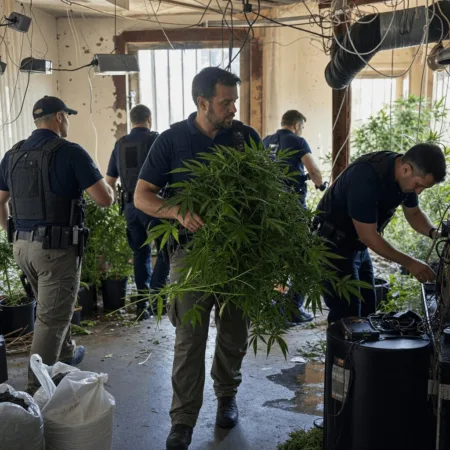
On March 25, 2026, local Gainesville police conducted a targeted operation that ended with the arrest of a young man at a humble neighborhood home. According to WCJB News, the individual was found in possession of a clear plastic bag filled with cannabis and a prescription bottle labeled oxycodone. Law enforcement cited evidence consistent with suspected trafficking, not just personal use, elevating the case’s legal gravity.
Specific details show how law enforcement drew a line between minor possession and distribution-level infractions, which mirrors national discussions about how aggressive pursuits can spark policy changes as seen during notable high-profile marijuana-related seizures. Officers reported that the volume of cannabis exceeded Florida’s personal use limits, and additional packaging materials were discovered at the scene. The inclusion of oxycodone, a Schedule II controlled substance under FDA regulations, triggered enhanced charges carrying steeper penalties than marijuana alone.
Neighbors were stunned, with many expressing disbelief that someone they saw every day could be at the center of a Gainesville drug trafficking arrest fueled by shifting legal definitions. The local news outlet The Gainesville Sun further reported that this isn’t an isolated case, as law enforcement has stepped up surveillance in response to what they call a ‘regional uptick’ in drug-related activity involving both cannabis and prescription opioids.
Expert Analysis: Why This Gainesville Drug Trafficking Arrest Resonates
This case lays bare the challenges of balancing drug enforcement and cannabis reform. While Gainesville is known as a college town with progressive leanings, state and federal law still lag behind social attitudes. As industry analyst Leafly points out, “When you criminalize distribution but encourage medical use, confusion is inevitable, and people get caught in the crossfire” (Leafly analysis).
It’s not surprising that the community feels conflicted. On one hand, illicit trafficking can introduce unknown substances and unregulated products, potentially harming consumers. On the other, efficient and inclusive legal cannabis markets have been documented to reduce criminal activity and promote economic growth (Brookings Institute), as reflected in regulatory conversations such as those covered in the cannabis compliance panel on enforcement and policy insight.
Industry veteran Josh Kappel, founding partner at Vicente LLP, recently commented, “Legal ambiguity hurts communities, not just accused individuals. Clear pathways to legitimate access and education reduce the chance for misunderstandings and criminalization of otherwise responsible adults.” (Vicente LLP News)
Ultimately, this Gainesville drug trafficking arrest spotlights how America’s war on drugs, combined with uneven progress out of it, continues to impact lives on the ground in every city and neighborhood.
Looking Forward: Bright Spots Beyond the Gainesville Drug Trafficking Arrest
Despite the turbulence caused by headlines like this Gainesville drug trafficking arrest, tangible progress keeps rolling forward. Florida lawmakers are increasingly receptive to public pressure; ballot initiatives for broader reform gain steam each year, as documented by Marijuana Moment. More critically, local and regional leaders grow more sensitive to the nuances between medical, recreational, and illicit uses—promising a future where fewer people are caught in gray-area arrests.
As stigma fades, responsible advocacy and smart regulation will create safer, fairer markets. The cannabis industry’s evolution isn’t slowing down. Instead, each challenge, including high-profile events like this, simply accelerates much-needed conversations about justice, safety, and personal freedom. Here’s to building a future where innovation, community health, and individual rights can finally chill in harmony—and it all starts, as always, right here in Gainesville.
Originally reported by: wcjb.com

3 Comments
Pingback: Army enlistment marijuana policy: Surprising new changes revealed
Pingback: Omnibus cannabis policy bill: Will it finally pass?
Pingback: North Carolina marijuana law impact: What you must know now