






E. Clay St. drug bust: Shocking Guns, Marijuana, Cash Haul
The E. Clay St. drug bust has local headlines buzzing and the cannabis industry talking. It’s not every day you see a street bust spark real conversations about policy, perception, and regulation. As society moves toward cannabis acceptance, sudden events like this demand a closer look—especially with shifting laws and attitudes. Let’s break down what really happened, why it matters, and what it means for the future of cannabis—both for the local community and the broader industry.
Regulatory, Social & Industry Context: Why the E. Clay St. Drug Bust Matters
The E. Clay St. drug bust is not just another headline, it’s a snapshot of America’s complicated relationship with cannabis. Many states are dialing back prohibition and launching thriving legal markets, but federal law remains rigid (DEA still classifies cannabis as a Schedule I drug). Meanwhile, city streets feel the impact of laws, enforcement priorities, and cultural shifts. Thomasville, Georgia, where E. Clay St. sits, has seen mixed signals: local reform efforts, gradual cultural normalization, and pushback from old-school law enforcement. According to NORML, criminal justice reform is patchy and often lags behind public sentiment. Still, high-profile raids like this highlight the tension between changing social views and hardline regulations, reminiscent of recent regional events such as the San Leandro marijuana seizure that also spotlight contradictions within the evolving cannabis landscape.
Key Developments & Issues: Facts Behind the E. Clay St. Drug Bust
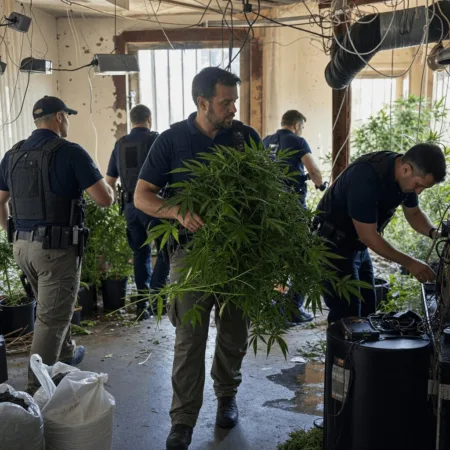
The E. Clay St. drug bust took place on February 12, 2026, rattling the Thomasville community. According to the Times-Enterprise, police seized multiple handguns, clear plastic bags full of marijuana, and stacks of cash from a residential home. The sweep was part of an ongoing investigation, supported by both city police and state law enforcement. Early morning action led to several arrests, and authorities say the haul included a substantial amount of cannabis and unregistered weapons. Investigators allege intent to distribute, triggering felony charges that could have lasting impacts for those involved. With cannabis legal in many states, and growing public acceptance, these busts highlight regional contradictions. The event quickly became a lightning rod for debate among cannabis advocates, legal professionals, and policymakers as conversations about the risks and legal implications of workplace and community cannabis use remain prominent, as seen in cases like the THC workers comp claim.
Expert Analysis & Insights: Navigating Policy, Enforcement, and Possibility
The E. Clay St. drug bust illustrates the ongoing struggle between modern cannabis reform and lingering stigma. Industry experts are quick to point out the double standard. According to Leafly cannabis columnist Bruce Barcott, “Raids like this remind us the law is slow to catch up with the culture.” He goes on: “The line between criminal conduct and legitimate commerce can be razor-thin depending on your ZIP code.” This bust, while dramatic, is part of a broader pattern: communities caught between law enforcement tradition and business innovation. The presence of unregistered firearms certainly complicates public perception, but focusing only on the negatives ignores the fact that criminalization often drives people underground, fueling unregulated activity rather than public safety. As seen in recent Marijuana Policy Project reports, legal cannabis markets lead to tax revenue, product safety, and community investment, if regulations are just and inclusive. The situation on E. Clay St. is a clear example of how local policy debates continue to impact real neighborhoods, much like the ongoing conversation around marijuana tax community reinvestment efforts aimed at repairing communities affected by prohibition.
Future Outlook & Conclusion: Growth, Progress, and Public Consensus
Even after a big E. Clay St. drug bust, the cannabis industry isn’t retreating. Instead, it’s a moment for reflection and needed change—especially for states like Georgia on the policy fence. With more Americans supporting legalization each year (Pew Research, 2023), these scenarios just might pressure lawmakers to align regulations with public sentiment. The real challenge is creating pathways from prohibition to participation, ensuring public safety while ending needless arrests. Industry voices, social justice groups, and the majority of voters agree: smarter laws benefit everyone. Tomorrow’s bust could be today’s business, with lives changed for the better—and the sky’s the limit for what’s next. For deeper insight, check Brookings research on cannabis reform.
Originally reported by: timesenterprise.com
1 Comment
Pingback: Cannabis Use in Older Adults: Surprising Latest Trends