Shocking Dunkin Donuts robbery: What really happened?
Let’s be honest—when you hear about a Dunkin Donuts robbery in 2026, it grabs your attention. The intersection of changing cannabis laws, shifting ideas about crime, and everyday coffee runs has never felt more real. This story taps straight into current discussions about safety, social change, and how cannabis now weaves through “normal” life, including even our favorite donut shops. In this breakdown, we dive deep into the Dunkin Donuts robbery, reveal what happened, and spark a conversation about what it means for your neighborhood, the cannabis industry, and broader social trends.
Backdrop: Cannabis Acceptance, Retail Realities, and Social Tensions
The backdrop for the Dunkin Donuts robbery speaks to a bigger national shift. Legal cannabis has gradually become normalized across much of the US, leading to interconnected debates on safety, regulation, and public perception. According to Pew Research Center, more than 88% of Americans now support cannabis legalization in some form. As dispensaries normalize, so does the blending of cannabis culture with street life and daily commerce. University Heights, Cleveland, like many mid-sized cities, has seen cannabis become a casual part of street culture, a trend echoed by the expansion of cannabis retail options and regulatory changes in places like Massachusetts and beyond. Yet with these changes, tensions grow, especially around retail crime and perception. The Association for Convenience & Fuel Retailing detailed in its Retail Crime Survey that shoplifting and thefts are rising as economic strains worsen and new consumer habits form. While not unique to cannabis-friendly neighborhoods, these issues find heightened scrutiny wherever retail and cannabis cultures blend. Local police, city councils, and dispensary owners are scrambling to balance public safety with evolving social norms, similar to the adjustments seen in cities after significant cannabis retailer reopenings that reshape community interactions, as discussed in recent reopening case studies.
The Dunkin Donuts Robbery: Details and Developments
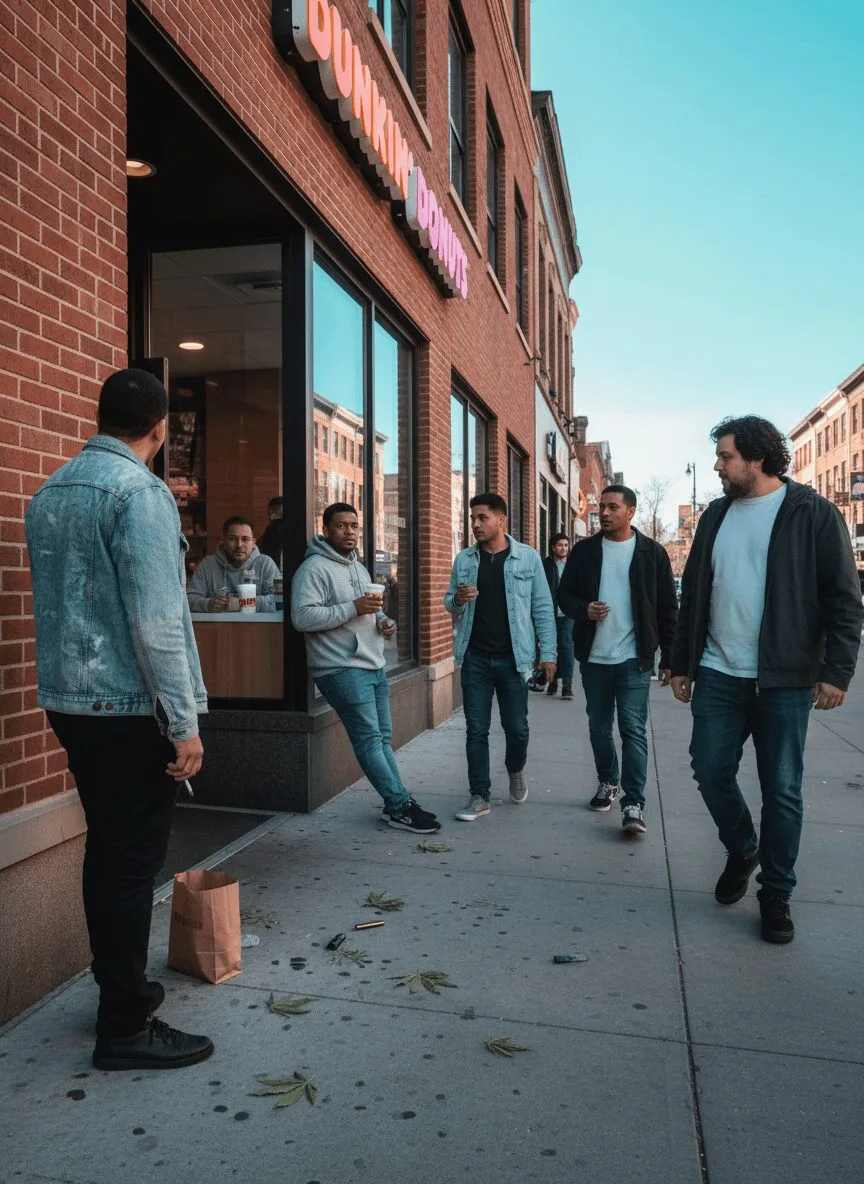
On April 1, 2026, the University Heights Dunkin Donuts off Cedar Road became the center of a brazen midday robbery. According to Cleveland.com, two masked individuals entered the store, brandishing firearms at employees and customers. Witnesses said the robbers demanded all cash from the registers and a supply of prepaid cards. Surveillance footage shows several people outside the store at the time, some appearing unaware of the incident inside. Police reports indicate one suspect was seen leaving with a prominent paper Dunkin bag, another clutching what appeared to be vape products, hinting at the melding of donut runs and cannabis-friendly habits. No serious injuries occurred, but staff and patrons were visibly shaken. The suspects reportedly fled on foot toward South Green Road. University Heights Police collaborated with county law enforcement and nearby businesses, combing security video for leads. As of press time, investigators continued to pursue multiple strong leads. This
Dunkin Donuts robbery
quickly became the talk of social media, sparking questions about changing neighborhood dynamics and the visible presence of cannabis around traditional retail spaces—illustrating how rapid changes at local dispensaries can impact community perceptions, much like what was observed during the fresh start of major dispensary reopenings in other neighborhoods.
Expert Analysis: Cannabis Culture, Community Impact, and Industry Insight
From a cannabis industry view, there’s no shortage of cultural overlap between coffee culture and cannabis, but that’s not an automatic invitation for crime. Dr. Heather Richardson, policy analyst at NORML, shares, “Linking every retail crime to cannabis reflects outdated fears. Legalization often improves safety by moving cannabis out of the shadows, just look at stats from states like Colorado.” Still, the Dunkin Donuts robbery shows why nuanced perception is crucial. Law enforcement and retail groups like the National Association of Chain Drug Stores highlight that increased visibility of cannabis accessories—vape pens, green leaves, even casual joints—sparks debate about normalcy versus risk. But most academic reviews, such as the Brookings Institution’s in-depth work, note that legal access does not correlate with increased violent crime. In fact, neighborhoods with responsible retail integration often see safer, more connected communities. The
Dunkin Donuts robbery
may simply reflect broader retail crime, not a cannabis-driven spike. These shifting perspectives mirror debates unfolding elsewhere, such as in North Carolina, where evolving cannabis policy is re-shaping community conversations across the region.
Looking Forward: Community Resilience & Cannabis Normalization
The Dunkin Donuts robbery jarred Northeast Ohio, but it’s just one snapshot in a fast-changing American scene. As cannabis becomes mainstream, neighborhood life adjusts. Regulatory improvements—like those piloted in Oregon and Illinois—raise safety standards and foster public acceptance, according to Leafly’s recent policy analysis. Dispensaries, cafes, and convenience outlets can work together to craft smarter, safer communities where people enjoy both donuts and dynamic cannabis culture without fear.
Looking ahead, open-minded conversations, clear-headed regulation, and real-world safety strategies will help turn high-profile moments like the Dunkin Donuts robbery into catalysts for connection and reform. While crime stories grab headlines, the bigger takeaway is how much healthier, more integrated, and socially mature the cannabis sector is becoming as it teams with mainstream retail and community living.
Originally reported by: cleveland.com