Buffalo Niagara Airport Marijuana Seizure: Shocking Arrests
If you’ve followed cannabis industry news lately, you’ve seen the headlines: the Buffalo Niagara Airport marijuana seizure has everyone talking—and for good reason. With shifting laws, evolving attitudes, and a vibrant underground market, airport busts like this bring important issues into focus. Right now, as legalization and enforcement clash coast-to-coast, this Buffalo Niagara Airport marijuana seizure serves as both a reality check and a rallying point. Buckle up—we’re diving into the facts, the fallout, and what the future holds for consumers, travelers, and the industry as a whole.
Legal Landscape: Why Airport Cannabis Seizures Still Make Headlines
The current U.S. cannabis market is a patchwork quilt, legal here, not there, and always complicated at the federal level. According to the National Conference of State Legislatures, 24 states have legalized recreational marijuana, while it remains illegal federally and in much of the Midwest. This creates confusion, and risk, for cannabis users traveling between states, especially by air. The Transportation Security Administration (TSA) officially maintains that possession of cannabis, even for medical use, is prohibited on aircraft due to federal law. When it comes to airports like Buffalo Niagara, located close to the U.S.-Canada border and serving a mix of travelers from different legal jurisdictions, busts are not just possible, they’re inevitable. Social attitudes, meanwhile, are softening, with a Pew Research poll reporting that nine in ten Americans support cannabis legalization in some form. For travelers who are concerned about federal and state law confusion, recent Supreme Court decisions concerning marijuana further illustrate the ongoing legal complexity across the U.S. But outdated laws, patchy enforcement, and local priorities keep the story far from simple, and travelers in a high-stakes game of hide-and-seek with airport security.
A Closer Look: The Buffalo Niagara Airport Marijuana Seizure Unpacked
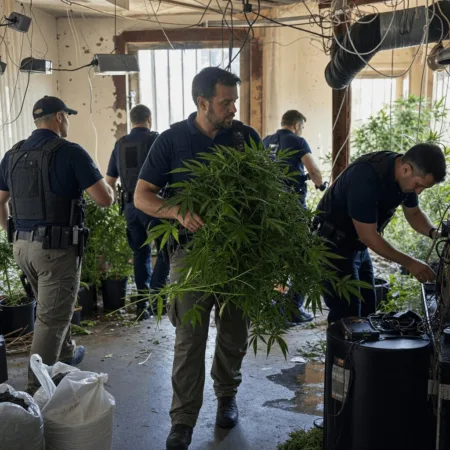
The recent Buffalo Niagara Airport marijuana seizure, as reported by major news outlets, saw law enforcement intercept over 200 pounds of cannabis inside checked luggage during a routine baggage screening just days ago. According to official police reports, three suspects, ranging in age from their early 20s to mid-40s, were arrested on felony possession and intent to distribute charges. The marijuana was tightly packed in vacuum-sealed bags and stashed in several suitcases, a classic move for those hoping to outsmart modern-day scanners. As this incident follows a growing number of similar events nationwide, it stands alongside other headline-making busts like the Bloomington cannabis cash seizure, showing just how aggressively authorities pursue large-scale trafficking cases. Local authorities teamed up with state police and customs officials, citing regional anti-trafficking statutes. The suspects were promptly arraigned and held pending further legal proceedings, with confiscated cannabis valued at over half a million dollars. As law enforcement put it, this Buffalo Niagara Airport marijuana seizure underscores the “zero tolerance” policy that remains in effect at New York airports, despite state-level legalization for recreational use. Because cannabis remains illegal at the federal level, transporting hefty quantities across state or national borders is prosecuted aggressively, especially at major air transit hubs.
Industry Perspective: What This Bust Means for Cannabis—and for You
This Buffalo Niagara Airport marijuana seizure is more than just a headline, it’s a reminder that old-school prohibition meets new-school cannabis commerce in unpredictable ways. According to veteran policy analyst Sarah Hershberger, featured in Leafly’s regulatory news desk, “As long as cannabis remains federally illegal, multi-jurisdictional confusion will persist. Travelers are caught in the middle, no matter how liberal their home state laws may be.” The cannabis industry has called for clearer guidelines: transport and possession rules need harmonization, especially in regions where state and federal boundaries blur. These seizures also reveal that illicit cannabis trafficking remains lucrative, even as legal markets expand. The risk calculus changes when profits soar in regions with tight supply and high demand—a point echoed by recent MJBizDaily market analysis reporting robust underground activity, especially near transit hubs. For consumers and advocates, the incident signals the urgent need for sensible, unified regulation, not more confusion or punitive crackdowns. The complexity and risks for travelers resemble stories recently unfolding elsewhere, such as the Bertie County marijuana seizure, where cross-jurisdiction enforcement has raised similar concerns. Balanced against this red tape is a fast-growing mainstream acceptance. According to expert John Hudak of the Brookings Institution, “Only a truly coordinated federal approach will resolve these jurisdictional nightmares and bring policy in line with public opinion.”
Where We Go Next: Progress, Pitfalls, and a Clearer Future
The Buffalo Niagara Airport marijuana seizure reminds us that as long as laws diverge, stories like this won’t disappear overnight. But the arc of change is unmistakable. New York’s legalization push, surging market demand, and mainstream acceptance signal an industry moving—however fitfully—toward normalization. According to Forbes coverage of New York’s law rollout, each seizure or arrest catalyzes further calls for reform and smarter, safer commerce. And as legal boundaries blur, airports may just be ground zero for reform: where cannabis meets compliance, and travelers spark the next conversation. With credible advocacy, continued legislative updates, and a little luck, the green wave shows no signs of slowing down. Expect many more changes at the intersection of cannabis and travel—and hopefully, far fewer airport busts in the years ahead.
Originally reported by: yahoo.com