


Bertie County marijuana seizure: Shocking store raid details
Lately, cannabis policy and enforcement have been the buzz of the industry, with the Bertie County marijuana seizure stealing headlines. Regulatory action, retail raids, and evolving social attitudes are making waves across the Carolinas. If you care about legalization, consumer safety, or simply follow cannabis news, the recent Bertie County marijuana seizure offers insider lessons on how law interacts with the real world. We’ll break down the key details, unpack the raid, and examine what it means for the market moving forward.
The Cannabis Environment: Legal Complexity and Shifting Attitudes
The Bertie County marijuana seizure didn’t happen in a vacuum. North Carolina stands at a crossroads between old-school prohibition and today’s booming cannabis economy. Federally, marijuana remains a Schedule I controlled substance (source: DEA). However, over 20 states have legalized recreational use, and medical access is expanding across the South. North Carolina still prohibits recreational cannabis, but the legal nuances around hemp-derived products (think CBD and delta-8) have made retail enforcement a gray area. According to NORML, penalties for possession and sale remain steep. Yet, local dispensary-style shops have mushroomed, offering products in a risky legal limbo. This landscape often puts store owners at odds with law enforcement, especially when regulations on packaging, potency, and counterfeit goods are involved, a tension also mirrored in regions like Oklahoma where similar cannabis enforcement crackdowns shape future policy discussions.
From Raid to Seizure: What Unfolded in Bertie County?
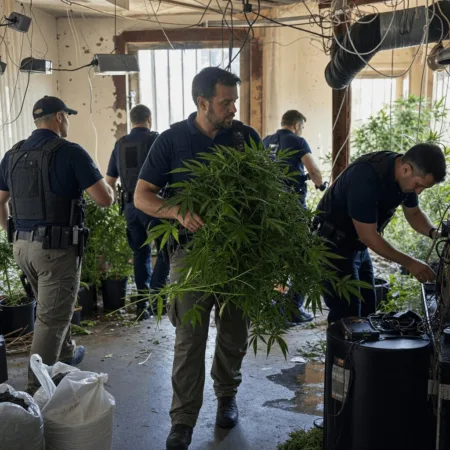
On August 23, 2025, Bertie County Sheriff’s Office conducted an unannounced raid at a local retail store, resulting in the largest Bertie County marijuana seizure seen this year. Sheriffs, citing concerns about suspected illegal cannabis sales and counterfeiting, confiscated a significant quantity of marijuana products, allegedly including both flower and edibles that tested above state-legal THC limits. According to WITN News, authorities also recovered counterfeit vapes and branded packaging materials that they argued were designed to mislead consumers about product legitimacy. The store, though unnamed in public reports, faces possible criminal charges connected with unauthorized sales, possession with intent to distribute, and trademark violations. Bertie County law enforcement emphasized their concern for public health and regulatory compliance. The incident follows similar actions statewide, part of a larger trend highlighted in Leafly’s recent review of Carolinas’ cannabis enforcement, where raids often target ambiguous hemp-derived products and gray-market retailers. The way these enforcement stories unfold locally is reminiscent of high-profile situations such as the tragic Lawrenceville case that continues to reshape the state and national cannabis debate.
Expert Insight: Regulatory Gaps, Market Risks, and Cannabis Advocacy
The Bertie County marijuana seizure exposes how conflicting laws can trap retailers and confuse consumers. Many experts believe enforcement actions like this highlight the urgent need for unified cannabis policy across state and federal levels. According to Marijuana Moment, hemp-derived products often slip through legal cracks, placing honest operators in jeopardy while fueling unregulated markets. Steve Hawkins, executive director of the US Cannabis Council, states: “We must end this patchwork system and deliver clear, nationwide rules so businesses and consumers alike can operate safely and transparently.” Cannabis Business Times points out that confusion around THC potency and counterfeit branding worsens the problem, hurting both public health and emerging legal operators. On the ground, advocates argue raids like the Bertie County marijuana seizure often hit small businesses hardest, stifling innovation without addressing the underlying causes, namely, a lack of realistic regulation and clear consumer guidance—a situation not unfamiliar to those following the wider debate about THC exposure and community education. When enforcement focuses solely on seizures, it overlooks the more effective solution: education, standardized testing, and workable licensing frameworks. Normalizing informed, legal retail practices would help prevent the confusion and risk highlighted by cases like this one.
The Path Forward: Lessons and Hope for Safer, Smarter Cannabis Policy
Despite setbacks like the Bertie County marijuana seizure, the industry is evolving toward greater safety, acceptance, and legal clarity. Consumers increasingly demand regulation—but also hope for reform that supports rather than hinders small businesses. As reported by MJBizDaily, regional pressures and business innovation are driving lawmakers to reconsider outdated policies. If North Carolina and similar states embrace equitable regulation, the next headlines could be about safer products, transparent compliance, and a thriving local cannabis economy. Big change is coming, and the Bertie County marijuana seizure will serve as both a cautionary tale and a catalyst for smarter, more just cannabis policy.
Originally reported by: witn.com