


Brownsville DPS marijuana arrest: Dramatic chase leads to bust
If you’ve been following the evolving landscape of cannabis in Texas, the recent Brownsville DPS marijuana arrest is hard to ignore. As shifting policy winds blow across the Lone Star State, every headline about enforcement versus reform draws sharp attention—especially with public attitudes and legal markets changing rapidly nationwide. This story isn’t just another episode of law and order; it’s a raw glance at how current Texas policies are playing out on streets where real lives, legal ambiguity, and the cannabis industry collide. Buckle up: this Brownsville DPS marijuana arrest is about more than seized buds—it’s about what comes next for policy, the people, and the pulse of change.
Regulatory and Social Context: Where Texas Cannabis Law Stands
To really get why the Brownsville DPS marijuana arrest matters, it helps to know Texas is still one of the stricter holdouts on recreational cannabis. Medical use is permitted only under very specific qualifying criteria as detailed on the Texas Department of State Health Services site. That means the gray area between hemp and marijuana, especially with recent confusion around THC testing and enforcement, remains thick. According to reporting from The Texas Tribune, inconsistent local practices and legal uncertainty are causing both law enforcement and civilians to second-guess right and wrong, especially in South Texas. It’s a situation that’s drawn comparisons to other states struggling with patchy implementation, notably in the Midwest, where changes like Minnesota’s evolving cannabis industry continue to shake up norms and expectations. Against this backdrop, cannabis-related traffic stops like the Brownsville DPS marijuana arrest aren’t just routine, they’re legal flashpoints with outsized consequences for real people.
Key Developments: Chase, Arrest, and Real-World Fallout
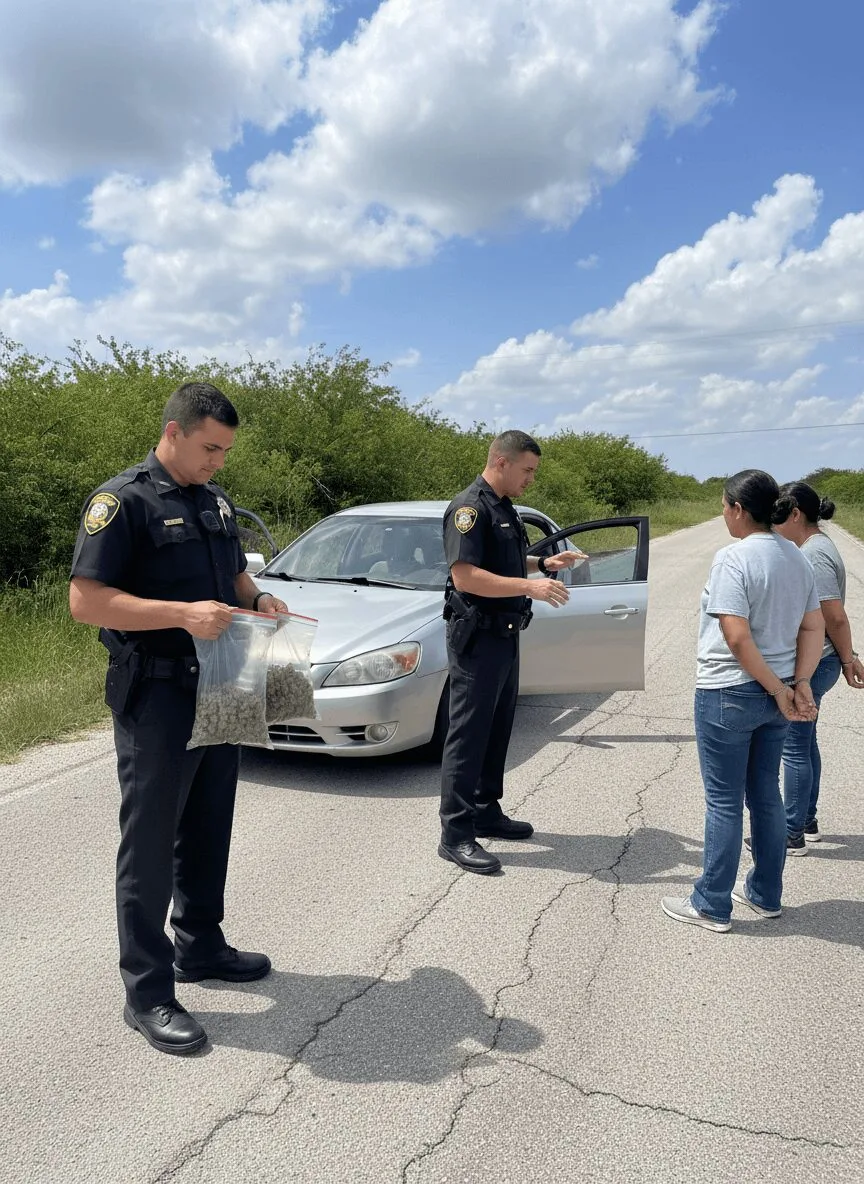
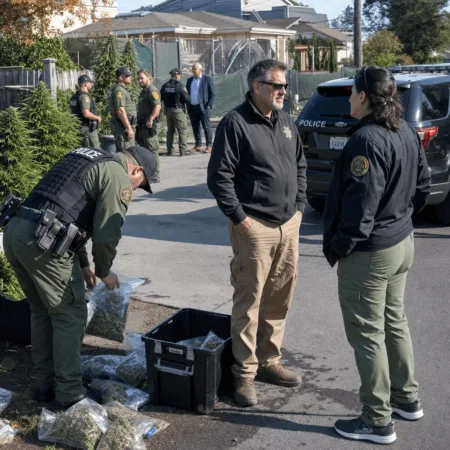
According to verified coverage directly from ValleyCentral, the incident began as a standard traffic stop on a dusty Brownsville shoulder under a big Texas sky. DPS troopers initiated pursuit when the vehicle allegedly failed to yield, leading to a short, tense chase. Recent case files from around the country show how these incidents often unfold in rapid, unpredictable ways, similar to the circumstances surrounding the high-profile THC vapes arrest after a high-speed chase in Connecticut. When the car finally stopped, officers discovered several transparent zip bags containing what’s believed to be high-grade cannabis buds, clearly visible and packaged in a way that left little room for legal ambiguity. Two local individuals, clad in everyday street clothes rather than ‘kingpin’ attire, were promptly detained, handcuffed at the scene, and placed under arrest pending investigation. Officers were seen conversing in view of open car doors, candidly assessing the scene and evidence just like you’d see in any textbook enforcement scenario. The Brownsville DPS marijuana arrest underscores how, even as national markets embrace legalization, street-level enforcement in Texas remains a story of tangible real-world impact and high-stakes uncertainty.
Expert Analysis & Insights: What This Means for Texas and Beyond
Here’s where things get interesting. Cannabis industry observers and policy analysts agree that such incidents highlight the tension between reform and legacy law enforcement. As Marijuana Moment notes, “Every traffic stop involving cannabis in places like Brownsville is a high-wire act, where one group sees routine enforcement and another sees the remnants of outdated policy.” The Brownsville DPS marijuana arrest could just as easily have involved legal products in Colorado or California, but in Texas, these stakes remain dead serious. The disconnect between local law and national momentum has real consequences, not just for individuals arrested but for broader social trust and law enforcement credibility. Many communities are experiencing their own challenges—some, like New York, have seen a dramatic rise in cannabis DWI arrests—demonstrating how evolving laws can trigger new enforcement patterns and debates. Industry veterans, like NORML’s Texas affiliate, have long advocated shifting toward decriminalization and a stronger focus on harm reduction, noting that “Policing personal cannabis possession has massive costs, financially, socially, and in terms of public trust.” These wider trends are shaping the debate far beyond this one stretch of Texas highway.
Future Outlook: Reform, Redemption, and the Next Moves for Texas Cannabis
This Brownsville DPS marijuana arrest might look like just another notch in law enforcement’s belt, but it’s actually a marker on the road toward bigger change. As more states open up regulated adult-use markets—Illinois, New York, and Arizona, to name a few (NORML’s U.S. cannabis laws overview)—the pressure is building for Texas to reevaluate its approach. Every arrest sparks conversation and, for many advocates, fuels the push for policy that reflects public opinion, economic opportunity, and social justice. While THC-rich buds still mean trouble for Texans today, the voices calling for meaningful reform get louder with every headline. Stay tuned and stay hopeful: Texas cannabis policy is changing, and cases like this—headline-grabbing as they are—just might be the catalyst needed for a fairer, freer, and smarter approach statewide.
Originally reported by: valleycentral.com
1 Comment
Pingback: Decorah Police marijuana report: Updates & Shocking Details