





Boones Mill cannabis hearing: What Really Happened?
Right now, the cannabis landscape is shifting fast—especially in small-town Virginia. The recent Boones Mill cannabis hearing gives us a front-row seat to the real-world obstacles local communities face. Despite Virginia’s push toward legal cannabis, only two people showed up to weigh in on retail sales in Boones Mill. Yeah, two. This story isn’t just about turnout; it’s about what happens when local policy, community attitudes, and business potential collide in today’s cannabis industry. I’ll break down what went down at the Boones Mill cannabis hearing, why it matters right now, and how it fits into broader trends shaping the future of legal weed in America.
Virginia’s Changing Cannabis Scene: Regulatory and Social Challenges
It wasn’t long ago that Virginia flipped the script on cannabis, legalizing personal possession and home cultivation in 2021 (Virginia Department of Health—Cannabis Regulation). Commercial retail, though, has stalled in the General Assembly. Local municipalities like Boones Mill are left to decide whether to welcome cannabis sales, stall them, or ban them outright. Many local boards schedule public hearings before new ordinances take root, giving residents (and would-be business owners) a direct channel to shape the rules on their own turf. But social attitudes lag behind legal developments, as people in rural areas often remain cautious—sometimes motivated by stigma, sometimes mistrust, and sometimes just lack of information. Boones Mill’s cannabis hearing illustrates how state-level law doesn’t always translate into high community engagement, especially outside city centers. Still, as coverage in The New York Times documents, the dialogue is changing as more Virginians explore the economic upsides of regulated markets (think jobs, tax revenue, legal clarity), even if old-school skepticism holds on. Towns across the U.S. have faced parallel hesitations, and similar situations have appeared in other states—like when Maine hosted their own divisive marijuana referendum (see this look at Maine’s evolving cannabis policies), underscoring persistent questions about public trust and information gaps.
Boones Mill Cannabis Hearing Recap: Core Facts and Local Drama
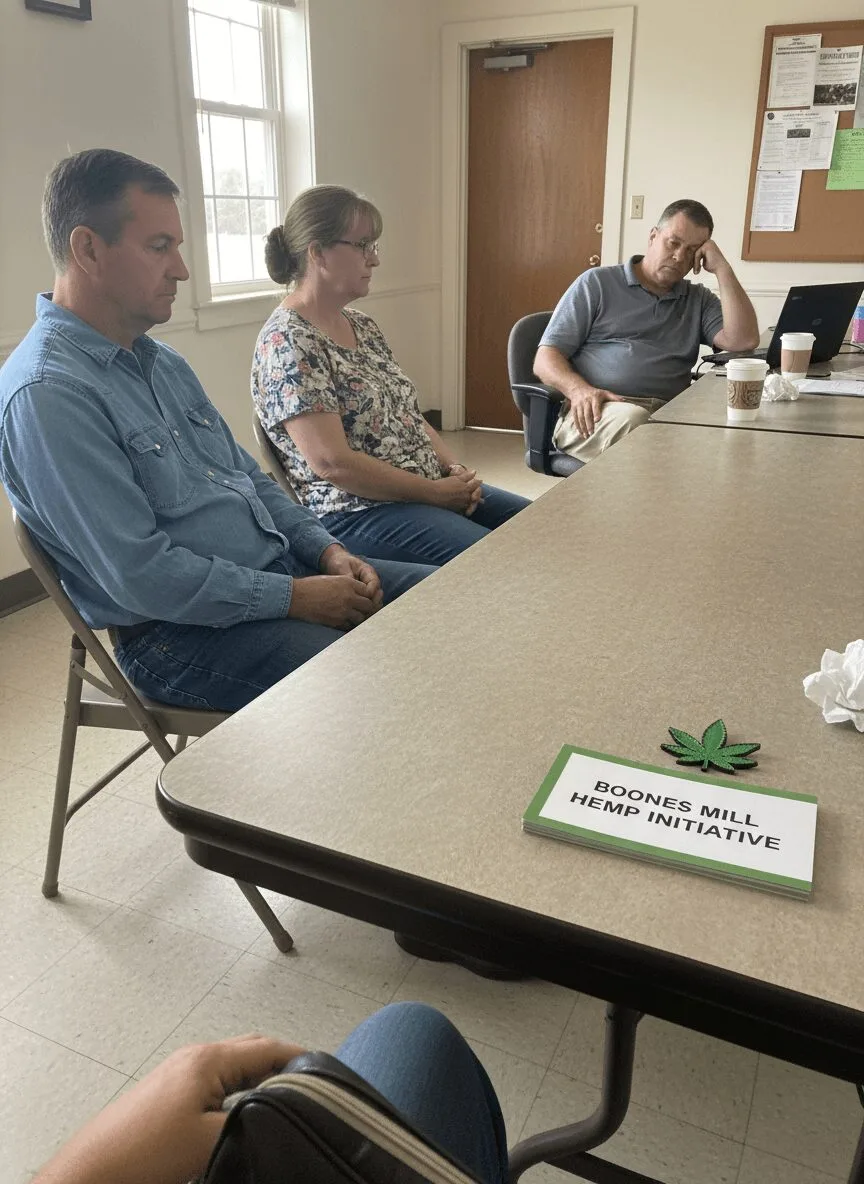
The Boones Mill cannabis hearing, held on January 14, 2026, was scheduled to gauge local sentiment regarding cannabis sales in the town’s limits (Cardinal News). Despite plenty of public notice, just two community members turned out—one in favor, one raising concerns. The board’s official, stationed behind a long table, couldn’t help but look bored as the hour ticked by. No business lobbyists, no organized opposition, just a classic small-town moment. The town’s leadership mulled over indicators like neighboring counties’ approaches, opinions from the Virginia Association of Counties (VACo), and state trends. The hearing didn’t lead to an immediate vote, but it set the stage for further debate. According to Virginia Mercury, many localities remain stalled by similar engagement problems, demonstrating how legal change outpaces community readiness. Municipalities wrestling with sluggish resident involvement, as seen in cities like Mansfield reaping tax benefits from legal cannabis (recent cannabis tax revenue surges in Mansfield), suggest that public participation may eventually shift as economic interests rise.
Expert Insights: Why These Quiet Hearings Matter
As small as the Boones Mill cannabis hearing crowd was, these local discussions shape the industry’s future. The slow pace isn’t unique—Missouri, Maine, and New Jersey have seen comparable scenes after legalization, as documented by the Marijuana Business Daily. The issue, according to NORML Policy Analyst Jax Williams, is about translating state reforms into local buy-in. “Getting from lawbooks to Main Street takes more than a signature, it’s about real conversation, sometimes awkward, sometimes inspiring, at public meetings like Boones Mill’s,” says Williams (NORML Blog). This kind of turnout reflects the ongoing challenge of dispelling old stigmas and explains why even legal states see patchwork retail rollouts. Hearings like Boones Mill’s may be anticlimactic, but they’re also where rubber meets the road. The upshot? Each of these sleepy town hall moments is a data point—and an opportunity to move the conversation forward. The more these meetings happen, the more normalized the topic becomes, paving the way for real, regulated access. As the national industry continues to evolve, questions surrounding new rules and major changes—such as those impacting medical marijuana regulations—remain just as relevant (read about the changing landscape of medical marijuana policies here).
The Road Ahead: Turning Low Turnout Into Real Change
Boones Mill cannabis hearing may not have packed the room, but its effects ripple out. Every small town that pauses to weigh cannabis legalization—however quietly—shows how far the conversation has come since prohibition days. The path to widespread retail access isn’t always smooth or flashy. Still, as more hearings pop up across Virginia, public dialogue will undoubtedly follow (sometimes slower, sometimes blazing). According to Leafly, the state’s evolving approach is creating more business opportunities and fostering change in public opinion. For now, Boones Mill offers a snapshot of how laws change on the ground—one community, one conversation, and, OK, sometimes just two people at a time. Stay tuned, though: today’s slow minutes might just be the prelude to tomorrow’s green rush.
Originally reported by: cardinalnews.org


