


THC Legality Police Raid: Shocking Reality Behind Store Raids
With cannabis culture booming and stores from coast to coast selling THC-infused products, the sudden news of a THC legality police raid shakes the foundation of consumer trust and business security. This matters now more than ever because the legal landscape around THC remains murky, especially as state laws change rapidly and enforcement lags behind the cannabis market. The recent wave of police raids exposes the daily tension between market innovation and outdated law enforcement tactics. In this article, we break down why the THC legality police raid phenomenon demands attention, what recent shocking raids reveal about the system, and what it all means for those passionate about positive cannabis change.
Understanding THC Legality and Police Raids: The Regulatory Maze
The debate over THC legality has created a complex web of regulation, especially across states with differing policies. While NORML and other advocacy groups report that dozens of states now allow some type of cannabis product, confusion persists around synthetic THC, hemp-derived products, and federal drug scheduling. In most states, even if CBD is legal, products containing delta-8 or delta-9 THC can trigger enforcement.
This conflict is further fueled by the lag between legal reform and police practice. According to Marijuana Moment, store owners may rely on state-approved loopholes, believing they’re in full compliance. Yet, as police raids show, law enforcement sometimes acts on outdated interpretations or local pressures, especially where officials disagree on THC’s status. Meanwhile, the FDA clarifies that most THC remains federally controlled, leaving local authorities wide discretion.
From Kansas to California, broad police actions—despite local legalization—keep the THC legality police raid debate hot and highlight a nationwide struggle between progress, confusion, and enforcement over cannabis products.
The Reality of THC Legality Police Raids: Key Facts and Recent Events
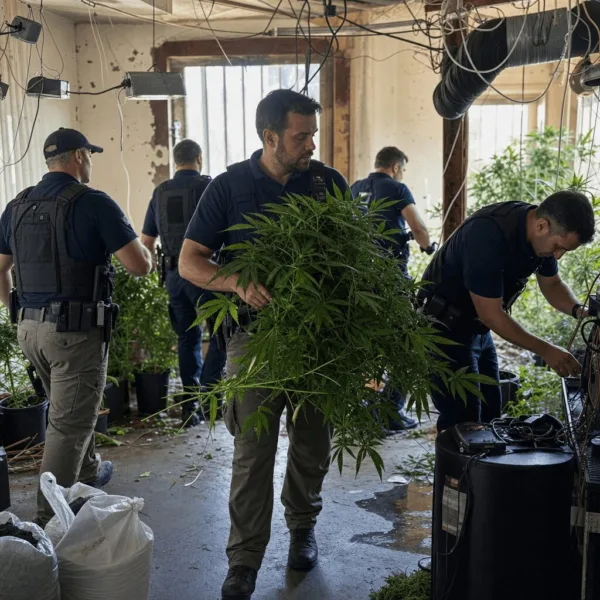
Recent events in Marion, Kansas, exemplify the chaos surrounding THC store raids. According to the Marion Record, a local retailer reintroduced THC products after an earlier police seizure. Even with apparent legal status under state hemp guidelines, law enforcement returned, seizing product and threatening charges. The shop, owned by Bryan Evans, had complied with prior police directives, only to find the legal ground shifting beneath their feet.
Police maintain that any level of THC—delta-8 or otherwise—remains illegal in Kansas, despite conflicting opinions from state regulators and legal counsel. In the reported incident, officers raided the store again in May 2024, just weeks after its reopening. Evans, frustrated but resilient, pointed to his documentation that products met Kansas’s hemp definitions, yet was again forced to prove legality at his own expense.
This THC legality police raid drama highlights the lack of clear, reliable regulatory guidance. According to Leafly News, similar confusion plagues businesses in multiple states, with one jurisdiction’s blessing and the next county’s crackdown. The result: businesses and consumers are stuck in a dizzying cycle of opening, closing, and reopening—all while local police cite vague statutes and inconsistently enforced rules.
Expert Analysis and Insights: Navigating the THC Legality Police Raid Dilemma
So what does this all mean for the cannabis community and those following the THC legality police raid headlines? Here’s where deep industry perspective is crucial. The current situation reveals a system straining under its own contradictions. States like Kansas lag in aligning their enforcement with evolving consumer demand—and business owners carry the burden.
Jane West, industry advocate and founder of Jane West Enterprises, recently told Forbes: “I’ve seen first-hand the harm done to small businesses because enforcement doesn’t keep up with the law. It’s not just confusing—it’s devastating.” That disconnect between evolving law and inconsistent policing fuels unnecessary business risk and consumer mistrust.
Industry reports from Brightfield Group point out that while hemp-derived cannabinoids offer incredible economic opportunity, the lack of standardized rules leads to uneven playing fields, legal whiplash, and, yes, stressful THC legality police raids. The take-home lesson? Until statewide—and ideally federal—clarity emerges, businesses must be laser-focused on compliance, documentation, and open dialogue with regulators.
Looking Forward: Cannabis Liberation After THC Legality Police Raids
Despite the frustrations of THC legality police raids, the future of cannabis in America is blazing bright. Market demand continues rising, regulators increasingly study real-world science, and social acceptance is higher than ever. Responsible advocates, business owners, and informed consumers are all pushing for smarter, fairer laws—ensuring local confusion doesn’t derail industry progress. According to the National Conference of State Legislatures, more than 35 states have enacted medical or adult-use legislation, and ongoing reform at the federal level seems increasingly likely.
So while today’s THC legality police raid stories spotlight real challenges, they also fuel wider conversations and, ultimately, legislative change. As the community remains resilient and engaged, the cannabis industry’s journey toward full legality—and genuine liberation—promises to be worth every moment of the struggle.
Originally reported by marionrecord.com