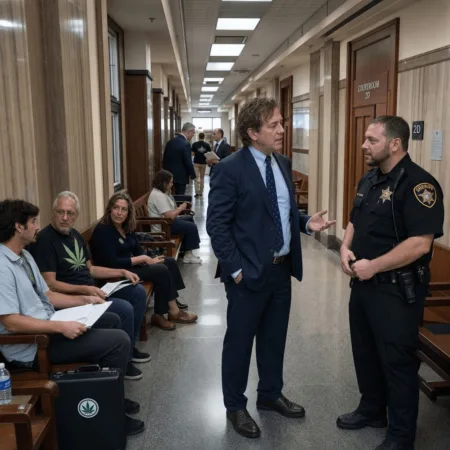
Tennessee marijuana rescheduling: What’s at Stake?
Right now, Tennessee marijuana rescheduling is lighting up conversations statewide. With shifting federal guidelines and Tennessee’s deep-rooted values in play, this discussion goes far beyond politics—it’s about people’s lives, local economies, and criminal justice. The prospect of rescheduling marijuana could change everything from jobs and taxes to medical access. Let’s unravel what’s truly at stake for Tennessee as this green debate heats up.
Tennessee Marijuana Rescheduling: Historical Context and Statewide Sentiment
To truly vibe with the Tennessee marijuana rescheduling conversation, you’ve got to know the background. Tennessee has held a famously conservative approach to cannabis regulation for decades. Medical marijuana remains highly restricted, with only CBD allowed by law if it contains no more than 0.9% THC. According to NORML, adult-use cannabis remains squarely off-limits, with harsh penalties lingering for even minor possession.
But the times, they are a-changin’. More Tennesseans now view current marijuana policy as in need of an overhaul. While over 38 U.S. states have adopted some form of legal cannabis regulation (Pew Research Center), Tennessee’s stance remains staunch. Meanwhile, states like Mississippi and Arkansas are forging ahead with various forms of marijuana reform, mounting pressure on Tennessee policymakers to act. In this landscape, reports of increased law enforcement activity provide perspective on how changing norms can influence both policy and day-to-day legal outcomes, as highlighted in current arrest data from other regions. All this means the potential for federal rescheduling could create a massive ripple effect, sparking hope and debate statewide.
Breaking Down the Recent Developments: News from Capitol Hill to Local Communities
So, let’s break down what’s new: On the national stage, the U.S. Drug Enforcement Administration (DEA) announced a proposal in May 2024 to reschedule marijuana from Schedule I (no accepted medical use, high potential for abuse) to Schedule III (accepted medical use, moderate to low potential for dependence). This move, according to NBC News, is undoubtedly the biggest change to U.S. cannabis law in more than half a century. While it falls short of outright legalization, the shift could make banking and research easier, and offer tax relief for legitimate cannabis businesses.
Turning our focus to Tennessee marijuana rescheduling, state leaders and advocates are closely watching these developments. WJHL discusses Tennessee lawmakers like Senator Janice Bowling, who acknowledge the ongoing debate yet affirm that current state laws prevail until legislative action is taken (WJHL). Stakeholders from medical professionals to criminal justice advocates are forming coalitions to push for change. In communities nationwide, discussions about evolving legalization frequently intersect with how public perceptions adapt in response to psychedelic policies, as seen in wider national movements and executive actions. This illustrates how Tennessee’s choices fit within a broader, evolving policy landscape.
Expert Insights: What Does Tennessee Marijuana Rescheduling Really Signify?
Let’s talk turkey. If you ask top cannabis legal analysts or advocacy leaders, they’ll tell you Tennessee marijuana rescheduling could be a game-changer if state lawmakers step up next. Rescheduling doesn’t flip the switch, state law takes precedence on what’s legal inside Tennessee’s borders,
points out Tom Angell, founder of Marijuana Moment. Crucially, this federal move would loosen restrictions on research, ease stigma, and pave new reform pathways.
Many in Tennessee’s medical ecosystem are hopeful that access could expand for patients with chronic conditions, particularly if internal policies evolve. Local business owners—ranging from cultivators to retailers—are tracking the potential for more equitable tax treatment and easier banking. Industry momentum is also evident in the surge of innovative investment strategies for both cannabis and psychedelics companies, echoing the growing synergy between regulation and economic opportunity. And most importantly, a 2023 statewide poll shared by Tennessee Lookout reports a growing majority in favor of medical legalization—pointing to a landscape where fresh perspectives, new business opportunities, and compassionate reform could finally converge.
The Rocky Road Forward: Realistic Hope and the Future for Tennessee Marijuana Rescheduling
Here’s the real talk: Tennessee marijuana rescheduling won’t magically solve every issue overnight. But it signals a seismic shift—one that makes further reform almost inevitable. As the country moves toward a science-backed, less punitive approach, Tennessee is poised for a more rational, compassionate policy future. Criminal justice reform, medical access, and entrepreneurship all stand to gain as the stigma lifts. With neighboring states adapting quickly, the Volunteer State’s lawmakers will face growing calls for action.
If Tennessee navigates this new era thoughtfully, matching the clarity of evolving federal law with strong local leadership, the entire state could benefit. Communities might see less incarceration, new jobs, and more health options. Whether or not you light up, Tennessee marijuana rescheduling means changes ahead for everyone. And that’s definitely worth watching, as echoed in industry analyses like those by Leafly. Stay tuned, Tennessee—the grassroots movement’s just getting started.
Originally reported by: wjhl.com