






Tallahassee marijuana trafficking: Inside the real courier case
The conversation around Tallahassee marijuana trafficking is heating up as local and federal authorities crack down on out-of-state cannabis operations. This story dives deep into the real-life courier cases that illustrate the shifting landscape of illicit cannabis transportation in Florida. With regulatory gaps, market demand, and ongoing criminal enforcement, understanding these events matters now more than ever. Here’s why Tallahassee marijuana trafficking is making headlines, and what this means for the cannabis industry, advocates, and consumers alike.
Understanding the Background: Laws, Markets, and Cannabis Culture in Florida
Tallahassee marijuana trafficking doesn’t happen in a vacuum, it’s tied to tough state laws, federal prohibition, and the ongoing clash between policy and demand. Florida’s medical marijuana program remains exclusive, according to Florida Medical Marijuana Registry, with no recreational legalization yet. This creates a persistent gap between what’s legal and what many Floridians want, pushing some to turn to out-of-state sources. National cannabis trends show higher demand in prohibition states. In Tallahassee, these factors combine with local dynamics at the crossroads of statewide and national developments. As growing attention is given to public debates on cannabis law reform, it’s notable that concerns over enforcement intensity arise every election cycle or legislative session—NORML notes that this often coincides with increased ballot initiatives. In some regions, high-profile incidents have signaled the shifting norms around marijuana seizures and law enforcement tactics—recent events in Lewis County highlight how shock, legal confusion, and social attitudes can collide.
Key Developments: The Tallahassee Marijuana Trafficking Courier Case Breaks
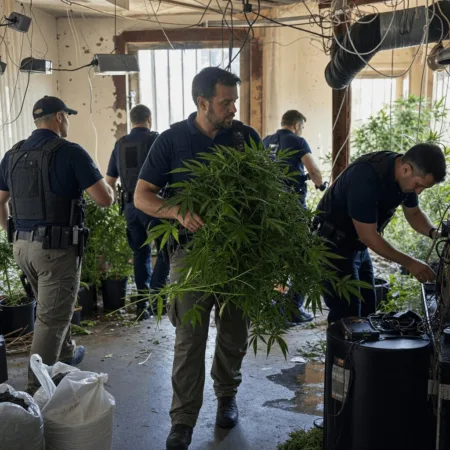
According to tallahassee.com, federal authorities have uncovered a multi-state marijuana trafficking pipeline linking California to Florida, culminating in a high-profile bust in a Tallahassee motel. On November 21, 2025, law enforcement agents arrested two suspects caught operating as couriers, allegedly moving large amounts of high-grade cannabis through city motels and local neighborhoods. Authorities seized bags of marijuana, significant cash, packaging materials, and phones loaded with encrypted messaging apps.
The operation highlights how traffickers adapt to legal gray areas, sourcing product from states where cannabis is legal and smuggling it into places with tighter laws. Investigators traced financial flows and communications between the couriers, suppliers on the West Coast, and local Tallahassee distributors. The defendants now face federal trafficking charges, and agents say the bust is part of a larger crackdown. They’re linking the case to prior similar seizures throughout 2025. According to U.S. Department of Justice press releases, federal agencies are increasingly monitoring cannabis distribution networks that use seemingly ordinary couriers to bypass both state and federal law. This kind of enforcement action mirrors trends elsewhere, such as when industry leaders are rocked by legal intervention in regulatory disputes. The result is a heightened risk for operators, even as markets and attitudes shift in favor of legalization elsewhere.
Expert Analysis and the Cannabis Advocate’s View
From the perspective of a long-time cannabis industry observer, Tallahassee marijuana trafficking cases like this one reflect years of policy whiplash and regulatory inconsistency. Cannabis remains a billion-dollar business nationwide, and as Marijuana Moment reports, the unresolved conflict between state reforms and federal prohibition creates fertile ground for black market activity.
“When high consumer demand meets slow regulatory progress, we see entrepreneurs—both licit and illicit—step in to fill the gap,” says cannabis policy expert Morgan Fox, political director for NORML. “Criminalizing this flow doesn’t address the underlying problem: Florida’s laws lag far behind the people and the market.”
The recent Tallahassee marijuana trafficking bust is both a cautionary tale and a predictable outcome in states with restrictive or ambiguous cannabis regulations. As policy debates continue, other communities are also seeing new industry developments, such as the launch of local wellness initiatives centered on legal cannabis access. As long as recreational use remains illegal in major Southeastern markets, industry observers expect more stories of interstate movement, enforcement headlines, and policy debates. Legal cannabis operators note that regulation and safe access reduce black market momentum, while hardline enforcement alone rarely eliminates consumer desire or organized trafficking.
Future Outlook: Cannabis Reform, Social Shifts & Market Evolution
Looking forward, Tallahassee marijuana trafficking cases might become relics of the past as legal reforms catch up with public will. National polling by Pew Research Center shows over 80% of Americans back some form of legal cannabis. Florida activists are already gathering signatures for new ballot initiatives, signaling future battles over full recreational legalization. When laws align with real-world use, safe, regulated markets can replace underground operations.
In the meantime, staying informed and pushing for smarter, more humane policies is key. As the cannabis community knows well, progress is rarely linear, but every headline—good and bad—pushes the conversation forward. If you care about the industry’s future, keep an eye on Tallahassee marijuana trafficking stories, because they’re barometers of where law, culture, and cannabis are headed next.
Originally reported by: tallahassee.com
1 Comment
Pingback: Illegal Marijuana Extraction Lab Uncovered in Shocking Bust