





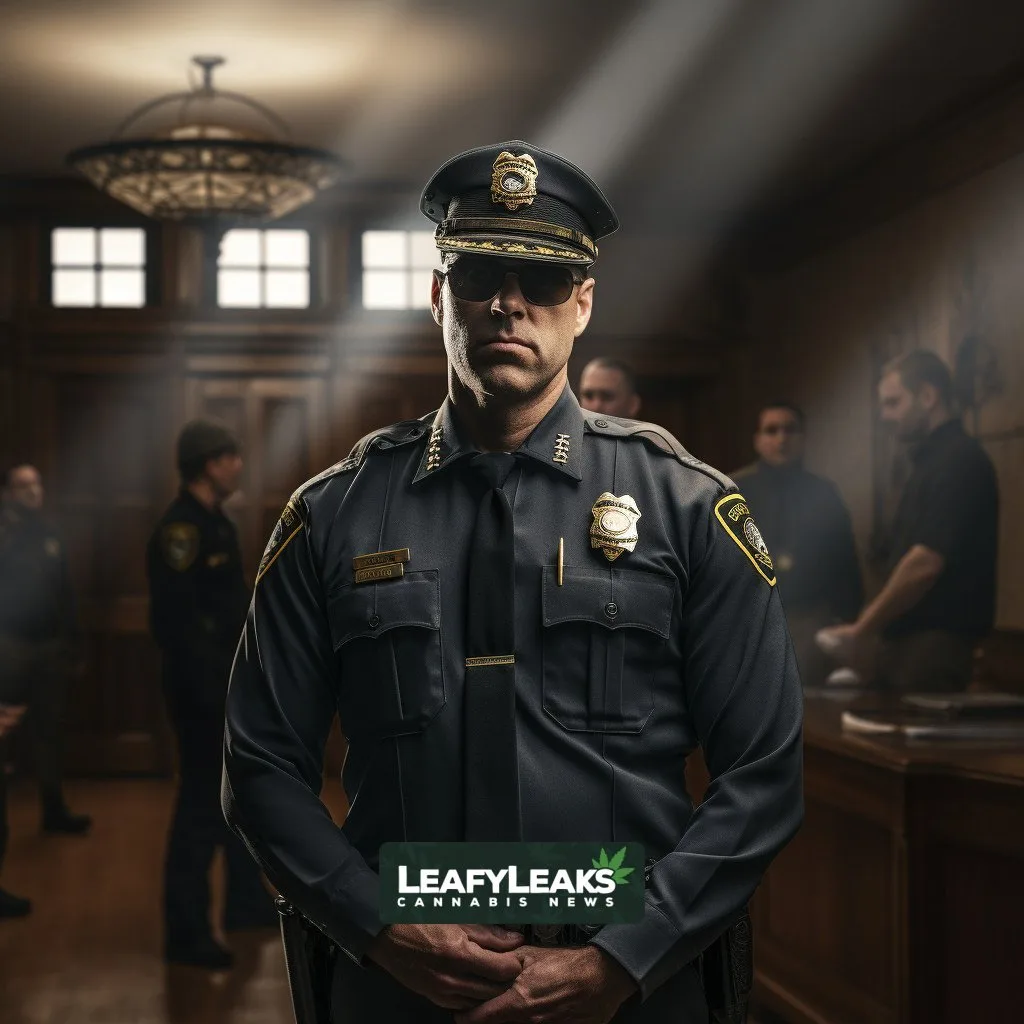
South Dakota Law Enforcement Officers Commission Offers Redemption for Cannabis Use
In a significant move, the South Dakota Law Enforcement Officers Standards Commission in Pierre has granted forgiveness to two aspiring law enforcement officers for their past cannabis use. The commission’s decision paves the way for Parkston Police Officer Kody Beckers and a future Roberts County sheriff’s deputy to become eligible for certification in the state, despite their prior encounters with marijuana.
Parkston Police Officer Kody Beckers’ Journey
For Parkston Police Officer Kody Beckers, his dreams of a career in law enforcement were jeopardized due to a seven-year-old guilty plea to THC wax possession during his college years in Minnesota. THC, the psychoactive compound in marijuana, resulted in a felony conviction in Minnesota, rendering him typically ineligible for law enforcement employment. However, Beckers managed to secure a stay of adjudication by admitting his guilt, ultimately leading to the expungement of his crime from the records. Beckers expressed remorse for his past actions and shared how he turned his life around, fueled by a desire to help people and find purpose.
Beckers’ journey to certification was not without hurdles. While his education at Minnesota Tech qualified him for law enforcement certification, the prior felony remained a significant obstacle. The Minnesota Police Officer Standards and Training Board granted Beckers a variance, allowing him to seek certification in that state. Nevertheless, in South Dakota, state law explicitly restricts certification for individuals who have pleaded guilty to a felony. In a contested case hearing before the commission, the question arose whether Beckers’ stay of adjudication in Minnesota aligned with South Dakota’s suspended imposition of sentence statutes.
After more than 40 minutes of closed executive session discussion, the commission ultimately exercised its discretion in Beckers’ favor. Recognizing the potential for redemption and the officer’s commendable efforts in Parkston, the commission decided to grant an exception. Beckers will be subjected to periodic drug testing to maintain his eligibility for certification.
Alicen Fladland’s Path to Redemption
Similarly, the commission extended forgiveness to Alicen Fladland, who aspires to become a deputy under Roberts County Sheriff Tyler Appel. Fladland had used marijuana in 2022 after obtaining a medical marijuana card through the Flandreau Santee Sioux Tribe to manage pain following knee surgery. Unaware that tribal medical marijuana cards weren’t recognized by the state, Fladland confessed her marijuana use on her certification application.
Hank Prim, the head of law enforcement training for the state Division of Criminal Investigation, vouched for Fladland’s honesty, emphasizing that without her transparency, the commission might not have been aware of the situation. Attorney General Marty Jackley, a commission member, moved for her reinstatement, contingent on submitting a new application. The commission unanimously approved the decision, paving the way for Fladland’s path to a potential law enforcement career in South Dakota.
Shaping the Future of Law Enforcement
The recent decisions by the commission reflect a willingness to consider individual circumstances and offer opportunities for redemption to those with prior cannabis-related issues seeking careers in law enforcement. As the state continues to navigate the evolving landscape of marijuana legislation, these instances provide a glimpse into how forgiveness and second chances can shape the future of law enforcement in South Dakota.


