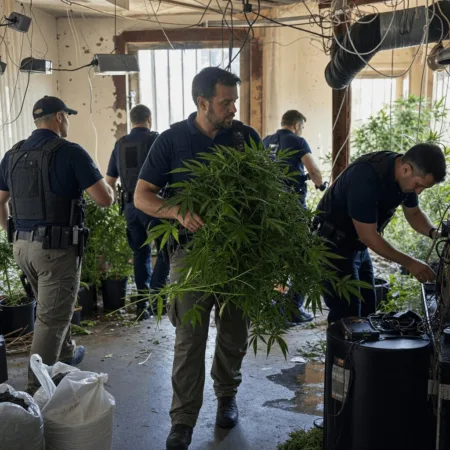
School Drug Ring Bust: Major Marijuana & THC Vape Seizure
Right now, conversations about cannabis in schools aren’t just theory—they’re making headlines. As cannabis products become more common, regulators, educators, and entire communities are grappling with a wave of real-world impacts. The recent school drug ring bust shakes up our assumptions, pushing everyone—advocates, policymakers, businesses—to reconsider how illicit youth access fits into the rapidly evolving cannabis landscape. In today’s piece, we’ll break down why this issue is making national news, what’s at stake for both public health and legality, and what this means for the cannabis industry’s path forward.
Changing Laws, School Risks, and the Bigger Cannabis Market Picture
The cannabis scene has changed fast in just a few years. Legalization and decriminalization have spread, with NORML‘s tracked expansion across the US. But one thing hasn’t changed: keeping youth access in check. It’s not only about laws; it also affects public perception and community trust, especially as new challenges emerge with market growth. In some areas, recent pushes for cannabis taxation have sparked robust discussions—just as the debate over using marijuana tax funds in local government shows how community needs shape cannabis policy responses. Regulatory agencies, like those highlighted by the CDC, continue warning about the risks of unregulated products and underage use, especially THC vapes. Meanwhile, increased demand and social normalization have created new market opportunities, drawing both legitimate entrepreneurs and black-market operators eager to participate. As popularity rises, schools face increasing pressure; they have become a focal point for questions about safety, supply, regulation, and the balance between cannabis industry growth and the safety of young people.
Inside the School Drug Ring Bust: Facts, Figures, and Fallout
On June 24th, 2024, the Orange County Sheriff’s Office in Florida broke a major case, dismantling a sophisticated operation targeting local schools—a classic example of a school drug ring bust drawing statewide attention. This was far from a small seizure. Officers confiscated over 100 pounds of marijuana flower, more than 2,500 THC vapes, and various other cannabis products. According to WFTV’s credible reporting, several suspects—some under 18—face felony charges related to intent to distribute, possession within 1,000 feet of a school, and conspiracy. Authorities revealed these products were systematically brought onto school grounds, alarming administrators and parents alike. The exceptional scale highlights a growing issue faced by educators and law enforcement. As technology makes vapes and edibles easier to hide, staff now contend with discreet exchanges and social media transactions. School-related drug investigations such as this reflect broader patterns—recent reports from the DEA and SAMHSA note increased trafficking of concentrates and vape pens in educational contexts over the past three years. This also finds echoes in criminal cases like the surge of cannabis-related arrests shaping community responses in Wyoming, putting school safety and law enforcement strategies in the spotlight.
What Cannabis Experts Say, and Why This Isn’t a Simple Story
It’s tempting to view school drug busts as evidence the cannabis industry is out of control, but key industry voices urge a deeper look. MJBizDaily maintains that regulation, not prohibition, is the best way to prevent youth access, as black-market supply thrives where gray areas exist. Industry policy consultant Chloe Joseph notes, “Clamping down on legal operators doesn’t stop illicit dealers, instead, real education, robust age gates, and responsible business practices do.” Leafly’s annual jobs report shows that the legal sector creates transparency and replaces underground dealers with legitimate jobs. Every time a school drug ring bust happens, it pushes the conversation toward smarter regulation—ensuring access with a focus on prevention programs for youth. Notably, states with legal frameworks often report lower teen usage rates, as per the CDC’s data, showing progress where regulation is paired with public health outreach. Recent public policy trends, including global discussions about law enforcement and cannabis policies, suggest the debate is far from over and requires ongoing vigilance and adaptation.
The Future: Turning Challenges Into Solutions
Each high-profile school drug ring bust is a wake-up call—for everyone from parents to industry leaders. But busts like this can fuel smarter policies, not panic. Forward-looking states are already using these incidents to argue for stricter compliance systems, more funding for campus education, and real investment in legal access over criminalization. As the cannabis industry matures, most experts see these problems as bumps—not brick walls—on the way to a more responsible, accepted future. Regulatory agencies like MPP and scientific research featured in top journals continue to spotlight solutions: education, responsible distribution, and robust track-and-trace tech. With better-informed communities, clear rules, and active partnership across sectors, even tough episodes like this school drug ring bust can end up moving the industry forward in big ways.
Originally reported by: wftv.com