Rochdale cannabis possession: What this viral photo reveals
The mainstream discussion on Rochdale cannabis possession heated up after a striking photo of relaxed city youth went viral. More than just another headline, this image has ignited renewed debate about local enforcement, social attitudes, and the real face of cannabis possession in Rochdale. With laws shifting across the UK and high-profile decriminalization experiments gaining steam in Manchester and beyond, the timing couldn’t be hotter. This deep dive explores the social signals, regulatory ripples, and public perceptions shaping the ‘new normal’ for Rochdale cannabis possession today.
Understanding Rochdale Cannabis Possession: Background & Context
Cannabis possession has always been a bit of a Rubik’s cube in the UK, and Rochdale is no exception. As The Guardian reports, class B drug status means penalties can range from a mild warning to hefty fines and even jail for repeat offenses. Yet, the social reality diverges from the black-and-white legal script. Many local police forces, including Greater Manchester Police, have leaned toward informal resolutions, particularly for first-time or low-level cases, a trend highlighted in recent data from Release, the UK’s leading center on drugs and drug law. At the policy level, Home Office directives remain cautious but cracks are showing, ongoing pilot programs in nearby boroughs experiment with cannabis caution schemes, reflecting shifting social acceptance. Meanwhile, Rochdale’s unique blend of diverse urban youth, economic challenges, and regional cannabis culture have created a local atmosphere where cannabis possession, while technically illegal, is often treated as a relatively minor community concern rather than a moral crisis. This balancing act is reminiscent of the broader American shift, such as the evolving reclassification debate, where you can see how legal frameworks adapt to public sentiment and enforcement realities.
Viral Photos, Legal Tensions, and Social Reactions: Key Developments & Issues
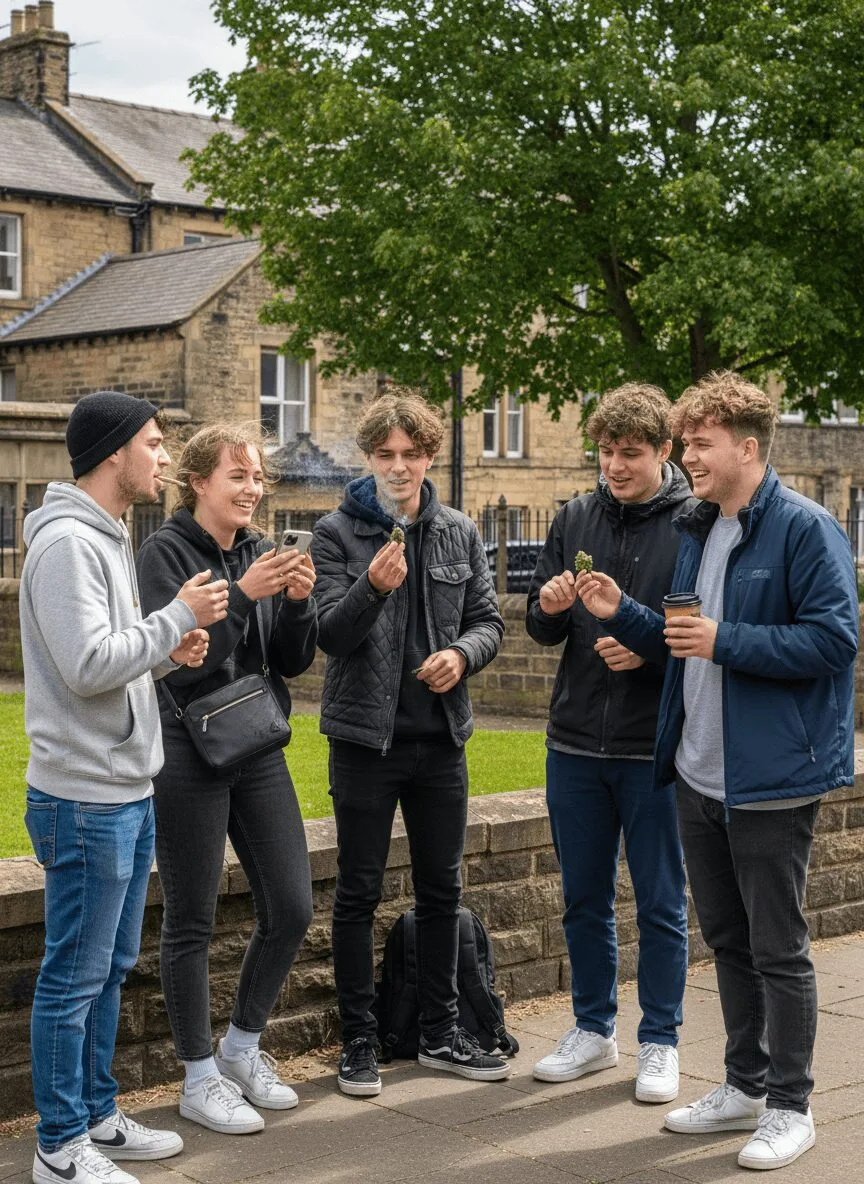
The conversation around Rochdale cannabis possession was reignited when a photo (originally distributed by YappAppNews) circulated across social media, showing a group of laid-back young adults casually socializing in a park, with cannabis visibly present. The image captured a slice of everyday life, drawing sympathy, approval, and criticism in equal measure. Police statements, reported by BBC Manchester, emphasized that, while Rochdale cannabis possession is still technically prohibited, the approach is increasingly pragmatic, warnings, community referrals, or confiscation are the norm unless aggravating factors apply. Local community leaders acknowledged a recent uptick in reported cases (as of early 2024), reflecting the broader rise in cannabis use among 18-24 year olds, according to ONS national crime data. Following the viral post, several youth advocacy groups used the opportunity to call for more sensible local drug policy, citing examples from successful de facto decriminalization zones in London and Bristol. It’s interesting to note how, in other communities as well, public parks have become ground zero for debates on cannabis, much like the recent policy debate over cannabis bans in West Hartford local parks. The town council, while reaffirming legal boundaries, promised an upcoming review of policing priorities and harm reduction strategies, echoing the national trend towards evidence-based reform.
Expert Analysis, Community Voices, and the Everyday Reality: Rochdale Cannabis Possession
For cannabis advocates and industry watchers, Rochdale cannabis possession is a microcosm of the UK’s larger policy tug-of-war. Experts like Steve Rolles of Transform Drug Policy Foundation argue, “Photos like these remind us that real cannabis use happens in social, open settings, not in the shadows of criminal intent.” The normalization of casual cannabis possession in Rochdale reflects two powerful trends, shifting generational attitudes and a growing law enforcement focus on true harm minimization. Recent surveys by Volteface indicate strong support among young adults for cannabis reform, and even cautious approval from many parents and educators, provided harm-reduction measures are in place. Meanwhile, #SaferCommunities advocates point to places like Canada and parts of the US, where decriminalization has sharply reduced youth criminalization without driving up public disorder, supporting Rochdale’s move toward a more proportionate response. The need for thorough cannabis education is also echoed by groups actively seeking to change minds and reduce stigma at the community level. As Rolles notes, “Prohibition hasn’t worked, smart, compassionate policy is the future.”
Future Outlook: Opening Doors to Sensible Rochdale Cannabis Possession Policy
What happens next in Rochdale cannabis possession policy? Signs point to incremental reform, shaped by local realities and growing public support. With major UK parties quietly studying international models, and The Lancet (see here) recently highlighting the benefits of evidence-based cannabis regulation, the path ahead is clearer than ever. Rochdale, like many UK towns, is at a crossroads: continue the old tug-of-war, or embrace a future where cannabis possession is recognized as a health and social issue rather than a criminal one. The viral photo may fade from timelines, but its message lingers: real change is sparked by honest depiction, open debate, and a growing sense that Rochdale cannabis possession is about more than a plant—it’s about the lives and wellbeing of our own communities.
Originally reported by: facebook.com