






Riverview Correctional marijuana seizure shocks facility staff
If you’ve been following cannabis news lately, you know this industry is at a seismic moment. But the recent Riverview Correctional marijuana seizure just reset the conversation. With more states embracing reform, yet cannabis still labeled contraband in some environments, this incident is a lightning rod for debate. Today, we’re unpacking why this story is catching the eyes of not just prison officials, but the entire cannabis community, lawmakers, and everyday folks who care about evolving drug policy.
Cannabis Contradictions: Evolving Laws, but Patchwork Realities
The Riverview Correctional marijuana seizure is a headline-grabber because it spotlights the legal limbo that cannabis occupies in the U.S. On one hand, state-regulated adult use and medical markets have blossomed, with places like New York where Riverview is located, forging ahead with progressive laws. Yet, the federal government continues to list cannabis as a Schedule I substance. Correctional facilities, bound by both state and federal legal frameworks, prohibit any cannabis presence, regardless of state trends or public opinion shifts.
Socially, weed’s reputation has come a long way. Dispensaries are now part of local economies and billions flow in legal sales, according to NCSL. But inside institutions like Riverview, old-school zero-tolerance takes precedence, a reminder that legalization is anything but universal. As some states pursue new regulatory models, the need for a unified approach to hemp THC regulation is increasingly discussed. The tension between modern policy and correctional policy is why the Riverview Correctional marijuana seizure story resonates.
The Seizure Itself: What Went Down at Riverview Correctional
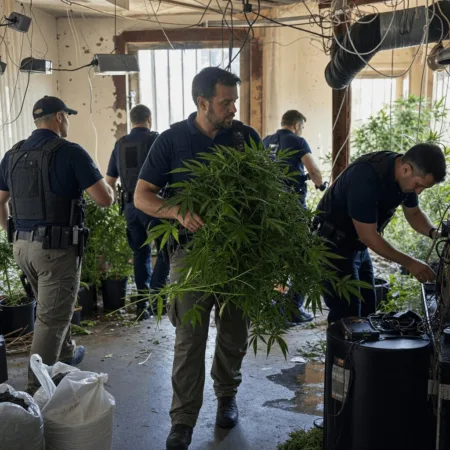
Let’s get into the nitty-gritty. On April 16, 2026, officers at Riverview Correctional Facility confiscated over two pounds of cannabis, making it one of the largest such take-downs reported in the facility’s recent history. Sources including WWNY TV confirm that facility staff uncovered the stash during a targeted operation inside the complex’s controlled environment. Correctional officers responded with swift action, following protocols and securing evidence in line with New York State Department of Corrections policy.
According to facility officials, the marijuana was discovered inside a secure area, raising questions about possible smuggling methods and broader security issues. Authorities are investigating the source and intended recipients, but have so far withheld names to protect the integrity of the probe. Recent high-profile criminal justice stories, like major sentencing news shaking up local communities, put such events in broader perspective. The Riverview Correctional marijuana seizure sparked concern among staff and was quickly relayed to correctional unions and state oversight bodies for review.
Expert Analysis: What This Seizure Means Beyond the Prison Walls
The Riverview Correctional marijuana seizure isn’t just headline fodder, it’s a real-world example of cannabis policy complexity. Cannabis law expert and advocate Paul Armentano of NORML explains, “While cannabis is legal in many contexts, institutions like prisons remain holdouts for the drug war approach. Incidents like these show the clash between old and new.” Industry publications, including MJBizDaily, repeatedly note that the legal gray zones in correctional policy can complicate the rollout of reform.
Supply chains and evolving consumer expectations often collide with outdated enforcement. For instance, the complex landscape seen in some East Coast states mirrors recent significant changes in Ohio’s dispensary laws and owner reactions. When large seizures occur in a progressive state, it signals that broader system updates are overdue. “The fact that people are risking so much to move cannabis inside prisons says a lot about access, demand, and policy contradiction,” says a recent Leafly op-ed.
Looking Forward: Reform Momentum and Cannabis Normalcy
Despite the drama of the Riverview Correctional marijuana seizure, the collective movement toward sensible cannabis laws keeps rolling. States continue to update rules to better reflect reality, with panels such as the NYS Office of Cannabis Management advising on best practices. Lawmakers and industry leaders are increasingly recognizing the folly of patchwork bans. For every incident like Riverview, there’s a groundswell of advocacy stirring for smarter, safer, and more consistent policies across all institutions.
As social acceptance grows, supported by credible outlets such as Pew Research, it’s likely that even the most conservative systems will adapt. The industry’s future is more open, more educated, and more compassionate than ever before.
Originally reported by: wwnytv.com

1 Comment
Pingback: Virginia driving while high: What you must know right now