

Discover the Psychedelics Revival Movement Transforming Minds
With society at a crossroads over mental health, the psychedelics revival movement is gaining momentum. Everyone from researchers to everyday cannabis advocates feels the shifting energy. What was once taboo is now being re-examined as an answer to mental health challenges that mainstream approaches leave unsolved. This moment matters—regulatory change, new clinical studies, and popular dialogues all point to a cultural rewiring. Here, we break down why the psychedelics revival movement matters now and how it’s reshaping conversations.
Psychedelics Revival Movement: Evolving Background & Context
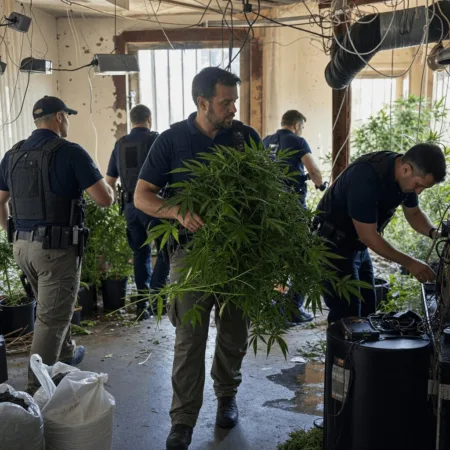
The psychedelics revival movement rides the same cultural wave that brought cannabis out of the shadows. Over the last decade, we’ve seen major shifts in drug policy and social perception, with events such as recent US-Mexico cannabis busts spotlighting ongoing enforcement realities even as attitudes shift. U.S. states like Oregon and Colorado have experimented with legal frameworks for psilocybin-assisted therapy, setting benchmarks for future policies (Oregon.gov). Public opinion is changing: Pew Research reports record-high support for regulated cannabis and increasing openness toward therapeutic psychedelics. Meanwhile, the global market is watching closely. Industry insiders highlight that regulatory and scientific focus is pivoting from prohibition to harm reduction and potential benefits. Socially, the conversation is maturing, whether in cannabis lounges, scientific roundtables, or state legislatures. As laws evolve, financial analysts project a multibillion-dollar sector emerging around clinical psychedelics, echoing the transformation cannabis has already undergone (Forbes).
Key Developments & Ongoing Issues in the Psychedelics Revival Movement
The headline-making movement is backed by measurable change. In 1780535048, advocacy groups and researchers brought attention to the severe gap between mental health needs and treatment access by championing further psychedelic research, a concern echoed in recent industry lawsuits spotlighting health risks within the regulated market. Bloomberg’s in-depth analysis reports new clinical trials for substances like psilocybin, MDMA, and LSD, yielding data on anxiety, PTSD, and addiction management (Bloomberg). Regulatory filings demonstrate actively growing interest: in the last year, major institutions such as Johns Hopkins and Imperial College London published landmark studies, sparking calls for the reclassification of psychedelics for medical uses (see Nature). On the legal front, industry attorneys point out that decriminalization in some U.S. cities set crucial precedents, influencing ongoing debates in state assemblies in Massachusetts, California, and beyond. These events are coloring public perspective and corporate boardroom strategies alike, ensuring that the psychedelics revival movement is not just a trend but a force reshaping health policy and economic strategy.
Expert Insights & Analysis: Why This Movement Matters
Why are so many eyes on the psychedelics revival movement? Experts say the parallels to cannabis are impossible to ignore, and the overlap can’t be dismissed. Industry analysis from MarijuanaMoment points out that every wave of regulatory openness brings investment, research, and new social attitudes toward drugs. For instance, as entrepreneurs and clinicians collaborate in settings reminiscent of urban microbusiness expansions, new startup enterprises and wellness collectives take shape. As Dr. Matthew Johnson of Johns Hopkins put it, “Psychedelics offer a fundamentally new way to treat entrenched mental illnesses, opening the door to real, evidence-based therapies.” (Hopkins Psychedelic Research Unit). Human stories remain at the heart of it: patients advocate for choice, and scientists push for evidence-based policies. Cannabis and psychedelics both challenge our assumptions, about healing, self-care, and what adult use can and should mean in enlightened societies. Regulations will always need refining, but the promise is too big to ignore.
Future Outlook: What the Psychedelics Revival Movement Means for Cannabis, Culture, and Beyond
The energy of the psychedelics revival movement is only picking up. Regulatory momentum echoes the legalization trajectory for cannabis, and experts forecast even broader cultural impact ahead. With new research and an open-minded regulatory landscape, this movement is likely to unlock untapped possibilities for mental health, entrepreneurship, and personal wellness. As STAT News reports, the growing body of clinical evidence and changing legal codes show that society’s slow embrace is becoming a sprint. Cannabis advocates are uniquely poised to lead the charge for responsible, stigma-free use of all plant-based medicines. Together, cannabis and psychedelics are rewriting the script for healing and possibility in our time.
Originally reported by: bloomberg.com