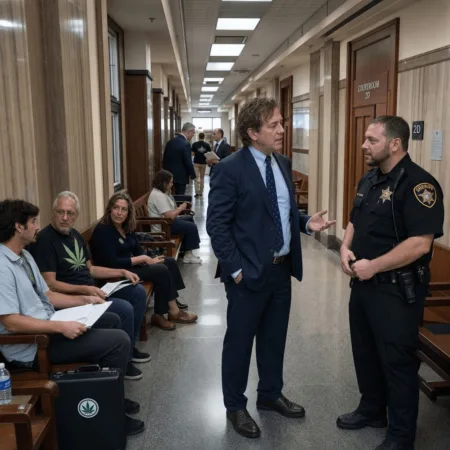
Marijuana Funding Cut: Unveiling the Battle Over Federal Dollars for Cannabis
Hey there, fellow cannabis enthusiasts! Buckle up as we dive into the latest buzz surrounding the world of marijuana. In this blog, we’re going to unpack the intriguing details of a controversial bill that’s causing quite a stir – the so-called “Marijuana Funding Cut.” Yep, you heard it right! We’ll break down what it means, why it’s happening, and even throw in some Q&A to keep you in the loop.
What’s the Deal with the Marijuana Funding Cut?
Picture this: A congressman from North Carolina, U.S. Rep. Chuck Edwards (R-NC), comes out swinging with a bill aimed at reducing federal funding to states and tribes that dare to legalize marijuana. It’s like a game of tug-of-war for cash, with the winner taking it all – or at least a significant chunk of it.
Unpacking the Stop Pot Act
Dubbed the “Stop Pot Act,” this controversial legislation has quite the agenda. Rep. Edwards wants to withhold a solid 10 percent of federal highway funding from any state or tribe that thinks legalizing recreational marijuana is a cool idea. Bold move, right? The bill asserts that jurisdictions allowing adult-use cannabis are disrespecting federal law.
Edwards doesn’t hold back, stating, “We can’t just let states and tribes go off script and do their own thing. Federal funds shouldn’t be handed out to those who don’t play by the rules.” He believes that during these challenging times, when communities are grappling with crime and mental health issues, the Marijuana Funding Cut could help in curbing drug access and easing the burden on law enforcement.
Clash of Sovereignty and Responsibility
Now, here’s where it gets interesting. Rep. Edwards published an op-ed in Cherokee One Feather, where he cautioned a tribe in his home state against embracing adult-use legalization. The tribe, known as the Eastern Band of Cherokee Indians (EBCI), was all set to vote on a referendum for marijuana legalization. Edwards’s take? Selling cannabis on tribal land would be irresponsible, and he’s determined to put a stop to it.
The EBCI Principal Chief, Richard Sneed, didn’t mince words when responding. He noted that Edwards’s words overstepped boundaries. It’s a non-Indian elected official meddling in tribal matters. Sneed’s point? Let the tribe handle its business independently.
A Ripple Effect Across the Nation
If this bill becomes law, it won’t just impact North Carolina’s Indigenous people. It’s a domino effect – many states, where almost half of the U.S. population resides, could feel the financial pinch. And let’s not forget about tribes in other states already venturing into the world of cannabis.
Here’s an interesting twist – two organizations have given a thumbs-up to the bill: the prohibitionist group Smart Approaches to Marijuana (SAM) and the Christian Action League. Their argument? Today’s marijuana isn’t the Woodstock Weed; it’s highly potent stuff wrapped in appealing packaging. They link the legalization movement to mental health and addiction problems, particularly in communities of color and among young folks.
The Q&A: Your Burning Questions Answered
- Q1: Why is this bill gaining so much attention?
- A1: The Marijuana Funding Cut bill has stirred the pot (pun intended) by targeting federal funding for states and tribes that legalize marijuana. It’s a battle between state sovereignty and federal law.
- Q2: How might this impact marijuana-legalizing states?
- A2: The bill could lead to reduced federal funds, affecting infrastructure projects that depend on highway funding. It’s a financial tug-of-war, folks.
- Q3: Who supports the bill and why?
- A3: Organizations like SAM and the Christian Action League are on board, concerned about the potential impact of potent cannabis products on mental health and addiction.
In a Nutshell
So there you have it – the lowdown on the Marijuana Funding Cut. It’s a legislative tango with high stakes, as federal funds hang in the balance for states and tribes looking to embrace the world of legalized cannabis. While supporters emphasize the need to adhere to federal law, critics argue for state sovereignty and individual freedom. As the marijuana debate rages on, stay tuned for more updates on this blazing issue.
[Note: This article is a reimagining of the original work by Ben Adlin. Credit to his insights.]