





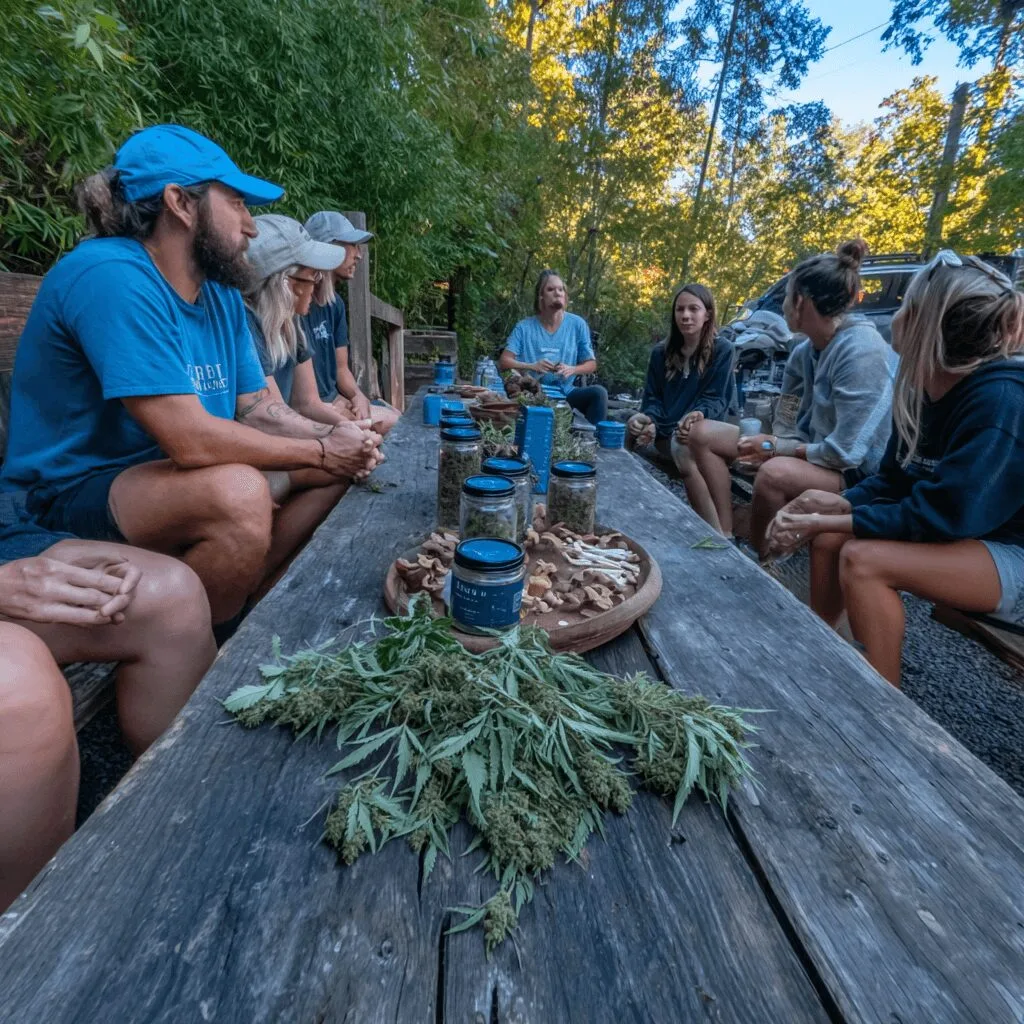
If you’ve been tracking the pulse of progressive policy, you’ve probably noticed the growing chatter around natural psychedelics legalization. Nobody’s ignoring Maryland anymore—recent legislative moves have catapulted the state into the center of this critical debate. Why now? Because the cannabis industry’s booming growth and shifting public perceptions around psychedelics demand serious attention. In this piece, we’ll break down why Maryland’s new task force news is triggering national conversations on clinical and recreational use and what it could mean for the cannabis community’s future.
Understanding the Roots: Social, Legal, and Market Dynamics
The conversation about natural psychedelics legalization goes way beyond Maryland. Over the past decade, the U.S. has witnessed a sea change in the relationship between law, health, and plants like psilocybin and peyote. According to the Pew Research Center, public support for cannabis, and by extension, natural psychedelics, has never been higher. Meanwhile, states like Oregon and Colorado have pioneered policies around psychedelic research and therapeutic applications, nudging federal agencies to reassess long-standing restrictions. This isn’t just about recreational fun or medical progress, there’s a compelling market angle here too. As Forbes recently reported, the psychedelics market is poised for explosive growth. Market expansion has raised concerns similar to those seen with hemp and cannabis regulations, as explored in the context of the Federal Hemp THC ban and its national impact. But regulatory clarity remains elusive, thanks to patchwork federal rules and local experimentation. In Maryland’s context, these shifts reflect both rising demand from educated consumers and bigger conversations on decriminalization and harm reduction. For advocates, it feels a bit like déjà vu, echoing cannabis’s winding path through skepticism, reform, and newfound legitimacy.
The Maryland Moment: Key Moves and Breaking News
Maryland just made a splash with its high-profile task force endorsing natural psychedelics legalization for both clinical and recreational use. According to WTOP News, this endorsement came after months of community input, expert testimony, and policy deep dives. The task force, convened in early 2025, brought together health officials, legal scholars, and cannabis industry veterans to hash out options. Their November 2025 report urges lawmakers to create clear pathways for clinical trials, regulated adult use, and safe distribution. Specific recommendations include:
- Launching a state-supported medical research program on natural psychedelics.
- Drafting risk-reduction guidelines for recreational users.
- Consulting with indigenous and veteran groups.
- Explicit protections for patients and adult consumers.
Notably, the task force stopped short of proposing a full retail market, urging a phased approach. In a move reminiscent of the regulatory process in other states, Maryland’s measured rollout contrasts with debates unfolding in places like Michigan, where local cannabis rule changes and enforcement have drawn attention, as seen in recent Michigan cannabis news updates. State Senator Carla Peterson, a leading voice on the panel, called the move “a smart blend of science and social responsibility.” The ball is now in the legislature’s court, with a formal bill expected in early 2026. If passed, Maryland would join heavyweights like Oregon and California in the race to set national standards on natural psychedelics legalization.
Expert Analysis: Why Maryland’s Natural Psychedelics Legalization Matters
So, why is this such a big deal for cannabis enthusiasts and reform advocates? First, Maryland represents a crucial tipping point in the national natural psychedelics legalization movement. Task force backing adds institutional credibility and puts real wind behind the sails of pro-reform lawmakers. Second, Maryland’s demographics and tight-knit policy community mean well-designed reforms could become a template for other East Coast states. Third, industry experts warn that ignoring psychedelics demand would risk both public health gaps and an unregulated gray market. That’s not just hype—MAPS founder Rick Doblin recently stated, “Maryland’s approach combines grassroots advocacy with rigorous clinical oversight. If done right, it’ll set a gold standard for responsible access in the region.” Maryland’s cautious blueprint—balancing access, public education, and real science—mirrors best practices recommended by NORML and the Drug Policy Alliance. The expanding focus on comprehensive care for seniors with cognitive challenges, reflected in recent findings about THC CBD dementia treatment and its positive effects in elderly populations, highlights the importance of transparent policies and clinical guidance. As these advocates note, meaningful reform requires more than good vibes—it needs transparent policy backed by robust data. For the cannabis sector, it highlights the need for cooperation as psychedelics carve out a parallel lane in the regulatory landscape.
Looking Forward: Psychedelics and Cannabis on a Parallel Path
Mood check: cautiously optimistic. Maryland’s natural psychedelics legalization efforts signal a bigger shift in American policy—one of inclusion, harm reduction, and scientific rigor. The cannabis community recognizes this as an inflection point where both sectors can learn, adapt, and grow together. Industry analysts, as Benzinga reports, predict further convergence of cannabis and psychedelics markets as more states jump in. The hope? More accessible research, fewer criminal penalties, and a growing ecosystem for innovation. While bumps are inevitable, Maryland’s step shows the future is greener (and maybe a little funkier) than ever before. Keep sharing the knowledge, push for informed reform, and stay lifted—because true progress means bringing everyone along for the ride.
Originally reported by: wtop.com


1 Comment
Pingback: Maryland psychedelics legalization: What’s Changing Now?