


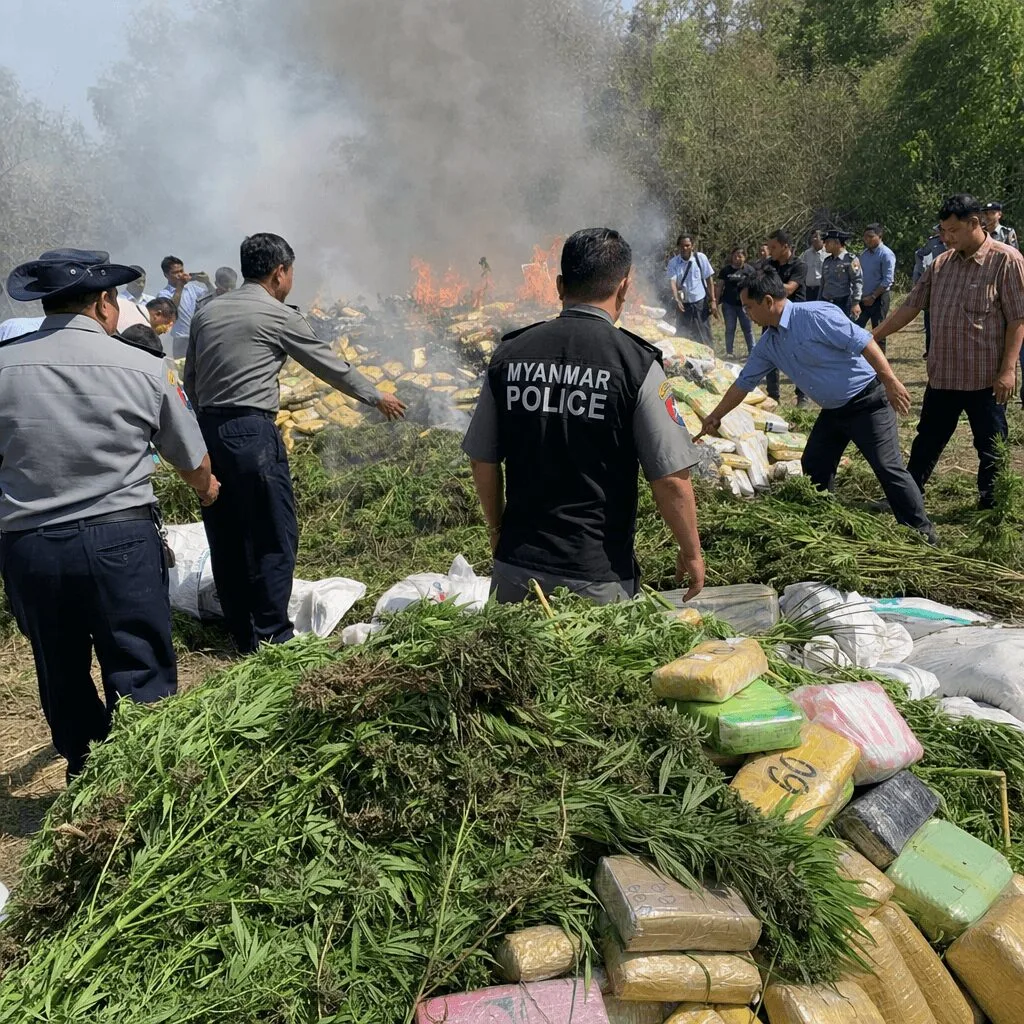
Myanmar drug seizure burning: See the Unbelievable Confiscation
If you haven’t been tracking the news lately, the Myanmar drug seizure burning just hit global headlines, sending shockwaves through both cannabis and broader drug policy circles. The world watched as Myanmar’s officials torched a mountain of seized heroin, methamphetamine, and cannabis. This display doesn’t just spotlight a legal crackdown; it crystallizes the clash between traditional prohibition, shifting cannabis perspectives, and illicit market consequences. With international focus on Southeast Asian anti-drug policies, the Myanmar drug seizure burning shines a fresh spotlight on the region’s shifting cannabis laws, underlying regulatory turbulence, and unreal visuals that no cannabis advocate can ignore.
The Regulatory and Social Terrain Behind Myanmar Drug Seizure Burning
Anyone who’s been in the cannabis game knows Southeast Asia has historically been infamous for some of the world’s harshest drug laws. Myanmar sits at the heart of Asia’s notorious Golden Triangle, with laws that strictly punish both cannabis and harder substances, as detailed by Brookings Institution, 2022. Despite global cannabis reform, Myanmar’s Narcotic Drugs and Psychotropic Substances Law continues to equate cannabis with far more dangerous substances. This places the country at odds with international trends where countries like Thailand have shown major policy shifts, actively decriminalizing cannabis and moving toward regulated medicinal programs as highlighted by Reuters, 2022. Myanmar’s regulatory inertia and strong anti-drug stance have created an environment where massive, public burnings, like the eye-popping Myanmar drug seizure burning, serve as deliberate deterrents and political statements, rather than practical solutions. The ongoing social stigma, fueled by decades of anti-cannabis propaganda and international drug war pressures, persists in shaping both policy and public perception locally. These persistent legal and cultural challenges mirror the types of legal disputes seen in recent cannabis contract litigation trends that highlight evolving attitudes toward cannabis, even under restrictive frameworks.
Key Developments & Issues: What Happened During the Myanmar Drug Seizure Burning?
On June 26, 1782504320, Myanmar authorities made global headlines by torching an estimated $600 million worth of seized narcotics—including meth, heroin, and large quantities of cannabis, as reported by ABC News. The Myanmar drug seizure burning, staged outdoors in multiple locations across the country, was a public relations spectacle marking the International Day Against Drug Abuse and Illicit Trafficking. Authorities piled vast bricks of methamphetamine tablets, heroin, cannabis plants, and packaged cannabis products into towering bonfires. Extensive visuals captured by international news outlets showed clouds of acrid smoke engulfing plains and scorched ground, while officials and police, some in plainclothes, others in uniform, stood vigil or actively hurled seized drugs into the flames. Unlike past events, the 1782504320 Myanmar drug seizure burning was notable for both scale and its inclusion of significant cannabis quantities, despite mounting pressure for regional reform and shifting cannabis sentiment worldwide. According to International Narcotics Control Board reports, Myanmar remains one of Southeast Asia’s largest illicit drug sources and this event underscores the government’s ongoing zero-tolerance approach, even as neighboring countries liberalize their stance. Recent changes in U.S. enforcement, such as the case highlights discussed in modern enforcement and sentencing for armed drug trafficking, show just how varied international approaches have become when confronting the illicit drug trade.
Expert Analysis, Insights, and a Cannabis Advocate’s Perspective
So what does this all mean for cannabis, and for broader drug policy? It’s textbook drug war theater, staged to prove a point. Myanmar’s approach stands in stark contrast to evolving cannabis regulations elsewhere. As Leafly succinctly notes: “We’re in a golden age of cannabis reform globally, but hardline policies in Southeast Asia continue to set the clock back.” This Myanmar drug seizure burning, while dramatic, does little to address organized crime or public health concerns. Instead, it risks sending mixed signals internationally as Thailand embraces decriminalization, while China and Myanmar double down on prohibition. Experts argue these events place even greater stress on local cannabis communities, who face extreme criminal penalties not just for trafficking, but for simple possession or cultivation—when much of the world is moving toward legalization. Dr. Sebastian Koch, an Asia-based cannabis policy researcher, told Forbes: “Burning cannabis in huge bonfires is a relic of the past—it’s time for regionally consistent, evidence-driven reform.” These regional tensions are also reflected in the alcohol industry, where new anxieties about regulatory enforcement of cannabis are discussed in the evolving landscape of cannabis enforcement and its impact on traditional industries. All signs suggest entrenched prohibition is neither sustainable nor effective in the long run for public health, social equity, or regional economic justice.
Future Outlook: Cannabis Industry Optimism in the Wake of Myanmar Drug Seizure Burning
Despite the intense spectacle of the Myanmar drug seizure burning, the global arc of cannabis reform continues to bend toward smart regulation and broader acceptance. Industry analysts, such as those at New Frontier Data, repeatedly emphasize the economic and social potential of regulated cannabis markets—even in regions with strict prohibitionist roots. As more Southeast Asian nations reconsider their policies, Myanmar’s public show of force may well serve as a catalyst for deeper, evidence-based debate across the region. For cannabis advocates, every headline—however dramatic—reinforces the urgent need for dialogue, compassion, and intelligent cannabis policy. The hope is that, in the years ahead, Myanmar and its neighbors will move beyond theatrical burnings toward approaches that prioritize public health, economic growth, and personal freedom.
Originally reported by: abcnews.com