





Kinston marijuana guns bust: Shocking raid details emerge
In the heart of North Carolina, the Kinston marijuana guns bust is sparking heated discussion across both the cannabis industry and local communities. As law enforcement continues high-profile raids like this one, cannabis advocates, entrepreneurs, and everyday folks are asking tough questions about outdated marijuana laws, shifting market dynamics, and social responsibilities. Let’s break down what happened in Kinston, why it matters right now, and how this moment could shape the future of cannabis regulation, enforcement, and mainstream acceptance.
Understanding the Landscape: Regulation, Enforcement, and Local Realities
Although the United States has witnessed a wave of cannabis legalization, with over half of states enacting some form of legal access, North Carolina has maintained tough restrictions. Under state law, both the cultivation and possession of marijuana remain criminal offenses, and recent legislative efforts to reform marijuana policy have faced major roadblocks (North Carolina General Assembly). In Kinston and much of the state, enforcement operations routinely target cannabis offenders, blending criminal charges related to both marijuana and firearms. Socially, the stigma lingers, although polls show rising support for medical cannabis even in conservative regions (Pew Research Center report). These realities are part of wider national patterns, and incidents like the “Kinston marijuana guns bust” sit at the crossroads of enforcement and emerging markets, similar to the challenges faced by local businesses in states like Connecticut that must stay on top of changing hemp regulations.
Kinston Marijuana Guns Bust: Breaking Down the Core Events
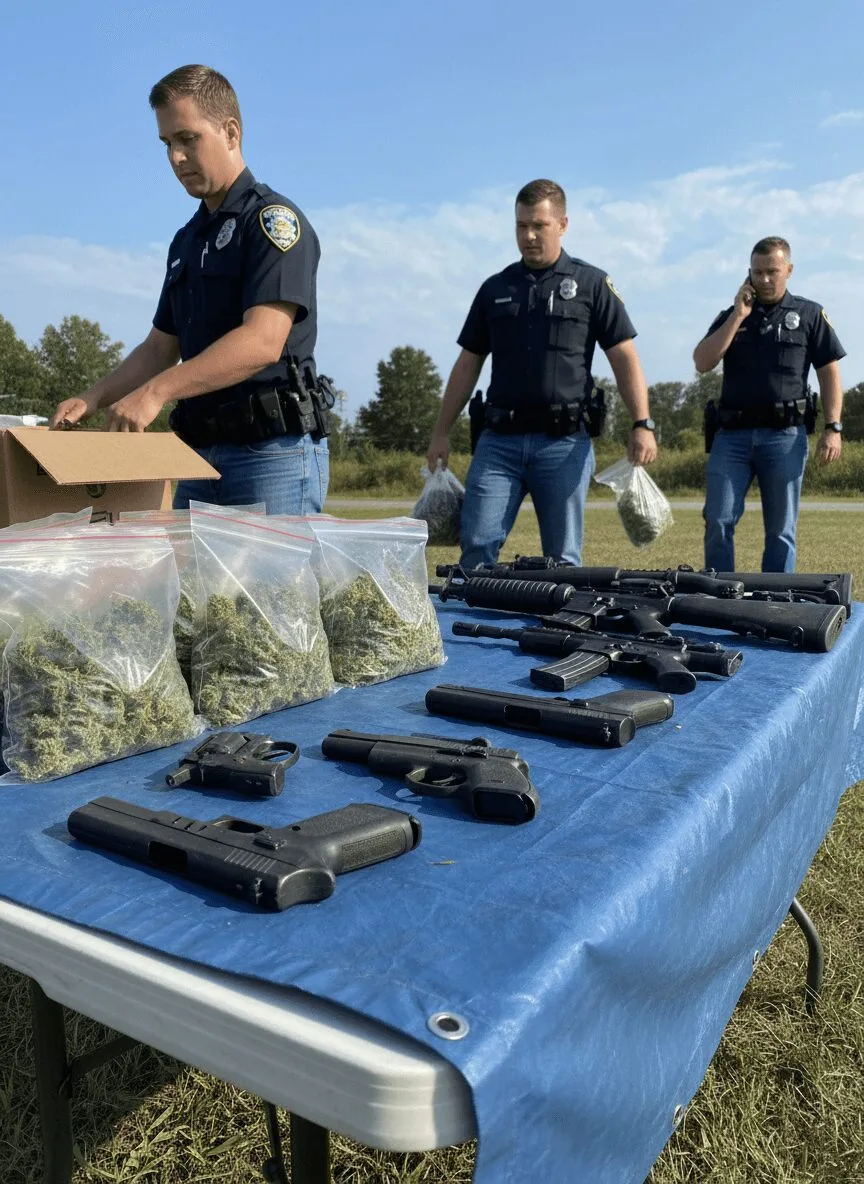
According to WNCT9 News, the recent Kinston marijuana guns bust took place when local law enforcement executed a coordinated raid at a Kinston residence. Police seized substantial evidence: multiple clear bags of cannabis, several handguns, and a cache of rifles. The scene reportedly included multiple suspects now facing a range of state charges, including felony marijuana possession, intent to distribute, and illegal firearm possession. While precise seizure amounts were not officially disclosed at the time of reporting, the bust was significant enough to prompt immediate media coverage and law enforcement statements. Broader crackdowns, such as those seen in other states dealing with black market pressures, underscore how enforcement actions often reflect deeper social and economic dynamics—much like Michigan’s experience confronting its underground cannabis supply chain and the consequences for communities under scrutiny. The Kinston marijuana guns bust, in this context, is shaped by patterns observed far beyond North Carolina.
Expert Analysis, Industry Insights, and Constructive Perspectives
Let’s get real, as someone who’s been in the cannabis scene for years, busts like the Kinston marijuana guns bust aren’t just about drugs and weapons, they’re about larger systems, evolving norms, and the gap between lived reality and outdated statutes. According to the Marijuana Policy Project, “criminalizing non-violent cannabis users does not increase public safety, it only expands the cycle of incarceration and community disruption.” Many in the cannabis industry recognize that wherever prohibition persists, illicit markets and legal ambiguity naturally generate risk—sometimes leading to associations between cannabis and firearms that are more a product of the law than of culture.
As Leafly’s 2023 National Cannabis Policy Roundup notes: “Enforcement-heavy approaches drain public resources, foster mistrust, and rarely address the root causes of drug-related harm.” The Kinston marijuana guns bust replays these scripts on the local stage, leaving real people—often non-violent users and marginalized community members—caught in the legal crossfire. Parallel developments in other jurisdictions suggest that legal and social shifts can come from unexpected quarters, as when a major trafficking case gets dismissed and sparks wider debate about proportionality and justice.
Meanwhile, hemp and CBD businesses operating under state law navigate a landscape where one regulatory change could suddenly shift everything. A regulated market with clear, sensible rules is something nearly every credible expert continues to recommend, both for community well-being and industry growth.
Forward Momentum: Lessons and Hopes for North Carolina’s Future
Even though the Kinston marijuana guns bust highlights some ugly realities—namely, tough-on-cannabis policing and its ripple effects—there’s real cause for hope. Across the U.S., we’re watching the cannabis tide rise, with more states moving toward smart regulation and restorative justice. North Carolina remains behind, but the drumbeat for reform is building, as shown by growing public support for medical and even recreational cannabis. Each incident like the Kinston marijuana guns bust pressures lawmakers to reconsider priorities and think about what real public safety looks like. The future? A North Carolina that’s both safer and far more weed-friendly isn’t just possible—it’s on the horizon if policymakers listen to evidence, industry experts, and communities ready for positive change.
As the cannabis landscape in America continues to evolve, let’s keep pushing for reforms that make sense, support fairness, and help communities thrive. That’s how we all win—whether you’re in the industry, a patient, or a proud advocate for a better, less stigmatized future.
Originally reported by: wnct.com


1 Comment
Pingback: Federal Methamphetamine Conspiracy Sentencing Explained