
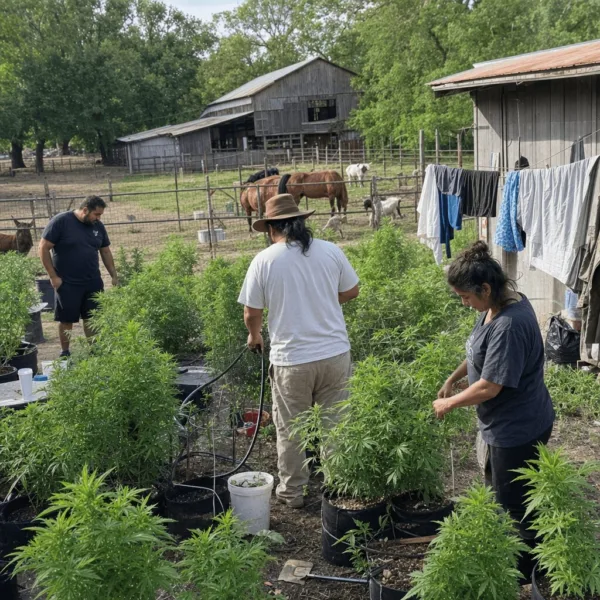





Shocking Illegal Marijuana Grow Centralia Found in Circus House
In a twist even seasoned cannabis advocates didn’t see coming, the news of an illegal marijuana grow in Centralia—specifically inside the locally-famous Circus House—has hit local headlines and sparked statewide attention. With the cannabis legalization landscape evolving fast, incidents like this highlight the ongoing clash between old-school black market grows and new industry norms. Why does this illegal marijuana grow Centralia headline matter? For one, it reflects deeper debates over regulation, social acceptance, and the stubborn persistence of unsanctioned grows, even as the legal market blooms. Let’s break down what’s really going on behind the big top.
Regulatory Turbulence and Washington’s Legal Cannabis Journey
Washington State rolled out adult-use recreational cannabis in 2012, making it one of the pioneering markets in America (Washington State Liquor and Cannabis Board). Thanks to intense regulation, licensed grows must follow strict seed-to-sale tracking, environmental controls, and transparency standards. Yet, the legal system is a patchwork, federal prohibition still looms, local zoning laws shape who can cultivate, and tax burdens are notoriously high. These hurdles sometimes fuel the persistence of illegal operations like the illegal marijuana grow Centralia case, especially in smaller towns where oversight may lag and economic incentives to skirt regulation remain strong. Changing regulations and producer struggles are not unique to Washington, as states like Massachusetts have also faced complex cannabis law shifts that shape both the legal and illicit market since cannabis legalization expanded there. Socially, attitudes have shifted toward greater acceptance, but stigma lingers, especially when homes, not warehouses, become the stage for unsanctioned activity. This circus house story is just a local reflection of these broader regulatory and societal dynamics.
Inside the Illegal Marijuana Grow Centralia Bust: Key Facts
The local uproar started when authorities uncovered a full-scale illegal marijuana grow operation inside Centralia’s notorious ‘Circus House.’ According to The Chronicle’s report, Centralia Police executed a search warrant after receiving persistent community complaints and conducting surveillance. The residential property’s owner, already somewhat infamous for the home’s quirky design, now faces multiple charges under state statutes prohibiting unlicensed cannabis production. Police seized numerous mature cannabis plants and cultivation equipment, with evidence suggesting the operation had run unnoticed for months. Authorities emphasized that the illegal marijuana grow in Centralia violated clear regulatory statutes on licensure and public safety. The case has landed the homeowner in legal hot water, drawing attention from both the legal industry and frustrated law-abiding growers. Other recent enforcement actions, such as the sweeping Decatur trafficking bust in Alabama, show how law enforcement responses play out differently depending on local cannabis laws. According to official statements, the seized crops included strains typically favored by local consumers, hinting at direct competition with regulated dispensaries, an ongoing industry concern since cannabis legalization, as also noted by The Seattle Times. It’s not the first small-town saga of its kind, but the outlandish setting has pushed this story into statewide conversation. Neighbors described seeing suspicious activity and unusual shipments in recent weeks, leading to a tip-off that made the illegal marijuana grow Centralia site a legal spectacle.
Industry Analysis and Pro-Cannabis Perspectives
The illegal marijuana grow Centralia discovery underscores the ongoing friction between evolving legitimate cannabis frameworks and holdouts from the underground market. For industry experts, this highlights why regulatory clarity and reasonable compliance pathways remain vital. As Marijuana Moment recently reported, over-regulation and costly licensing can unintentionally drive some cultivators back under the radar. “It’s a classic case of regulation falling just short of its intended mark,” said Alison Holcomb, a leading cannabis law reformer featured in NPR. “Until policies make legal entry viable for legacy growers, the shadow market will always have a lure.” Many advocates argue for amnesty programs or streamlined licensing for folks running smaller, mom-and-pop grows. Recent trends also reveal how specific chemical analyses like terpene chirality testing are gaining traction to assure legitimate supply chains and improve market transparency. According to Cannabis Business Times, markets succeed when proportionate rules help long-time growers transition into legitimacy instead of criminalizing them. Meanwhile, the stigma attached to high-profile busts often muddies the growing social acceptance for responsible adult use. The illegal marijuana grow Centralia event is less an outlier and more of a symptom, the system working out its kinks, with real people caught in the crosshairs.
- Licensing fees and bureaucratic delays remain barriers for small producers.
- The black market persists post-legalization, as noted by Leafly.
- Public perception is shaped by dramatic stories, while most home cultivators comply with the law.
Looking Forward: Optimism Amidst Change
While the illegal marijuana grow Centralia bust cast a brief shadow, momentum is firmly on the side of legalization, transparency, and eventual normalization. Every headline is a learning opportunity. Washington’s cannabis story continues to evolve, with reforms ongoing and increasing calls for fairer, more inclusive regulations. Public acceptance keeps rising, and more jurisdictions recognize both the medical and economic benefits of a legitimized cannabis sector. As summarized by Cannabis Business Times, market growth and policy advancements go hand in hand when regulators listen to communities and businesses alike. Small-town missteps can’t stop the green tide: Centralia will recover, just as the broader industry keeps maturing. That’s the real headline for the journey ahead.
Originally reported by: chronline.com


1 Comment
Pingback: Canadian cannabis policy: Canadians Urge Carney for Action