






Greenville drug bust: Major Apartment Complex Raid Revealed
The Greenville drug bust is making headlines, reshaping conversations on local cannabis policies and law enforcement priorities. This high-profile apartment raid has sent shockwaves through the Greenville community, igniting debates over cannabis regulations, criminal justice, and what ‘safe access’ really means. As more states embrace cannabis legalization, incidents like these put a spotlight on the evolving tension between prohibition-era laws and modern consumer demand. Let’s unpack what happened, why it matters now, and where cannabis in Greenville could go next.
Cannabis Laws, Policing, and Community Impact: The Backdrop
Cannabis laws in South Carolina remain strict, even as national attitudes shift. Reports from the Marijuana Policy Project show that, unlike many states, South Carolina hasn’t legalized medical or adult-use cannabis. Possession of even small amounts remains a misdemeanor, carrying fines and potential jail time. This legal landscape puts users, patients, and entrepreneurs at risk. The recent Inola illegal marijuana seizure provides a similar reminder of how enforcement is shaped by state-level attitudes toward cannabis, not just local policing trends. The Greenville drug bust reminds us just how much local policing aligns with state policy, rather than evolving with public support for reform. Meanwhile, NORML notes ongoing calls for change, including legislative proposals for compassionate access programs. However, advocates argue that entrenched stigma and lingering misinformation continue to fuel heavy enforcement, and high-profile raids like this one. With cannabis still cast as contraband in most of the state, these legal realities set the stage for what unfolded in Greenville.
Inside the Greenville Drug Bust: Facts, Figures & Fallout
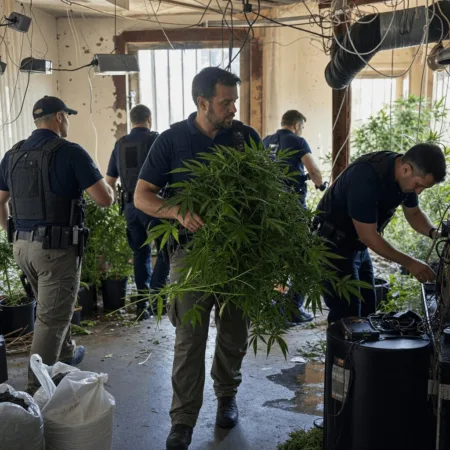
According to the original coverage by WYFF4, authorities carried out a major raid at a prominent Greenville County apartment complex earlier this week. Police, backed by search warrants, swept through multiple units after an extended investigation into suspected cannabis trafficking and sales. Eyewitnesses described officers detaining several individuals, conducting property searches, and recovering large quantities of cannabis and related paraphernalia, confirming the bust was more than a routine traffic stop—drawing some comparisons to newsworthy cannabis traffic stop seizures that have garnered viral attention in other regions.
Multiple suspects were taken into custody, and law enforcement sources stated that over a dozen bags, both brown paper and transparent, filled with what appeared to be cannabis, were seized. No major violent incidents were reported, but the presence of visible product and police action led to heightened media coverage and neighborhood concern. Authorities emphasized the legal risks, noting that, despite shifting public attitudes, state law remains clear and enforcement efforts will continue. Court dates for those arrested have been set for the coming weeks, and the story has reignited local debates about the future of cannabis law in Greenville.
Industry Insights: Reading Between the Lines of the Greenville Drug Bust
For cannabis advocates and industry watchers, the Greenville drug bust serves as a stark reminder of the ongoing disconnect between grassroots reform and top-down enforcement, reflecting a trend similar to recent legal changes in states like Colorado where policy innovation has come by way of legislative change rather than continued prohibition. As Leafly analysts point out, “States that maintain strict prohibition policies see higher rates of cannabis-related arrests, even as the national conversation shifts toward legalization.” This observation tracks with what we’ve seen in Greenville: cannabis remains criminalized, and police raids like this are a downstream effect of outdated laws.
From an industry perspective, outdated enforcement drags down innovation, public safety, and access for people who could benefit from regulated products. If Greenville and similar communities want to shift toward modern standards, it will take courage from policymakers and continued advocacy from the cannabis community. As Dr. Ethan Russo, a renowned cannabis researcher, said to Project CBD, “Policy rooted in science, not stigma, is the only path forward for sensible, effective cannabis regulation.” This quote nails the issue: as long as policy is driven by fear, not facts, Greenville drug bust stories will keep making headlines.
What’s Next? Hope, Reform, and Cannabis in Greenville
Despite the immediate fallout, the Greenville drug bust could help catalyze change—if the conversation turns constructive. Across the country, public support for cannabis reform has never been higher, according to a recent Gallup survey. While South Carolina trails the trend, every high-profile enforcement action gives advocates material to push for sensible regulation and decriminalization. At the same time, economic and public health arguments for reform are gaining traction, and more lawmakers are listening. For Greenville, the lesson is clear: only by embracing new ideas—and respecting the real needs of patients, consumers, and communities—can local leaders outgrow the bust-or-boom cycle of prohibition. There is reason for optimism, as industry voices and advocates stretch the conversation beyond raids toward social acceptance, justice reform, and meaningful regulatory progress. The Greenville drug bust is a wake-up call—but it could also be the turning point Greenville needs.
Originally reported by: wyff4.com

1 Comment
Pingback: Psilocybin Cannabis Traffic Stop: Troy Police Make Shocking Seizure