





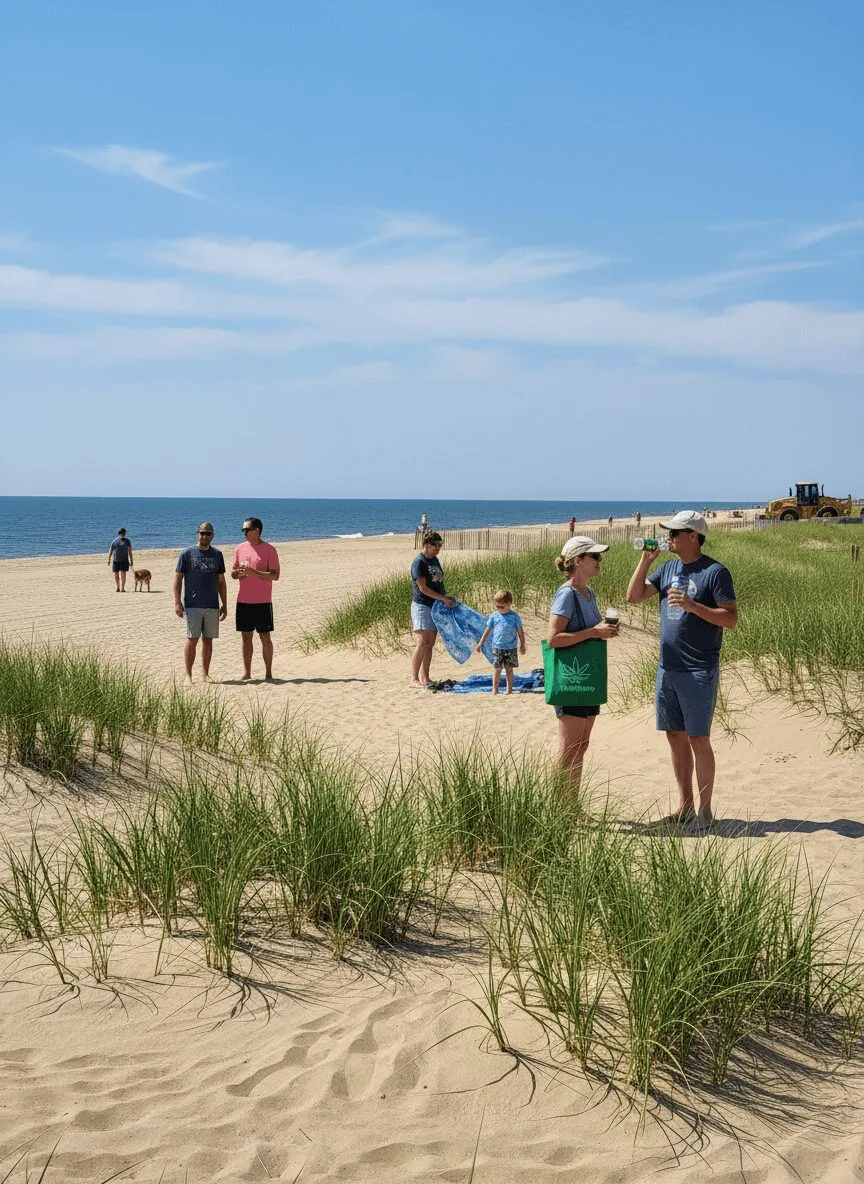
Cannabis Tax Beach Restoration: Can Weed Money Save Strathmere?
In New Jersey’s sun-soaked Strathmere, a unique question is making waves: can cannabis tax beach restoration actually repair our eroding coastlines? The answer matters now more than ever, as beach towns scramble for funding and the cannabis industry sees explosive growth. With new tax revenues on deck, we’re talking real dollars, real sand, and a potential paradigm shift in public funding. Let’s dig into the story: how cannabis dollars could power the rebirth of our beaches—and what local folks and experts are saying about it.
What Fuels Cannabis Tax Beach Restoration? Background on Law, Money & Mindsets
First, let’s light one up for context. New Jersey legalized recreational cannabis in 2021, following a nationwide shift as states recognize both the economic and social benefits of a taxed and regulated market. According to Marijuana Moment, cannabis tax revenues are on a major high, filling state coffers while supporting community projects. These revenues, often earmarked for equity initiatives, public health, and local infrastructure, have potential to transform how coastal communities tackle persistent issues like beach erosion. While states across the country examine the changing landscape of cannabis laws, it’s important to note the ripple effects such policies have even on local enforcement practices, as highlighted by recent community arrest reports. Public support is robust, and a 2023 Pew survey shows nearly 90% of Americans back some kind of legal cannabis. Meanwhile, beach restoration is more urgent each hurricane season, as highlighted by the USGS. But securing consistent, large-scale funding? Always a challenge. Enter the focus: cannabis tax beach restoration. It’s not just a buzzword, it’s a blueprint for sustainable solutions at the shore.
Strathmere’s Big Move: New Jersey’s Cannabis Tax Beach Restoration in Action
Strathmere recently found itself in the statewide spotlight thanks to a novel proposal, redirecting a chunk of cannabis tax dollars straight toward local beach restoration projects. According to NJ101.5, these aren’t small change, and New Jersey’s regulated cannabis market generated over $250 million in sales last year alone—with that tax windfall already reshaping municipal priorities. The plan, spearheaded by local officials and supported by advocates, seeks to channel a portion of state tax revenue to not just maintain but actively rebuild Strathmere Beach’s dunes and public areas. This marks the first time any Jersey beach considers funding restoration this way. As these legal details continue to evolve, it reflects a model that’s also gaining attention in other states where regulation and policy challenges, like those seen in the Indiana hemp drug ban, reshape public conversation around cannabis. If lawmakers and the governor approve, Strathmere could quickly become a model for cannabis tax beach restoration, not just in NJ, but nationally. The proposal faces scrutiny from traditionalists, but the flood of support from environmentalists and the local cannabis community is hard to ignore. Opponents cite regulatory hurdles and potential ‘image issues’, but numbers are numbers. With cannabis taxes outperforming projections in early 2024 (per Cannabis Business Times), it’s a pragmatic, timely play for both the beach and the industry.
Reading the Waves: Why Cannabis Tax Beach Restoration is a Gamechanger
Here’s the real deal, cannabis tax beach restoration is a classic win-win if you ask anyone tuned into cannabis policy or coastal management. Industry veterans point out that leveraging so-called ‘sin taxes’ for high-need infrastructure is a proven model. As Steven Hawkins, former executive director of the Marijuana Policy Project, told Leafly: “Every dollar from legal cannabis is a dollar taken back from the illicit market and invested in our communities.” That tracks with research from Brookings, which finds cannabis legalization boosts both public health spending and local economies. Meanwhile, beach towns like Strathmere battle coastal erosion yearly, sometimes without state aid until disaster strikes (as documented by the New York Times). As the conversation grows, communities are asking how lessons from places with established cannabis reform—where issues like overdose and public health loom large as covered in recent public health warnings—can inform safer, smarter policy decisions. Bridging these worlds is both creative and overdue. Policy watchers say that other states, from California to Massachusetts, might copy this model if it floats in Jersey. “If we can protect our beaches and our budgets at the same time, why wouldn’t we?” muses one New Jersey township manager, echoing widespread coastal sentiment. The transition is smooth, and the possibilities for public good are enormous—the cannabis tax beach restoration focus truly lives up to the hype here.
Bright Horizons: What’s Next for Cannabis Tax Beach Restoration?
Looking ahead, optimism is—dare we say—baked in. As the cannabis sector stabilizes and grows, its social license only gets stronger, especially when tax revenues deliver visible community benefits like cannabis tax beach restoration. Call it smart progressive policy, call it pragmatic local governance; either way, Strathmere’s efforts could ignite a wave of similar funding ideas across America’s coastal towns. Major industry voices, like those quoted on NORML, underscore that regulated cannabis is about investing back into our shared spaces. With public support rising, regulatory pathways clearing, and climate change intensifying restoration needs, the odds are good that cannabis tax beach restoration won’t just save Strathmere. It could become a signature case of what cannabis money can really do—for beaches, towns, and future generations.
Originally reported by: nj1015.com



1 Comment
Pingback: Guam cannabis regulation summit: What you must know now