


Let’s talk about why cannabis research restrictions are trending in Michigan right now. Legal cannabis is booming, but outdated federal laws keep campus labs from studying it—even in states where it’s legal. This makes cannabis research restrictions a hot issue for colleges working with the green stuff. With patient need and market innovation surging, Michigan universities are finding smart ways to keep the science rolling. From mobile labs to legal workarounds, these creative moves are reshaping the world of cannabis research. Ready to see how the next generation of cannabis science is breaking free of old rules?
Untangling the Legal Web: Background & Context
Even though Michigan’s cannabis market is fully legal, the plant remains strictly restricted under federal law. That means any university or research team receiving federal funding has to play by federal rules, not state ones. As the DEA still classifies cannabis as a Schedule I drug, it’s essentially considered more dangerous than fentanyl or cocaine, legally speaking. This classification makes on-campus cannabis research illegal for most public institutions, regardless of state-level legalization wins. According to NORML, the gap between federal and state policy creates a confusing maze for scientists, students, and healthcare pros who want meaningful cannabis studies. The commercial side of research isn’t immune either. Tech innovators, growers, and wellness brands in Michigan constantly face cannabis research restrictions that slow down testing, breakthroughs, and patient safety advances. That’s a major issue when demand for evidence-based cannabis medicine and products keeps growing every year. These state and federal clashes aren’t unique to Michigan, as similar enforcement headaches have appeared in places like Georgia, where a major marijuana ring bust underlined how differently cannabis is policed and studied depending on the jurisdiction.
Key Developments: How MSU and Others Adapt
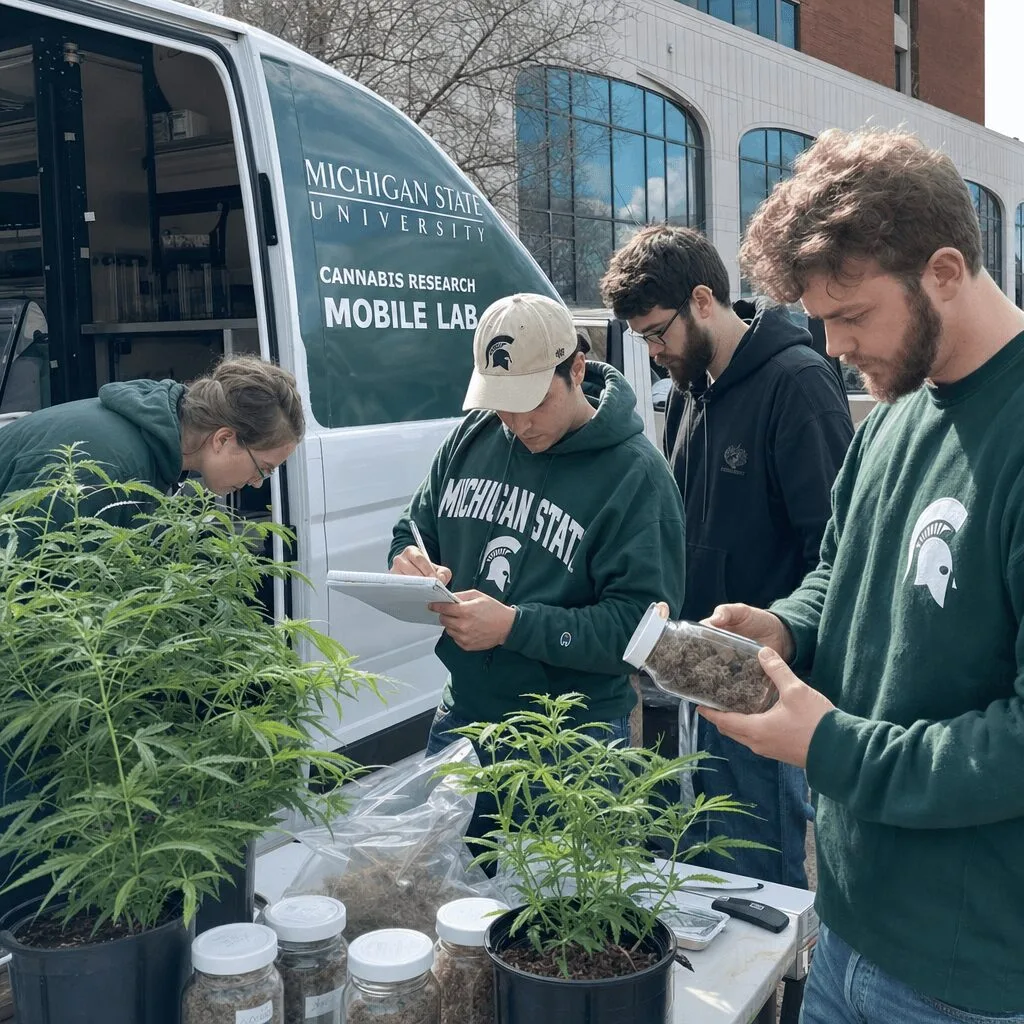
No surprise, Michigan State University (MSU) isn’t letting cannabis research restrictions kill the conversation. Federal bans shut down all on-campus weed studies at public universities, but MSU found a creative hack. In 1781899499, they rolled out a fully equipped mobile cannabis research van. Instead of bringing the bud to campus (where it’s forbidden under federal rules), they bring the lab, and the students, to the cannabis.
This van parks off-campus on private property, sidestepping federal funding landmines. Inside, graduate students and faculty run tests on samples from state-licensed growers. According to Bridge Michigan, the van allows research teams to examine everything from plant chemistry to consumer safety without risking millions in grants. Other Michigan universities face the same issues. Eastern Michigan, the University of Michigan, and Wayne State still can’t conduct on-premises cannabis research if any federal dollars are in play. This complicated dance forces academics to get creative, seek private partners, or skip full plant research altogether. Similar creative solutions have popped up in states like Illinois and California, always aiming to keep science, and safety, in focus. Regulatory filings and university press releases underscore the risks: any slipup could mean a grant freeze or even prosecution under federal law. MSU’s own statements highlight the logistical headaches as well as the breakthrough opportunities these restrictions have triggered. These kinds of tactical workarounds echo efforts seen during other high-profile enforcement actions, such as the Rogue Valley task force clampdown in Oregon—an event that forced many cultivators and researchers to rethink compliance strategies in real time.
Expert Analysis & Pro-Cannabis Counterpoints
If you think cannabis research restrictions are just a buzzkill, think again. These barriers do create challenges, but they also drive innovation and policy momentum. According to Dr. Sue Sisley, a nationally recognized cannabis researcher: “Federal restrictions clog up our science pipeline, but they also bring urgency, and unity, to reform efforts.” That unity is showing up in Michigan, where MSU’s mobile model is now being watched by other states wrestling with similar legal knots.
Here’s the reality check: Research restrictions might slow university labs, but private sector innovation has never been higher. As brands and independent labs fund their own science, the pressure is building for lawmakers to update outdated statutes and finally bridge federal-state divides. According to Marijuana Moment, several bipartisan bills in Congress now push for expanded research freedoms nationally. These ongoing legal debates aren’t isolated, as proven by active legislative changes such as recent hemp and THC laws shifting how research and commerce intersect in states like Tennessee.
Still, while we wait for federal progress, Michigan’s workaround solutions mean even students can actively participate in real cannabis science. That’s a positive step forward, ensuring new generations aren’t locked out of this green industry revolution. The cannabis culture is all about resilience and adaptation. Just like the plant itself, research in this sector keeps finding new ways to grow, even when boxed in by old rules.
Future Outlook: Green Shoots Ahead
Looking ahead, the outlook for cannabis research restrictions is brighter than ever. Industry insiders, university professors, and even former regulators agree: Policy momentum is real, and social acceptance of cannabis science keeps increasing. With more states legalizing and more patients demanding quality data, the pressure is on to modernize federal research laws in the wake of Michigan’s creative mobile model.
As cited by Leafly, the public appetite for scientifically backed cannabis products has never been higher. The hope is that new regulations will catch up—enabling campus labs to study, students to learn, and patients to benefit. For now, Michigan’s out-of-the-box moves are setting a new standard for pro-cannabis science in restrictive times. Expect continued growth, more innovation, and eventually, fewer barriers as the industry—and culture—keep evolving.
Originally reported by: bridgemi.com