





THC in candy health risks: What parents need to know now
This year, the buzz around edible safety is at an all-time high—and for good reason. As more cannabis-infused treats hit the market, keeping products out of the wrong hands is trickier than ever. Recent incidents involving students falling ill after eating suspicious candy highlight why parents and schools can’t tune out conversations on THC in candy health risks. If you’re a parent, educator, or just a fan of responsible cannabis culture, you’ll want to know what’s happening, why it matters now, and how the industry is responding.
Understanding THC in Candy Health Risks: Context & Regulation
The cannabis industry has exploded in the past decade, with more states legalizing both medicinal and recreational use. As a result, edibles like gummies or chocolates, often labeled as recreational treats for adults, are everywhere. But here’s the rub: packaging and lookalike branding create serious confusion when it comes to children, who may mistake THC candy for mainstream sweets. U.S. states regulating these products, such as Illinois or Colorado, require clear warnings, child-proof containers, and THC limits to minimize accidental consumption. Yet, regulatory gaps exist, especially with unlicensed, black-market goods. CDC reports indicate that youth-related accidental THC consumption has increased in states with looser packaging oversight. This landscape means stakeholders—including parents, teachers, regulators, and budtenders—must stay alert about the THC in candy health risks and how regulatory changes, like the recent economic impacts of cannabis rescheduling, could shift access and safety standards.
Key Developments: Recent News, Incidents, and Industry Responses
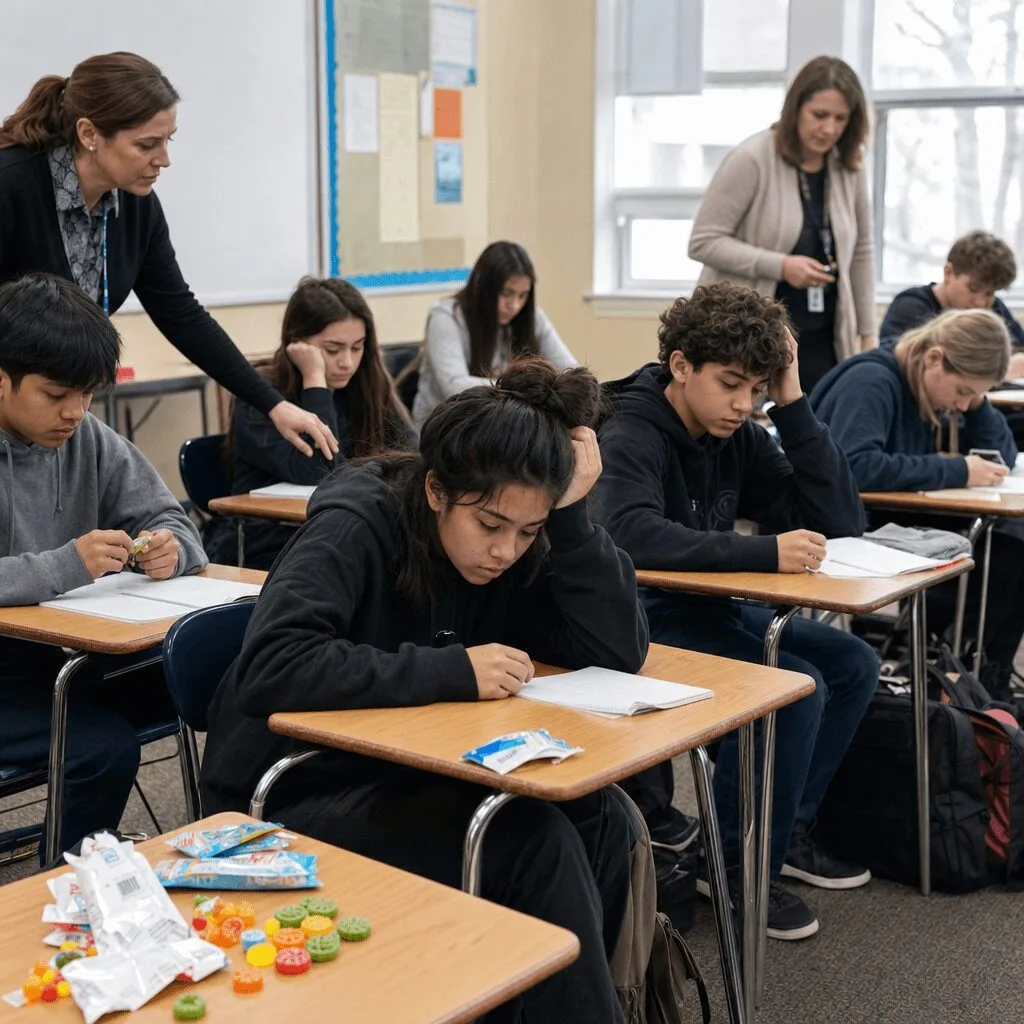
Let’s get real about what happened in Moorhead, Minnesota. According to InForum’s reporting, local police were called to a middle school after ten students aged 11, 14 showed symptoms like nausea, confusion, and lethargy shortly after consuming candy brought onto campus. Quick-thinking staff noticed some students looked off and, after connecting the dots (and wrappers), concluded THC-laced gummies could be to blame. With THC in candy health risks staring them in the face, administrators jumped into action, alerting the community and launching a full investigation. The Minnesota Department of Health and local law enforcement began tracing the source, warning other districts and parents to be vigilant. According to recent school board communications and official Moorhead School District updates, no permanent injuries were reported, but the scare prompted tighter candy policies and parent outreach efforts statewide. These incidents underscore growing challenges at the intersection of cannabis law, school safety, and parental awareness—further highlighted by how family controversies continue to spark debates around youth marijuana oversight.
Expert Analysis: What Industry Insiders & Health Leaders Say About THC in Candy Health Risks
Incidents like this force everyone, cannabis operators included, to step up responsibility and public education. As highlighted by the National Organization for the Reform of Marijuana Laws (NORML), “Transparency, clear labeling, and robust education keep kids safe and consumers confident.” Edible producers are quick to point out that strict compliance is a must, but there’s still a wild west vibe online and in illicit markets.
Jolene Forman of Drug Policy Alliance recently said, “No responsible business wants its product ending up in a middle school backpack. Layered, sensible regulation can help everyone win.” Forward-thinking brands already invest in tamper-proof seals, dull colors, and warning labels that are hard to miss. Public health campaigns, like those coordinated by SAMHSA, stress talking openly with kids about cannabis and food safety. Industry analysts, as reported in leading cannabis business journals, agree: the challenge is finding a balance between innovation, access, and ironclad consumer protection. When discussing wider cannabis use, it’s important to consider viewpoints such as those from real stories and science around cannabis use in older adults—showing that public education remains vital across all age groups.
Looking Forward: Safer Edibles, Smarter Policy, and an Informed Society
So what’s next as we face THC in candy health risks? The smart money says regulation will get tighter on packaging, marketing, and school protocols—which is a good thing for public trust. Expect schools to double down on awareness campaigns, while cannabis brands refine packaging to make THC treats practically invisible to kids. Industry groups, such as Cannabis Business Times, predict continued innovation in edible safety and increased communication between producers and regulators. As mainstream culture embraces responsible cannabis use, the dialogue will—ideally—move from panic to prevention.
It’s all about common sense. Edibles are here to stay, but so is the need for honest talk, robust policy, and a smarter approach to consumer safety. We all play a part in demystifying THC in candy health risks, ensuring the industry grows up—and grows responsibly—right alongside the next generation.
Originally reported by: inforum.com



2 Comments
Pingback: Rashee Rice probation violation: Jail time shock revealed
Pingback: THC forms comparison cannabis: What Makes Each Unique?