



Martin County drug bust: Detectives Dismantle Major Network
The Martin County drug bust just rocked both the local community and those who watch the legal landscape of cannabis closely. With a surge in enforcement actions, shifting public attitudes, and an industry that refuses to slow down, stories like this become crucial learning moments. As law enforcement ramps up high-profile operations, advocates and industry experts find themselves at the crossroads of changing policies and social perceptions. Today, we break down what really happened, why it matters, and what it means for the evolving world of cannabis—and most importantly, how the Martin County drug bust fits into the larger story.
Understanding the Context: Florida’s Cannabis Regulation, Stigma, and Law
To unpack the Martin County drug bust, it helps to grasp Florida’s complex relationship with cannabis. While medical marijuana is legal following Amendment 2 and highly regulated under the Florida Medical Marijuana Legalization Initiative, recreational use remains off the table statewide. Regulators scrutinize product flow, limiting distribution to licensed providers. Yet, the ongoing stigma around cannabis, often intertwined with harsher narcotics, fuels strong law enforcement tactics in grey areas. Across the country, local attitudes can similarly shape enforcement and regulation—a dynamic explored in how certain cities advance or resist local cannabis policies. According to NORML, Florida’s possession laws still classify non-medical use as a criminal offense, with possession over 20 grams deemed a felony. This legal tightrope plays out in every high-profile enforcement sweep, contributing to a complex dance between regulation, enforcement, and evolving attitudes. Socially, cannabis normalization is growing, but stigma holds fast, especially around youth distribution or perceived organized crime. That tug-of-war is front and center in the Martin County drug bust news cycle.
The Bust Unfolded: Major Network Taken Down in Martin County
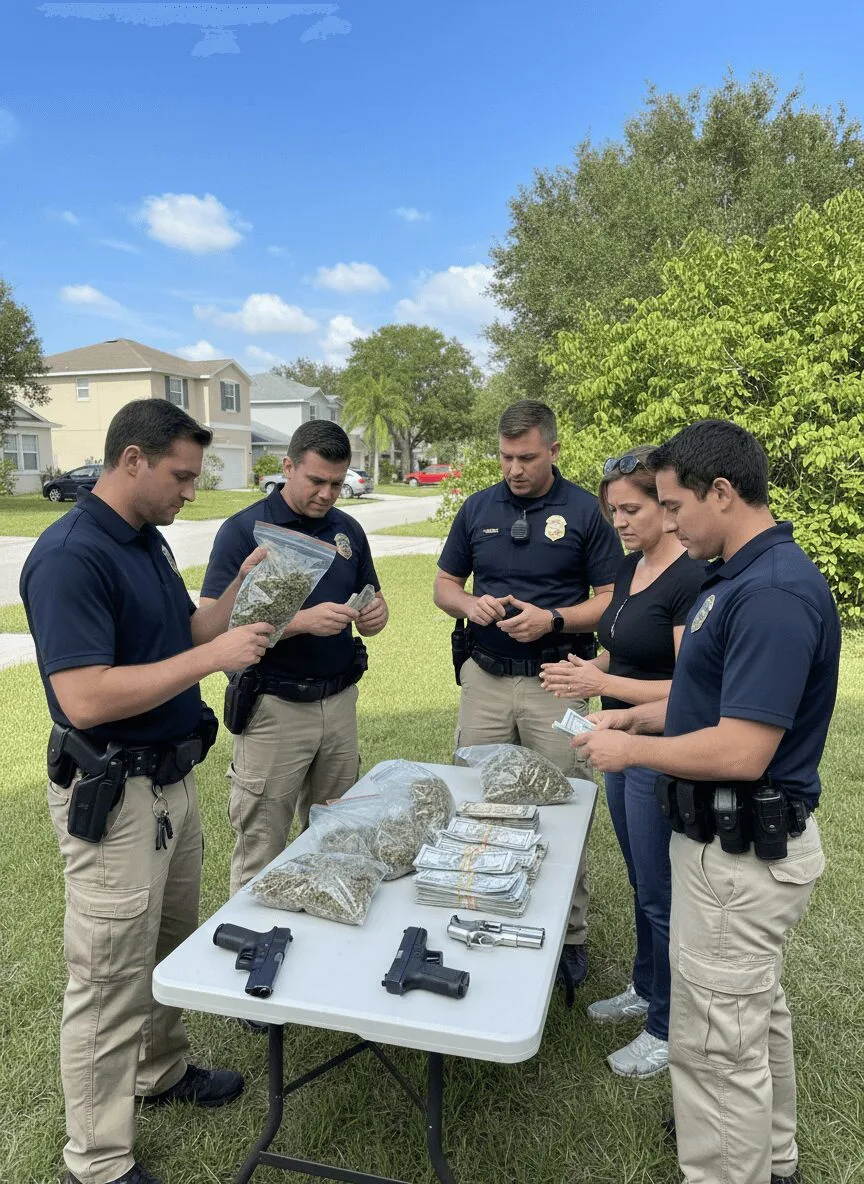
The Martin County drug bust, executed by Sheriff William Snyder’s team, made headlines for both scale and specifics. According to CBS12 News, detectives dismantled a significant narcotics network after an intensive investigation centered around Indiantown. The takedown led to several arrests, the seizure of more than $60,000 in cash, multiple firearms, bulk quantities of marijuana, cocaine, THC vape cartridges, and even promethazine cough syrup. Law enforcement highlighted concerns over the alleged targeting of local youth, particularly regarding distribution near schools. Investigators also described the operation as part of a response to a steady uptick in drug trafficking along key corridors that run through South Florida. As youth safety and education remain hot-button topics, it’s timely to consider why discussing cannabis openly with young people is critical alongside enforcement. Arresting officers said several suspects faced a blend of state and federal charges, including trafficking controlled substances, weapons violations, and intent to distribute. The Martin County drug bust quickly became a focal point for debates on cannabis enforcement and youth protection policies in Florida.
Expert Take: What the Bust Means for Cannabis, Law, and Culture
Let’s get real, there’s a bigger lesson behind the Martin County drug bust. Operations like this spotlight the friction between an outdated prohibition-driven mindset and the modern, nuanced reality of cannabis markets. As Marijuana Moment recently reported, enforcement can risk sweeping up non-violent, small-time cannabis players with little upside for true community safety. Industry leader Shaleen Title, formerly of the Massachusetts Cannabis Control Commission, summed it up best: “Effective cannabis regulation is built on the foundation of reducing harm and not criminalizing those caught in outdated enforcement cycles.” MJBizDaily analysts agree. They argue that increased transparency and licensing frameworks reduce illicit activity better than headline-making raids. Looking at national trends, it’s clear that emerging legalization opportunities can offer both challenges and lessons for states like Florida. Still, the intersection of cannabis with guns, harder drugs, or youth access complicates the narrative, and law enforcement’s job is no easy ride. But focusing only on punishment misses an opportunity. Proper education, treatment, and product testing—combined with legal pathways for responsible cannabis use—change the game entirely. Balanced responses, public health focus, and clear distinctions between cannabis and criminal enterprises remain vital. Incidents like the Martin County drug bust challenge the state to sharpen this balance.
Looking Ahead: Cannabis Reform, Social Acceptance, and Smarter Enforcement
Despite the drama of the Martin County drug bust, the broader cannabis industry continues to grow, learn, and adapt. Legalization in other states highlights how regulated, transparent markets undercut illicit trade and keep communities safer—something Brookings Institute has explored in depth. Florida’s future likely rests on how policymakers, business leaders, and communities use these moments to push for rational, balanced reforms. Advocates hope for pathways that distinguish between harmful criminal organizations and the legal cannabis industry, supporting those who need medical access while being smart on youth protection. While headlines like the Martin County drug bust catch public attention, savvy observers see them as catalysts—fuel for overdue conversations about smarter, focused enforcement and continued normalization. By learning from events like these, the path to a safer, fairer, and more successful cannabis landscape gets clearer every day.
Originally reported by: cbs12.com
1 Comment
Pingback: Psychedelics for PTSD Treatment: Science Uncovers Brain Rewiring