



Trump marijuana executive order: What Changes Now?
The Trump marijuana executive order is making headlines and stirring up the cannabis community. Why now? Cannabis regulation is a hot issue. With shifting public opinion and state-level reforms, every federal move gets industry leaders, advocates, and politicians buzzing. This executive order could signal a new era—one where business, law, and public perception collide. Let’s break down what’s changed, why it matters, and what seasoned insiders think about the impact of the Trump marijuana executive order.
The Regulatory Maze: A New Era for U.S. Cannabis?
Understanding the Trump marijuana executive order means looking at the tangled web of U.S. cannabis law. Federal prohibition remains under Schedule I classification, as outlined by the DEA. Yet, states across the nation have gone rogue, legalizing cannabis for medical or adult use, spurring a $20-billion industry according to New Frontier Data. In states like Ohio, grassroots advocates are fueling legal reform drives that shape these rapidly evolving markets. Meanwhile, Congress flirts with reform, and bipartisan support grows, but federal clarity remains a moonshot. Against this backdrop, executive actions from the White House become lightning rods, either igniting radical change or reinforcing old barriers. The Trump marijuana executive order lands smack in this climate, promising to disrupt, but not necessarily resolve, the friction between state advances and federal drag. Socially, over 68% of Americans now support legalization, per a recent Gallup poll. This shifting sentiment means every regulatory nudge reverberates far beyond Capitol Hill, and even retail community disputes, such as the recent closure of a local smoke shop sparking significant local debate, reflect the public’s engagement in these issues.
Key Developments: What the Trump Marijuana Executive Order Actually Does
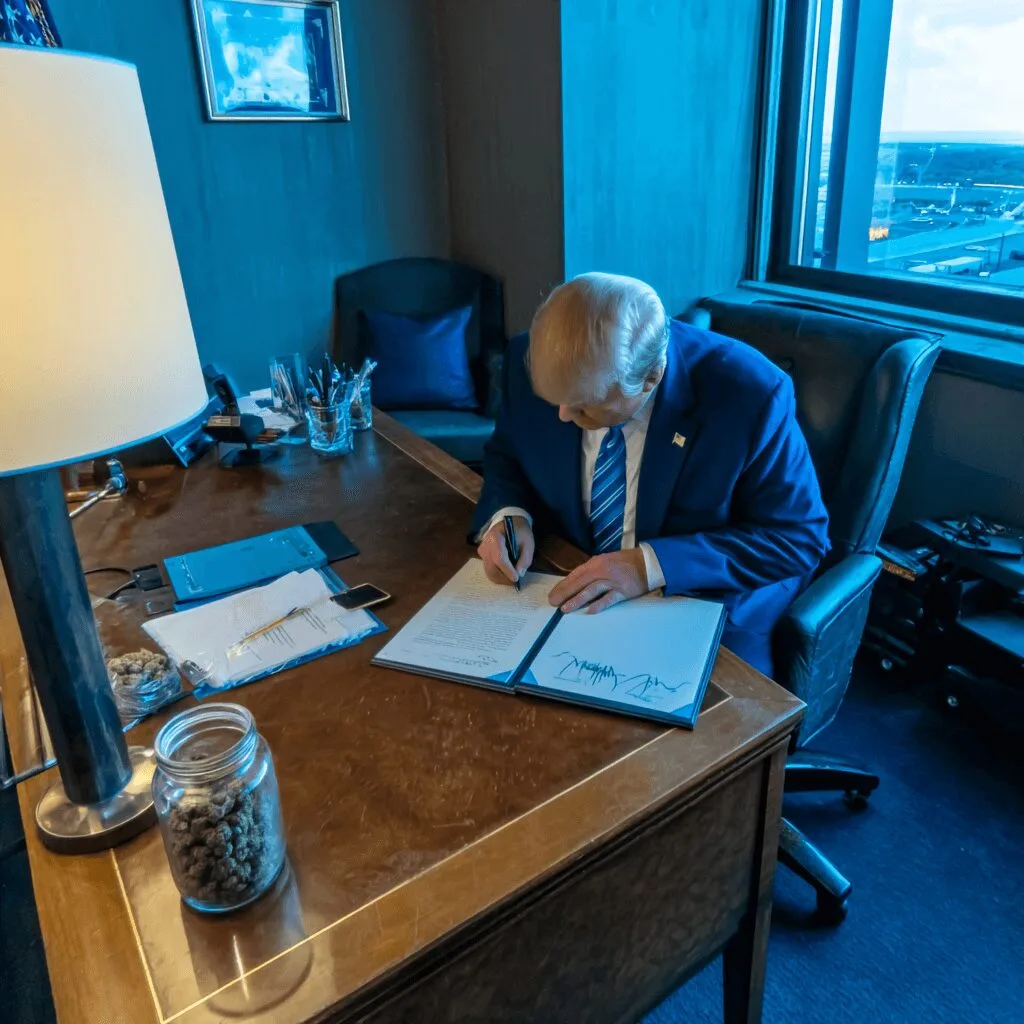
What’s beneath the bold headline? According to the original reporting, the Trump marijuana executive order outlines specific enforcement priorities. The order directs federal agencies to reconsider prosecution priorities on cannabis-related offenses, especially in states with licensed, regulated cannabis businesses. The timeline? The executive order surfaced in June 2024, following heated debate in Congress about criminal justice reform and medical marijuana research. The reforms echo bipartisan pushes at the state level, much like the surge of marijuana reform among lawmakers in Tennessee. While the order doesn’t re-schedule cannabis federally, it instructs the Department of Justice to deprioritize prosecution of licensed state industry actors. It also tasks agencies with reviewing barriers to cannabis research, impacting programs that benefit veterans and mental health— efforts similar to how cannabis is breaking barriers in veteran PTSD care. Some state officials, particularly in Colorado and California, voiced cautious optimism. Company leaders like MedMen and Cresco Labs issued statements welcoming the clarity. According to Marijuana Moment, the order also mandates a new federal task force to evaluate tax and banking roadblocks in the cannabis sector. Legal analysts at NORML stress that such executive actions still leave much up to agency interpretation. Some caution that without Congressional follow-through, true legalization remains out of reach. Still, industry stocks ticked up on the news, illustrating how regulatory certainty—however incremental—can lift markets, as highlighted by numerous cannabis business insights covered in MJBizDaily.
Expert Insights: Why the Executive Order Matters
Let’s cut through the smoke. Leading analysts see the Trump marijuana executive order as a high-stakes pivot point. Sheila Voss, policy director at Drug Policy Alliance, notes, “It’s not legalization, but it sets the tone for a new federal dialogue, whether by championing reform or forcing Congress to act.” Industry expert Leafly’s politics desk highlights that any executive order, while dramatic, could be rolled back by the next administration. This dynamic is not unique to federal actions; for example, even states with robust programs face sudden market risks, as seen after recent reforms in Washington sparked industry uncertainty. Yet, as MJBizDaily reports, 2024 marks a tipping point where markets, regulators, and consumers are all forcing the cannabis conversation into the mainstream. Why so much fuss? Simple: clarity—even if imperfect—increases investor confidence. Entrepreneurs, already navigating tricky state-federal waters, can now plan ahead. That’s a rare gift in the cannabis game. Even with “deprioritized enforcement,” risks remain, but so does momentum. As longtime advocate Ethan Nadelmann notes in a Rolling Stone interview: “Federal change always starts with small wins. This is one of them.”
The Road Ahead: Growth, Caution, and Big Potential
The Trump marijuana executive order doesn’t solve everything, but it’s a signal. A green flag, if you will, flying over a rapidly evolving industry. Businesses now have some breathing room. State innovators can keep blazing trails. For advocates, it’s the partial decriminalization win they’ve pushed for—without giving up on full legalization. Of course, landmark reform takes persistence and community input. According to a recent Pew Research Center report, national support for progressive reform has never been higher. Social acceptance is at an all-time high, and the push for equity and access gathers steam every year. So, keep watching Washington, but bet on the grassroots, too. Cannabis in America isn’t just a policy issue anymore—it’s a cultural movement. And the Trump marijuana executive order marks another big leap forward.
Originally reported by: franklinfavorite.com