





Douglas County marijuana seizure: Massive bust shocks Orondo
Let’s talk about why the latest Douglas County marijuana seizure is on everyone’s lips right now. Orondo, a quiet rural spot in Washington, just witnessed a major law enforcement crackdown that put the cannabis community on alert. Regulatory pressures, evolving state laws, and heated debate over illicit grows are all coming to a head. If you care about the cannabis scene—legal, social, or economic—this is a story that can’t be ignored. We’ll break it down: what went down, what it means for the market, and how it fits into the bigger industry picture.
Legal Landscape & Local Tensions: Understanding the Douglas County Marijuana Seizure
To really get the full story behind the Douglas County marijuana seizure, you have to understand Washington’s complex cannabis regulations. The state legalized recreational marijuana back in 2012, making it a pioneer in the movement (Washington State Liquor and Cannabis Board). But even as the legal market grew, unauthorized or ‘gray market’ operations continued to thrive, especially in rural counties where oversight is tougher, land is abundant, and some folks are still wary of full legalization. According to Leafly’s guide on Washington marijuana laws, enforcement actions spike in these areas whenever the market heats up or neighbors file complaints. These enforcement fluctuations are not unique to Douglas County, as seen in how other locations, like LeRoy, responded when new cannabis shops attracted community attention—consider the recent local shifts when a shop opened in LeRoy. The Douglas County marijuana seizure is a classic example of these ongoing enforcement efforts, reflecting how local law enforcement walks a tightrope between state legalization and federal prohibitions. Add in growing pressure from policymakers, and you’ve got the current tense climate surrounding rural cannabis grows.
What Went Down: The Orondo Marijuana Raid in Detail
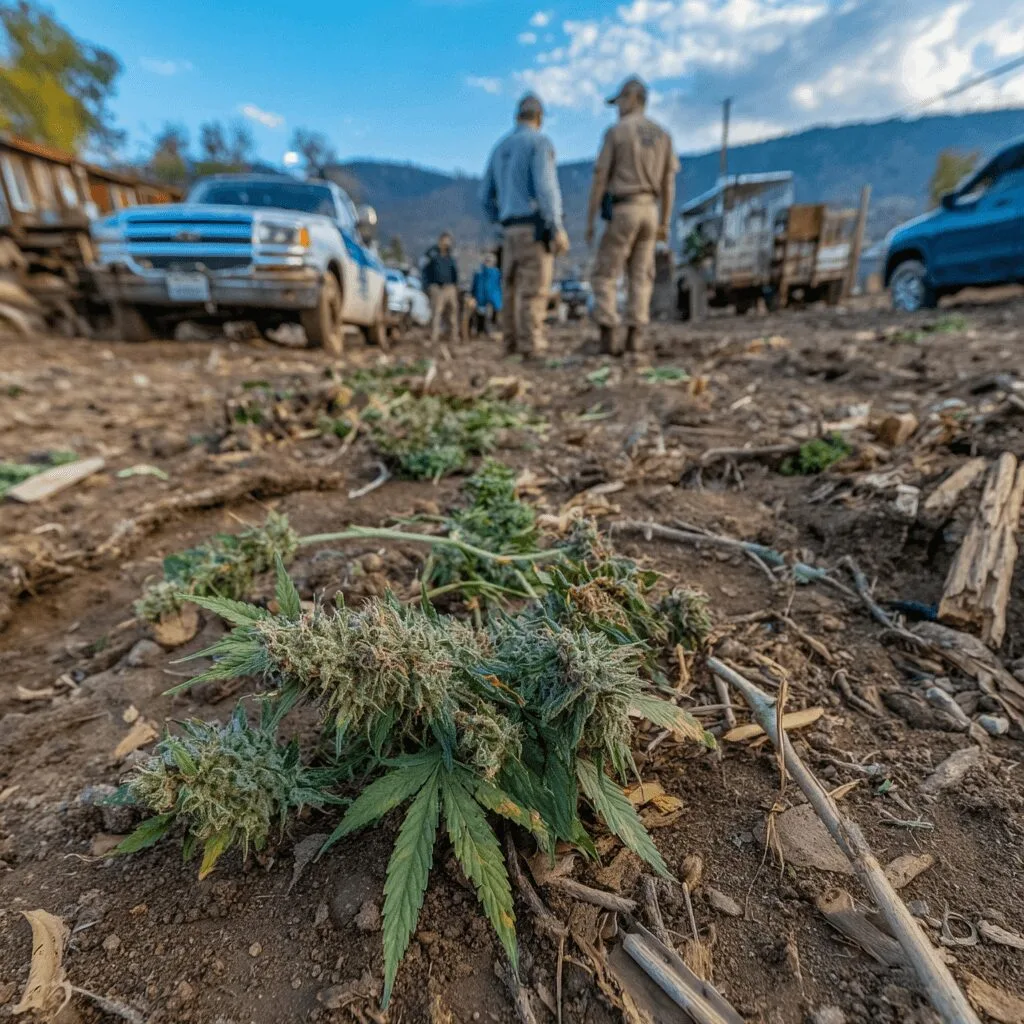
So here’s how the Douglas County marijuana seizure played out, according to credible reporting from KPQ News this week. Law enforcement responded to a tip about a possible illegal cannabis grow near Orondo. Quickly assembling a team, they arrived on scene to find what was described as a ‘massive’ number of mature marijuana plants and loose cannabis leaves scattered across dry, dusty ground. Local officers, no feds, just homegrown sheriff’s deputies and task force members, confiscated thousands of plants. They also found several makeshift structures and basic outdoor irrigation. Similar questions about organized crime versus unlicensed growers have been raised in places like Oklahoma, where a widely discussed legal fight among marijuana growers highlights what’s at stake for the industry. This Douglas County marijuana seizure made headlines statewide and raised debate: Who’s growing? Are operations legally permitted? Is it organized crime, or just unlicensed small farmers caught by evolving laws? Legal experts noted that, under current Washington law, unauthorized cultivation can carry harsh penalties, including asset forfeiture. This Orondo bust didn’t just shut down crops, it sent shockwaves through the region’s intertwined legal and gray marijuana economies.
The Bigger Picture: Expert Analysis on Douglas County Marijuana Seizures
Let’s dig below the headlines. Why do these seizures keep happening, and what’s their impact? Many advocates argue these events are growing pains for an industry in transition. Unlicensed grows stem from a market struggling with high regulatory fees, limited licenses, and confusing patchwork rules. As Marijuana Moment recently reported, “When legalization increases barriers to entry, the illicit market adapts, sometimes creatively, sometimes in ways that frustrate both law enforcement and legal entrepreneurs.” Cannabis industry consultant Nora Lieberman explains, “Crackdowns like the Douglas County marijuana seizure highlight the need for regulatory reform. Small growers deserve paths to legality, not just punishment.” Meanwhile, community sentiment is split: some locals resent illicit operations for resource use and legal risks, while others see them as survivors in an overly restrictive market. Similar stories unfold in states adopting new cannabis regulations, such as Ohio, where families want to stay informed about marijuana law changes. Seizures like this draw a stark line between legal compliance and legacy cultivation, and the fallout inevitably lands hardest on growers with the least resources.
Looking Forward: Reform, Opportunity, and the Staying Power of Cannabis
Where does the Douglas County marijuana seizure leave us? The short answer: at a crossroads. Enforcement will likely increase as regulators try to control both crime and compliance. But the cannabis industry isn’t going anywhere—it’s adapting, growing, and calling for smarter solutions. Market analysts at Cannabis Business Times see these friction points as the birthplace of updated policies that will eventually bridge gaps between legal markets and legacy operations. As more communities debate local bans and access, the push for fairer licensing and comprehensive reform gets stronger. So, even when news breaks about a big Douglas County marijuana seizure, it’s another signpost on cannabis’s hard but hopeful path toward normalization and opportunity for all involved.
Originally reported by: kpq.com

1 Comment
Pingback: Kentucky medical marijuana dispensaries: When Will Doors Open?