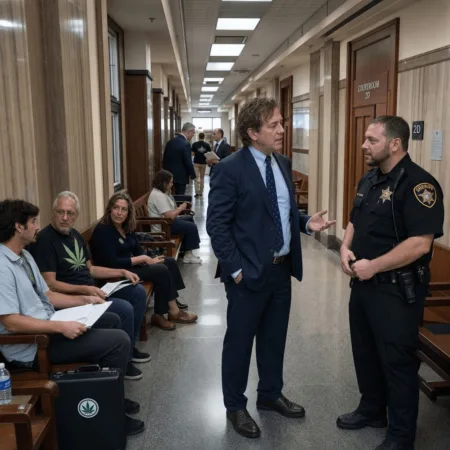





Federal Marijuana Policy: What Congressman Cohen & Allies Say
Right now, the conversation around federal marijuana policy is hotter than ever. With changing tides in Congress, increasing bipartisan support, and more Americans than ever backing cannabis reform, these policy shifts are making real waves. Congressman Cohen, alongside a coalition of industry insiders and policy advocates, is driving fresh momentum. From legal headaches to social justice, this issue impacts everyone—whether you consume, invest, or just love a good policy debate. Here, we break down why federal marijuana policy is in the spotlight, what key players are saying, and what it means for the future of U.S. cannabis.
Understanding the Landscape: Federal Marijuana Policy in Context
Federal marijuana policy is tangled up in a wild web of state laws, old-school stigmas, and evolving public attitudes. Although Americans overwhelmingly support marijuana legalization (Pew Research), cannabis remains a Schedule I substance under the Controlled Substances Act. This disconnect spawns serious issues, including major banking challenges for dispensaries, a patchwork of criminal charges, and hurdles for medical patients. For example, as new federal moves stir market anxiety, recent shifts in DOJ rescheduling reshape the business landscape. Meanwhile, state reforms move much faster than federal action. As NORML accurately maps, nearly half the country enjoys legal access, but federal law clouds everything from research funding to interstate commerce. Navigating these legal contradictions is like rolling a joint with oven mitts, messy, slow, and sometimes frustrating. The patchwork is why serious policy minds, like Congressman Cohen, are pushing hard for federal clarity and reform right now.
Key Developments: What Congressman Cohen & The Cannabis Unity Coalition Are Saying
Congressman Steve Cohen (D-TN) has stepped up again, teaming with the Cannabis Unity Coalition to push for groundbreaking changes in federal marijuana policy. According to Cohen’s recent official press release, the coalition addressed both the urgent need for de-scheduling cannabis and the broader social implications, ranging from criminal justice fallout to stalled medical research. These topics are deeply connected to the business side, where solutions are in high demand, as demonstrated by the emerging need for expert cannabis transaction advisory. Cohen specifically zeroed in on banking reform and the limitations faced by state-licensed operators under current federal statute. In a June 2024 roundtable, diverse stakeholders—industry founders, medical experts, and advocates—shared firsthand accounts of regulatory choke points and called out specific hurdles, such as IRS code 280E and the lack of research funding. Referencing recent DEA guidance, the group acknowledged both progress and ongoing obstacles. The event underscored bipartisan momentum for measures like the SAFE Banking Act, which, if passed, could finally offer legal shields to canna-businesses and their employees. According to MJBizDaily’s recent reporting, these policy shifts could open key financial doors and spur billions in growth. Cohen, echoing national trends, made it clear: federal marijuana policy isn’t just about law, it’s a domino effect touching business, health, and social equity across America.
Expert Analysis: What These Shifts Mean & Why the Cannabis Industry Is Buzzing
So, what’s the real impact of federal marijuana policy moves like those from Cohen and his cannabis coalition? Let’s break it down. By focusing on de-scheduling and banking reform, lawmakers are finally addressing core industry pain points. According to Leafly’s coverage of federal reform, legal uncertainty makes it tough for legit businesses to find banks, invest in R&D, or even write off basic expenses. This situation also leads to complex debates about mental health issues associated with marijuana use; for instance, recent research explores links between cannabis use disorder and depression. This isn’t just bad for business, it undercuts patient access and opens doors for gray-market operators. Lucille Vega, MD, a board-certified physician and vocal medical cannabis advocate, put it bluntly in Marijuana Moment: “Until we have real, unified federal marijuana policy, patients and businesses are left exposed, and progress gets throttled.” Industry leaders are hopeful. When Washington listens to advocates and modernizes policy, the whole ecosystem thrives, jobs, innovation, and public health see a boost. But, as always in cannabis, the devil’s in the details. Actual progress depends on converting talk into real, enforceable action. That’s why these latest developments, public roundtables, policy proposals, and congressional coalition-building signal hope for overdue change.
The Road Ahead: Federal Marijuana Policy’s Next Chapter
Despite decades of policy gridlock, the winds are clearly shifting. As covered by Ganjapreneur, today’s dynamic federal marijuana policy debate is about much more than cannabis—it’s about civil rights, social progress, and smart economics. Regulatory change isn’t just inevitable; it’s the only way forward if the U.S. wants a fair, prosperous, and equitable industry. As lawmakers like Congressman Cohen and advocacy groups double down, business owners, patients, and everyday Americans stand to benefit. The next few years will be critical. Optimism is in the air, and with each congressional session, the U.S. moves closer to federal marijuana policy that matches the will of its people. Keep your eyes on Capitol Hill—because the green future is coming, and it’s looking brighter every day.
Originally reported by: cohen.house.gov