


Cannabis Law Enforcement: Inside Rakesh Sahu’s High-Stakes Battle
If you’ve followed the cannabis scene lately, you know it’s not all mellow vibes and rolling fields. In India—especially Odisha—cannabis law enforcement has become a headline issue. The spotlight’s on young, resourceful officers like Rakesh Sahu shaking up old routines. Their boots-on-the-ground efforts speak volumes about changing legal mindsets in a region where cannabis forays once went unchecked. As laws shift globally and local markets feel the ripple, this story digs into how enforcement landscape is evolving, why regulation’s at a crossroads, and what these changes signal for the larger cannabis industry. Stick around for context, boots-on-the-ground action, expert takes, and why nobody’s hitting pause on this spirited debate.
Regulatory Hills and Rocky Roads: The Realities Behind Cannabis Law Enforcement
The roots of cannabis law enforcement run deep across India, and Odisha is no exception. Cannabis, or ganja as it’s locally known, has its cultural footprints, yet remains banned under the Narcotic Drugs and Psychotropic Substances (NDPS) Act of 1985. This act, as detailed by the Indian government, prohibits cultivation, possession, or trade, making enforcement a daunting task in India’s diverse terrains.
Odisha’s status as a cannabis hotbed stems not just from climate, but from socio-economic currents. Rural unemployment intersects with historic cultivation, often redefining law enforcement’s target audience from hardened traffickers to locals working fields for survival. Social attitudes add complexity, as the plant is sometimes seen as a spiritual or folk medicine staple. But regulators, per Legal Service India, continue to toe a tough line, citing global trends on drug control and the regional spillover from the interstate trade.
As debates unfold about the impacts of marijuana seizures on community and law, recent events elsewhere provide context, such as the way a local seizure has shaken up law enforcement responses and regional perspectives. So, while the West is turning over a new leaf on cannabis, India’s regulatory story remains written in bold, often at the crossroads of culture, legality, and changing economic ambitions.
Young Guns, Old Problems: Key Developments and Real Tensions in Odisha
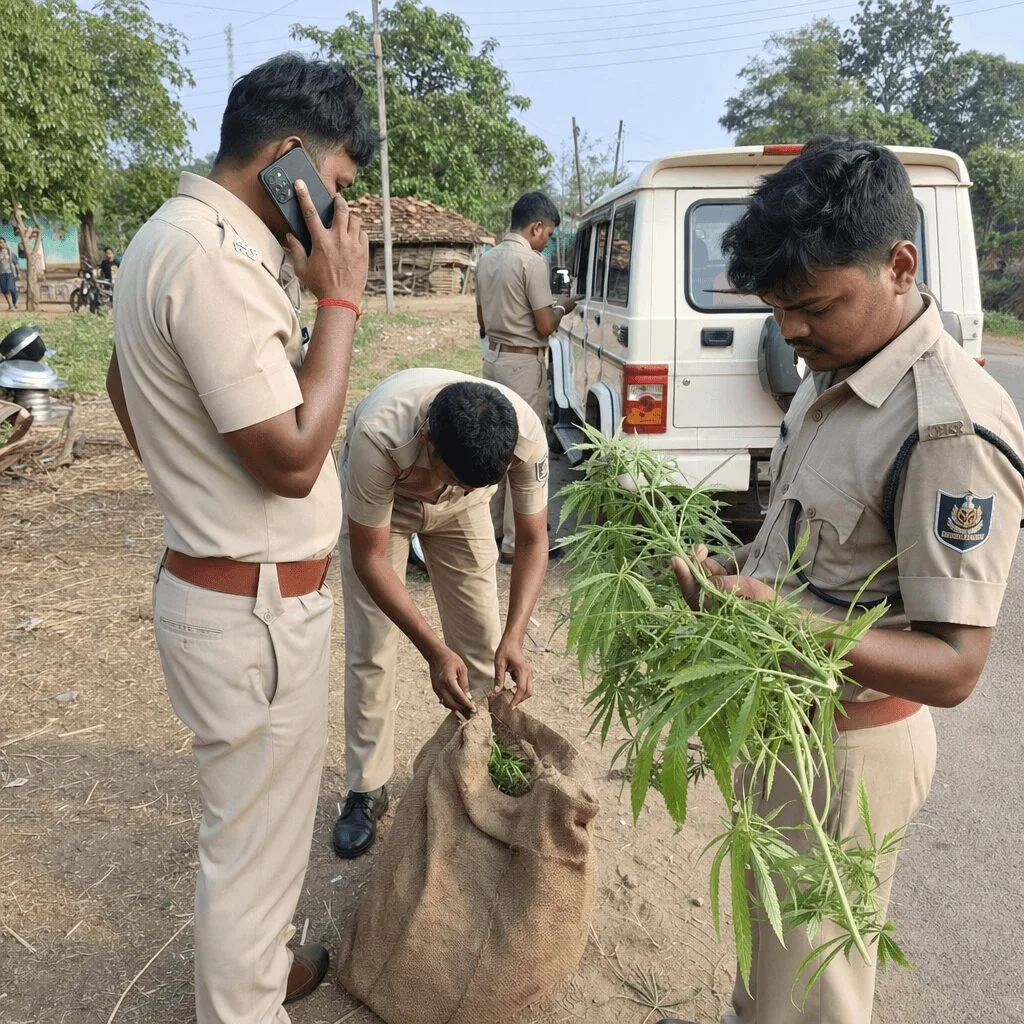
The original report (Odisha Barta) details how IPS officer Rakesh Sahu embodies a new breed in cannabis law enforcement. Patrolling rural lanes, Sahu’s team targets local producers and distributors who leverage Odisha’s lush landscape for illicit cultivation. Their tactics aren’t just raids, they deploy vigilance, street-smart surveillance, and community awareness, blending the old-school grind of law enforcement with modern investigative flair.
Recently, a surge in cannabis seizures made news, often leading to the discovery of hidden plots or clandestine transport via jeeps and small vehicles. According to Odisha law enforcement and local coverage, these high-stakes operations have netted hundreds of kilos, creating ripples in local markets and instigating a sharper legal scrutiny in 1783338300.
The officer’s candid approach, such as checking burlap sacks and inspecting every plant, reflects both pressure and creativity in fighting entrenched, resilient supply lines. Dramatic law enforcement efforts sometimes lead to unintended consequences involving the community and law enforcement resources, which further illustrates how the fight against illicit cannabis continually evolves. Rather than a one-off crackdown, this signals an ongoing commitment to keeping illegal cannabis off the streets, while navigating rural realities. These events are part of a wider trend in cannabis law enforcement across India’s states, each confronting their own unique challenges as urban demand and rural supply collide.
Expert Analysis: The Road Ahead, Global Echoes & Cannabis Context
So what’s the real impact of this new direction in cannabis law enforcement? It’s about more than kilo-counts or busted bales. Globally, the trend is bending toward thoughtful, regulated cannabis markets, a path India seems hesitant to follow. Yet, as local authorities get strategic, there’s also a growing call for policy reform. According to Cannabis Business Times, “rigid enforcement often penalizes the vulnerable without addressing broader socio-economic drivers.” In Odisha, this creates a paradox where small-scale growers risk prosecution, while urban demand surges unchecked on social media and the dark web.
Leading experts like Vicky Pathare, in The Indian Express, note: “Cannabis regulation needs to balance harm minimization with rural livelihoods, especially where medical cannabis is gaining global traction.” Prohibition may chill local intent, but research—such as from Leafly—shows legal markets can reduce crime, promote health, and create new jobs. For those wondering about scientific angles, there are encouraging breakthroughs linking cannabis compounds to improved health outcomes.
Importantly, officers like Rakesh Sahu represent both sides of the debate: enforcement of current laws and engagement with changing realities on the ground. Their experiences fuel policy discussions worth listening to, especially as the Indian government explores cannabis for industrial hemp and limited medicinal use. Plenty of lessons learned, and still plenty of smoke in the air.
Looking Forward: From Crackdowns to Cannabis Conversations
While cannabis law enforcement in Odisha remains vigilant, the story’s not just about roadside busts or headline raids. It’s about a society on the threshold of bigger decisions—how to manage cannabis in a changing legal, social, and economic landscape. As noted by Marijuana Moment, discussion over reform in India is intensifying, and more policymakers are joining the debate.
One thing’s for certain: Whether for social justice, medical breakthroughs, or rural empowerment, cannabis will keep stirring conversations in both courtrooms and living rooms. Those on the enforcement side, like Rakesh Sahu, remind us that law, compassion, and change all share the same road—a road as winding as an Odisha country lane, and just as full of possibilities.
Originally reported by: odishabarta.com