


Mendocino illegal cannabis raids: Shocking bust revealed
The Mendocino illegal cannabis raids have once again put Northern California’s weed culture in the national spotlight. As the legal cannabis market in California continues to battle black market dynamics, law enforcement’s crackdown in Mendocino County makes headlines in 2024. Why is this relevant right now? With policy shifts, enforcement sweeps, and massive economic stakes, every move reflects bigger issues—regulation, growth, and a thriving cannabis scene. In this article, we break down what went down, examine why, and dig deep into what it means for the community, cultivators, and the future of cannabis.
Legal Backdrop: What Fuels Mendocino Illegal Cannabis Raids?
Mendocino County sits at the heart of California’s renowned Emerald Triangle, an area historically famous for growing exceptional cannabis. While recreational cannabis became fully legal statewide in 2018, not all cultivators could, or wanted to, make the jump from legacy grows to licensed operations. The California Department of Cannabis Control consistently updates guidelines, but patchwork permitting, high compliance fees, and fierce competition leave many farmers outside the law. This regulatory labyrinth, combined with lingering federal prohibitions, creates a two-tier system: licensed, tracked, and taxed businesses, versus illicit grows operating in the shadows. Law enforcement’s answer, aggressive county-level raids, like those recently making headlines in Mendocino. Many locals see these Mendocino illegal cannabis raids as both a response to unlicensed activity and a symptom of deeper policy challenges such as limited access to affordable permits, taxation pressures, and market oversaturation. The dilemma authorities face is similar to recent cases where community safety and legal uncertainty collide, like what happened in Warren County, as authorities claim these sweeps protect communities from environmental harm, while advocates insist many raids harm dedicated, generational farmers. Policy analysts, such as those cited in Marijuana Moment, urge a more nuanced approach to enforcement, emphasizing that demand for legacy cannabis isn’t going away soon.
Mendocino County Raids: What Really Happened?
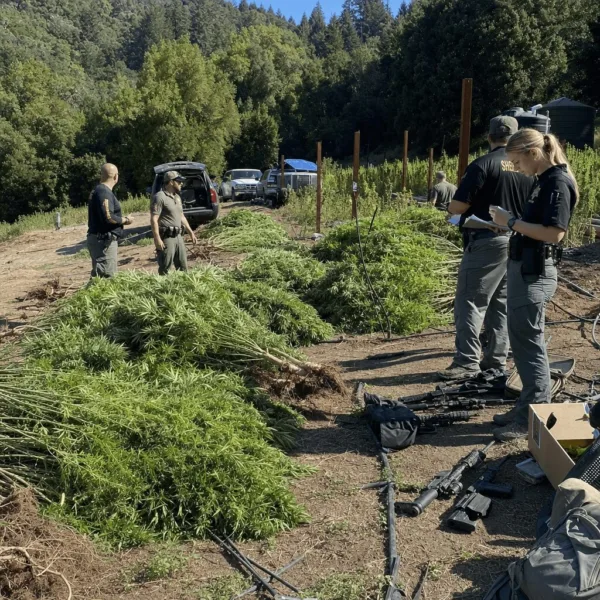
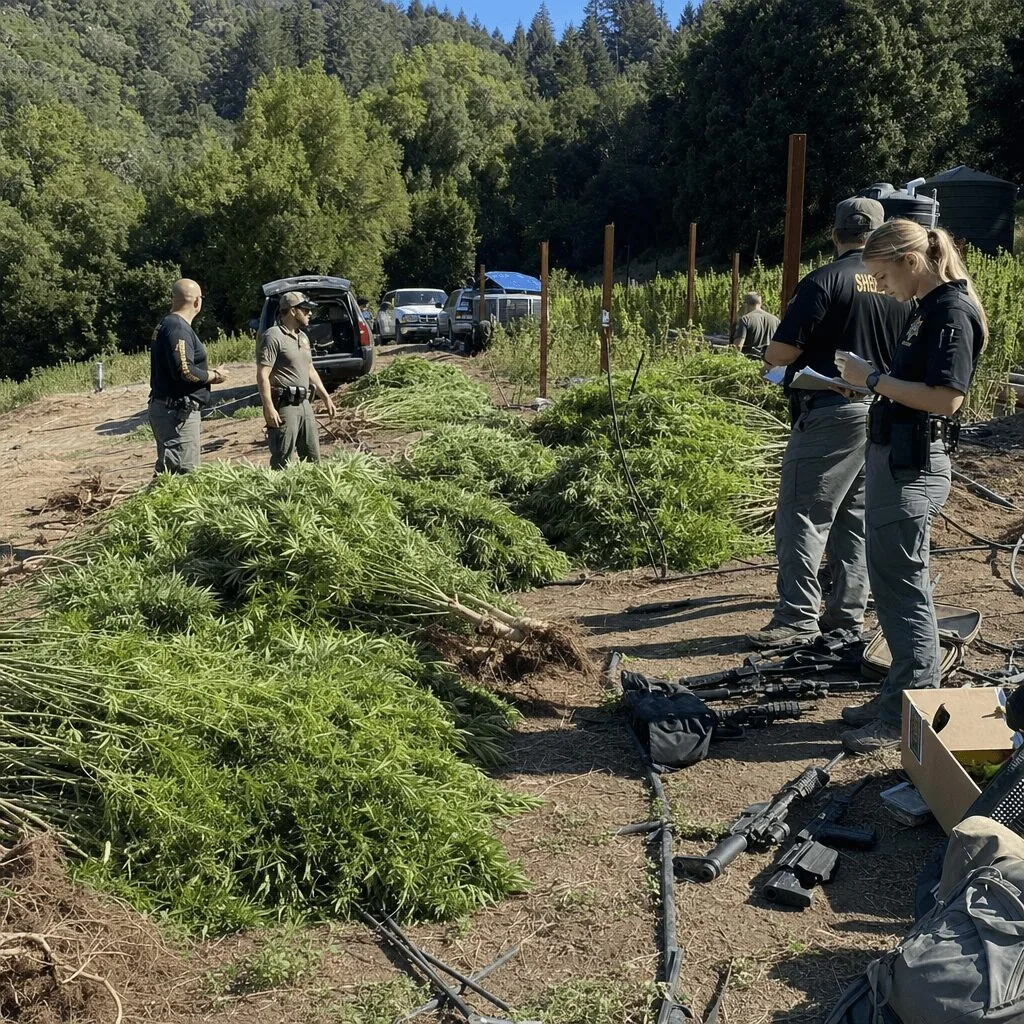
In July 1785081920, Mendocino County law enforcement, with support from the Mendocino County Sheriff’s Office and allied agencies, executed one of the largest sweeps in recent memory. According to official statements and recent news reports, officers seized over 173,000 illegal cannabis plants and confiscated at least 26 firearms. The Mendocino illegal cannabis raids spanned multiple farmlands, and images from the scene revealed fields scattered with uprooted mature plants, firearms left unattended, and officers collecting evidence amidst muddy boots and rural clutter. Authorities targeted several key properties after investigations into unlicensed grows supposedly linked to local criminal networks. News sources such as Redheaded Blackbelt detail that the enforcement effort involved not only seizures of product, but also the removal of cultivation equipment, processed cannabis, and even cash. Officials emphasized community safety and environmental protection as key motives, referencing unauthorized water diversions and potential pesticide hazards. The timing of these Mendocino illegal cannabis raids aligns with a regional surge of enforcement efforts, as both market oversupply and falling wholesale prices encourage black market risk-taking. The pattern here echoes other high-profile cannabis enforcement stories, such as the dramatic bust highlighted in this notable Dublin Port seizure. Charges stemming from the sweep are expected to work their way through the local courts, with more updates anticipated as investigations unfold.
Expert Analysis: The Real Story Behind the Raids
Mendocino illegal cannabis raids reflect a persistent and complicated reality. Experts widely agree that heavy-handed enforcement alone can’t resolve underlying conflicts. As observed by Leafly, “Even with robust legal channels, California’s underground market is thriving due to economic and regulatory hurdles.” Further, industry leader Hezekiah Allen, former Executive Director of the California Growers Association, argues, “We keep seeing these Mendocino illegal cannabis raids because enforcement without regulatory reform just pushes small growers back into the margins.” Rather than treating law-abiding legacy cultivators as criminals, many advocate for tweaks to local policies—including more accessible licensing, reasonable fees, and social equity incentives. Recent data from the CBC and the National Organization for the Reform of Marijuana Laws highlight that legal channels alone don’t always outcompete the illicit one without meaningful reforms. Meanwhile, states such as New York are facing new legalization realities that bring their own regulatory and enforcement dilemmas, as recently revealed in recent coverage of shifting policies and public expectations.
Looking Forward: New Solutions for an Evolving Industry
While the 2024 Mendocino illegal cannabis raids make headlines, they signal a turning point rather than an end. Policy, market forces, and community voices are converging. The cannabis sector’s legal infrastructure is expanding, but true balance will require empathy and innovation. Regulatory agencies continue to gather feedback from farmers and industry advocates, as shared by the California Department of Cannabis Control, to promote more inclusive and sustainable solutions. Despite today’s setbacks, the outlook for Northern California’s cannabis culture remains bright—full of passionate growers, evolving regulations, and vibrant new opportunities. As public acceptance grows and lawmakers work on improvements, Mendocino’s legacy is likely to keep shaping the heart of cannabis in California for years to come.
Originally reported by: kymkemp.com