


Illegal Marijuana Grow Bust: Black Market Scandal Exposed
If you care about the cannabis industry, you’ve seen “illegal marijuana grow bust” stories everywhere lately. The industry’s rapid growth—and patchwork patchwork of state-by-state legalization—means stories like this one out of Oklahoma are becoming more relevant by the day. As law enforcement cracks down on underground cultivation tied to billion-dollar black markets, major issues of safety, legitimacy, and regulation are front and center. Stick with us as we break down the latest illegal marijuana grow bust, look at the roots of the issue, and offer an informed, forward-thinking perspective for all sides of the debate.
Understanding the Background: Legal Gray Areas & Market Realities
The modern cannabis industry is a wild ride, and so is its regulation. While states from California to Massachusetts have legalized recreational or medical cannabis (see this National Conference of State Legislatures guide), enforcement gaps and gray-market loopholes still fuel illegal operations. Oklahoma, for example, has attracted thousands of growers thanks to its low entry costs and open licensing model. But this “green gold rush” has a shadow, with weak oversight and limited resources for regulators. According to AP News, more than 10,000 licensed grows in Oklahoma make it ripe for exploitation. When legal grows outnumber enforcement agents by over a hundred to one, you better believe the temptation for illegal activity is strong. Law enforcement is leaning in, but the balance between supporting small businesses and stopping organized crime is tricky. For example, the challenges faced by New York’s legal cannabis businesses highlight how local economies and broader normalization efforts remain tightly interconnected. This backdrop explains why another illegal marijuana grow bust rattles not just local economies, but also the broader movement to normalize cannabis.
Illegal Marijuana Grow Bust: The Oklahoma Black Market Scheme Busted
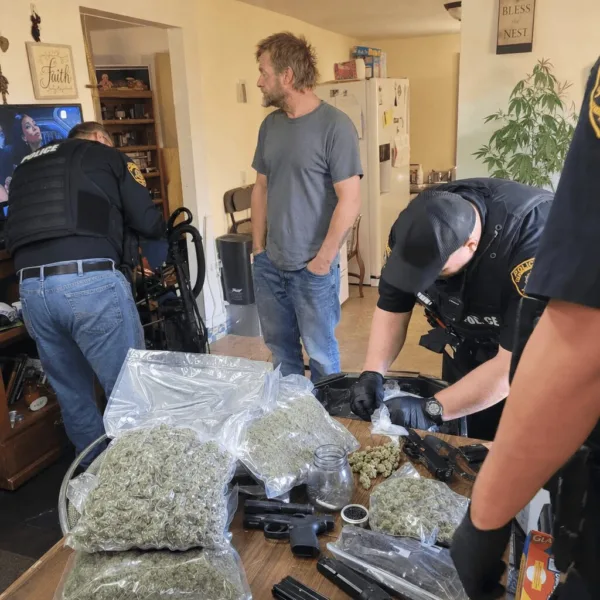
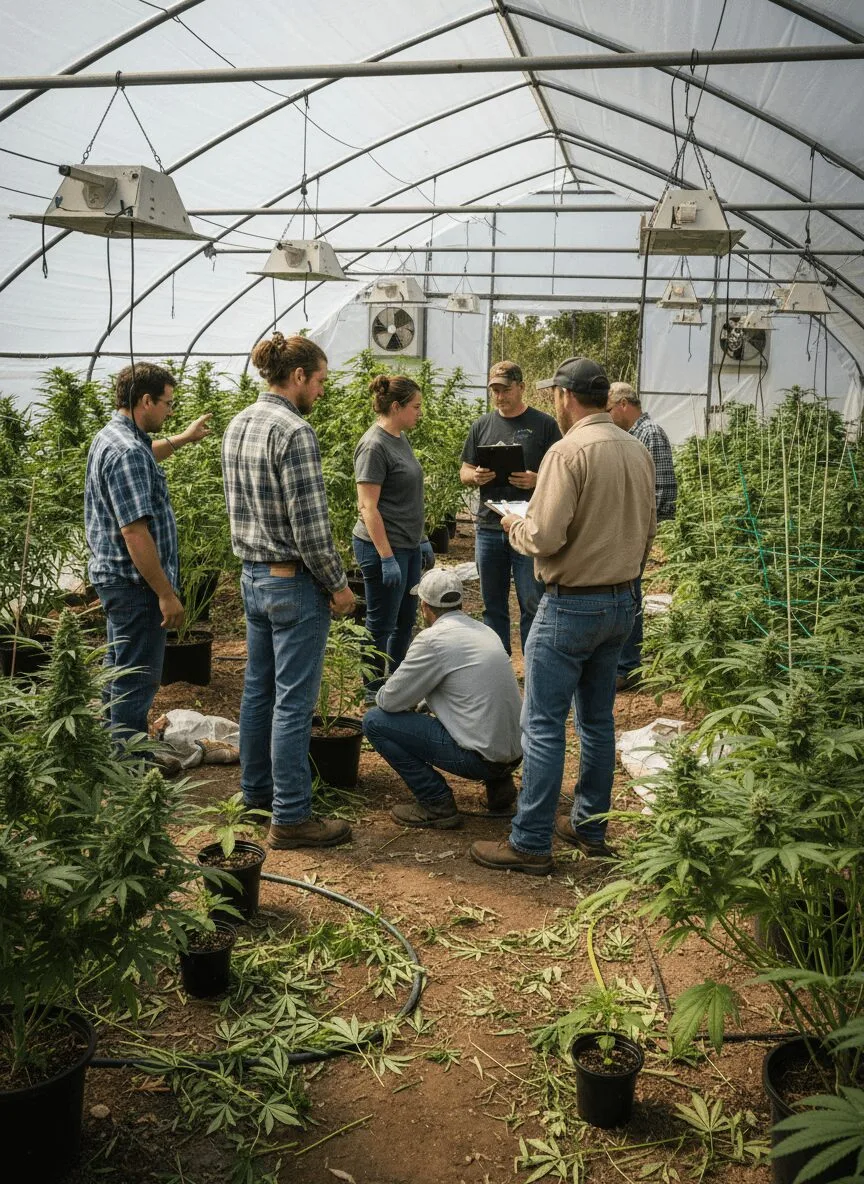
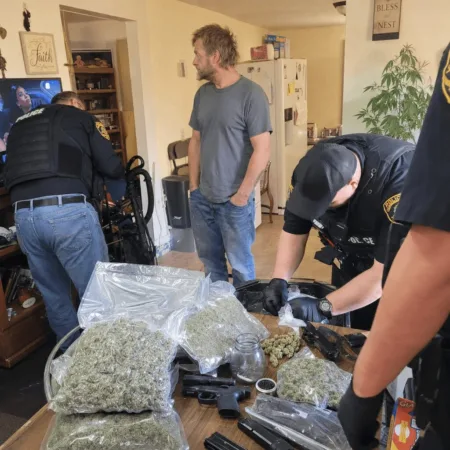
Let’s get to the facts, according to KFOR, authorities recently executed an extensive illegal marijuana grow bust in rural Oklahoma, linking it to a billion-dollar black market network funneling cannabis out-of-state. The operation, allegedly run by multiple shell companies with ties to China and California, used fake paperwork and fraudulent licensing to hide its scale. Local sheriffs discovered sprawling cultivation sites peppered across the county, complete with high-tech lighting, advanced irrigation, and thousands of mature cannabis plants ready for harvest. The bust happened in late May 2024, with authorities seizing over 15,000 plants, nearly 800 pounds of processed marijuana, and a slew of firearms and cash. Prosecutors announced pending charges for racketeering, money laundering, and cultivation without proper state licensing. Investigators say the group exploited regulatory gaps, funneling profits through fake real estate deals. According to the Oklahoma Medical Marijuana Authority, this illegal marijuana grow bust is just one front in an ongoing war against black market actors undermining legitimate growers and public trust. Relatedly, major crackdowns on cannabis-adjacent businesses, such as a recent wave of smoke shop raids in Union County, show how regulatory actions can impact the entire industry.
Expert Analysis: Navigating Challenges, Supporting Reform
Here’s where some nuanced expertise comes in: black market grows like this one are a direct consequence of inconsistent federal policy and light-touch enforcement at the state level. Industry insiders see a frustrating cycle, as legal markets can’t flourish while illicit actors undercut prices and evade taxes. According to Marijuana Moment, experts argue we need “robust, realistic rules that keep the playing field fair for responsible growers.” Amanda Reiman, a leading cannabis policy researcher, notes, “Until there’s an even playing field and federal clarity, operators trying to do things right will always be at a disadvantage.” This illegal marijuana grow bust is further proof of the stakes. Notably, reforms like the removal of certain local cannabis taxes have proven effective in supporting legal operators. The solution is not to crack down harder on all cannabis grows, but to fine-tune enforcement while prioritizing transparency and support for compliance among small legal operators. Otherwise, well-intended farmers risk getting lumped in with bad actors, while consumers deserve confidence that their products are safe, tested, and untied to organized crime.
What’s Next? Bright Spots and a Smarter Path Forward
Despite headlines about another illegal marijuana grow bust, the broader cannabis movement has never been stronger. New regulatory frameworks—like Oklahoma’s updated tracking system and expanded compliance education for growers—are already bearing fruit. As MJBizDaily reports, increased transparency and industry engagement are hardening legal markets against black-market threats. Social attitudes are shifting, too: recent polls continually show that over two-thirds of Americans support legalization. The next step is policy that balances strong enforcement with fair access and support for licensed growers. Each illegal marijuana grow bust is a challenge—but also a learning opportunity. With smarter oversight and greater industry unity, the cannabis community can move beyond these black market sagas toward a future that’s safer, greener, and more inclusive for all.
Originally reported by: kfor.com
1 Comment
Pingback: Denver marijuana business loans: Access cannabis funding now