





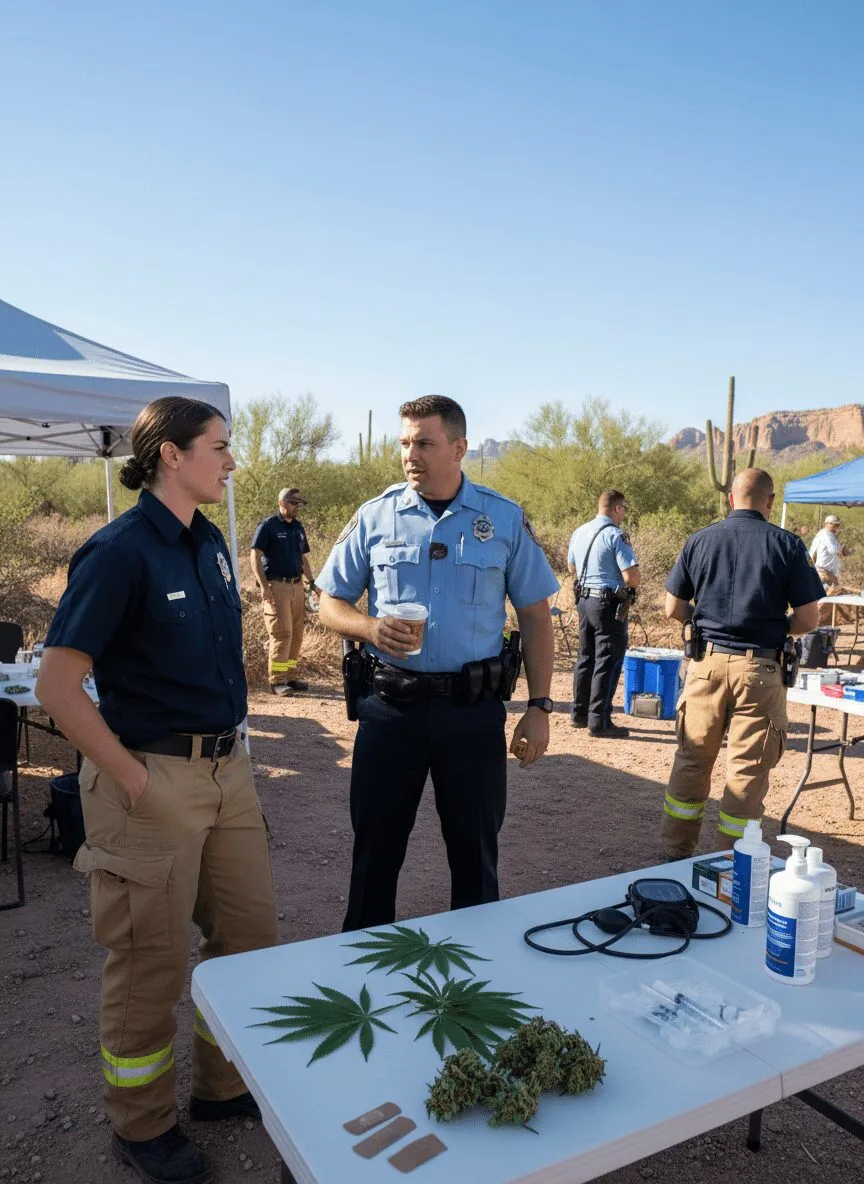
Psilocybin Trial PTSD: First Responders Find Hope in Arizona
If you’re dialed into the mental health scene or follow cannabis and psychedelic trends, you know change is in the desert air. Right now, Arizona’s psilocybin trial PTSD program is making a splash among first responders who’ve dealt with more trauma than most can imagine. These groundbreaking studies matter, not just for their scientific significance, but for how they symbolize shifting policy, public perception, and the expanding role of cannabis and psychedelics in modern healthcare. This article gets into the roots and ripple effects of Arizona’s psilocybin trial PTSD initiative, sharing fresh details, sharp analysis, and why it’s causing buzz industry-wide.
Regulatory Climate, Social Shifts, and the Rise of Psychedelic Therapy
The surge of interest in psilocybin trial PTSD therapies ties directly to recent shifts in policy and social attitudes. For decades, federal law classified psilocybin and cannabis as Schedule I substances, making medical access nearly impossible (as outlined by DEA scheduling guidance). But the 2020s brought a renaissance, with city-level decriminalization popping up in Denver and Oakland, then statewide legalization waves for cannabis and pushes for psilocybin study in Oregon (Oregon Health Authority reports). Arizona has long been a pioneer on the cannabis front, launching medical programs as early as 2010 and steadily loosening restrictions. To understand the broader context of how changes in marijuana policy could ripple through state and national approaches, recent developments highlighting how rescheduling creates new opportunities in states like Washington show that regulatory shifts can drive both commercial and therapeutic innovation. Societal stigma around mental health is fading too, opening doors for first responders via legislative action like Arizona House Bill 2486, which paved the way for controlled clinical trials studying psilocybin’s effects on PTSD and related trauma. Top researchers are now collaborating with medical professionals, signaling a genuine shift from “just say no” to “how can we help?”
Arizona’s Psilocybin Trial PTSD Program: Real Progress for First Responders
This isn’t theoretical, real people are seeing real impact. According to InvestigateTV’s April 2026 report, Arizona’s active psilocybin trial PTSD program is welcoming firefighters, police, and EMS workers struggling with chronic trauma. The trial is conducted with full state oversight, involving licensed researchers and rigorous safety protocols. Several participants have reported “life-changing” relief from symptoms where traditional therapies fell short. Funded by state grants and private partnerships, with medical suppliers like Arizona Psychedelic Institute providing dosing and follow-up care, the program began in early 2026 after HB 2486 cleared legislative hurdles. Notably, the protocol integrates both psilocybin and supplemental cannabis—a nod to the real-world overlap between these emerging therapeutic markets. As legal analysts from Marijuana Moment confirm, this marks the first sanctioned crossover trial of its kind for first responders in the Southwest, paralleling recent shifts in drug policies at both local and national levels that are reflected in updated medical marijuana reclassification discussions in Indiana.
Expert Insights: Why Psilocybin Trial PTSD Innovations Matter
Industry veterans see this not as a fad, but as a turning point. According to Dr. Ethan Russo—a leading researcher cited in Cannabis Now—“Combining therapies tailored to patient needs, especially in high-stress professions, is the next evolution in personalized medicine.” The psilocybin trial PTSD research aligns with broader evidence from Johns Hopkins and MAPS, showing significant decreases in PTSD symptoms from psychedelic therapy (MAPS research). Cannabis, especially when combined with controlled psilocybin dosing, is now recognized for its ability to smooth out anxiety spikes, promote sleep, and help process trauma—making the Arizona trials a vanguard model to watch. These new approaches are especially pertinent in light of current federal and state rescheduling efforts, as highlighted in the marijuana rescheduling impact analysis for cannabis businesses. The dual-molecule approach may soon be the gold standard for treating complex trauma, especially for those underserved by mainstream medicine.
Gazing Forward: The Momentum of Psilocybin Trial PTSD Therapies
With every first responder’s success story, Arizona’s psilocybin trial PTSD project pushes the limits of what’s possible in trauma treatment. Legislative frameworks are evolving, research is maturing, and stigma is giving way to hope. Industry analysts say that if trends continue, we could see policy dominoes fall in surrounding states, much like what occurred after early medical cannabis successes in Colorado and California (see Leafly’s legalization timeline). The message is crystal clear: nuanced, science-backed compassion is winning over blanket prohibition, and the cannabis industry stands ready to help usher in a new era of healing—no reefer madness required. The future is bright, and Arizona’s psilocybin trial PTSD pioneers are just getting started.
Originally reported by: investigatetv.com

1 Comment
Pingback: psilocybin trial PTSD Arizona: Breakthrough for First Responders