


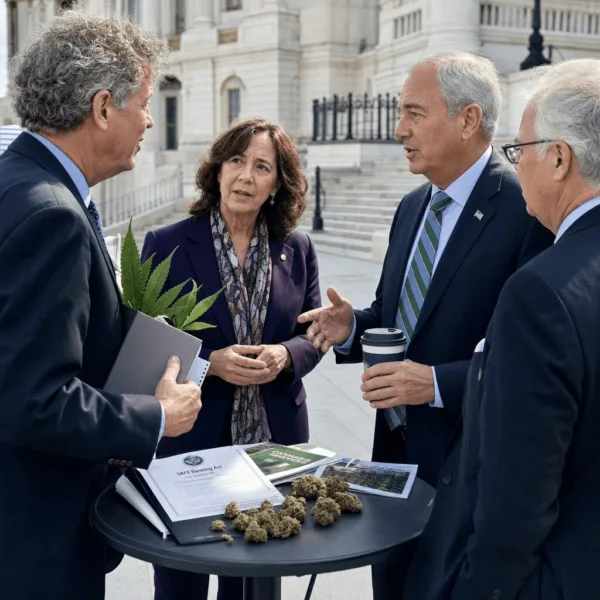



Grand Forks drug sentencing: What led to a 10-year term?
If you think the cannabis conversation is chill in 2024, think again. The Grand Forks drug sentencing case just sent ripples through North Dakota and beyond. With cannabis at the center of a hefty 10-year sentence, this news shines a light on where our laws still clash with reality—and why advocates and critics alike are buzzing. Dive into the roots of this sentencing, the legal backdrop, and what it means for the broader movement.
Behind the Legal Smoke, Background & Context of Grand Forks Drug Sentencing
North Dakota’s cannabis laws remain among the strictest in the Midwest. Despite sweeping reform in states like Minnesota and Montana, North Dakota punishes possession and distribution heavily, even as advocacy groups like NORML highlight outdated penalties. Those seeking to understand the evolving risks and landscape around substances should not overlook recent insights on nicotine and cannabis risks in 2024. While the Grand Forks drug sentencing seems tough by modern standards, the state’s resistance to full legalization keeps harsh mandatory minimum sentences in play. Plus, local law enforcement in places like Grand Forks faces community scrutiny, balancing public safety with a changing attitude towards cannabis use. According to Pew Research, over 88% of Americans now approve of at least medical cannabis, a stark contrast to North Dakota’s hard line policy. This sets the stage for why the latest headlines around Grand Forks drug sentencing have struck such a nerve.
Breaking Down the Core, Key Developments & Issues in Grand Forks Drug Sentencing
Let’s get down to brass tacks. According to recent reporting from the Grand Forks Herald, a local man in his 30s received a 10-year prison sentence after being convicted of multiple felony counts related to the possession and intent to distribute cannabis. Those following regional cannabis issues may also want to review shifting law enforcement attitudes, such as the Minnesota marijuana arrest that caused community reactions. The arrest occurred in a modest Grand Forks neighborhood. Law enforcement discovered significant quantities of cannabis alongside distribution materials, such as scales, baggies, and rolling papers. The case went to trial in mid-spring 2024, after state prosecutors highlighted a pattern of prior offenses. The judge, referencing North Dakota’s mandatory minimum guidelines, handed down the decade-long term without parole for at least six years. This particular Grand Forks drug sentencing underscores how even non-violent cannabis offenses carry serious risks in the region. The defendant’s attorney argued elements of personal use and shifting public opinion, but local statutes left little wiggle room. Cases like this have become flashpoints in ongoing discussions between pro-cannabis reformers and traditionalists who believe enforcement keeps neighborhoods safer.
Expert Analysis & Cannabis Advocate Perspective on Grand Forks Drug Sentencing
Watching another Grand Forks drug sentencing hit the news, one can’t help but shake their head at the disconnect between law and modern cannabis culture. As Jane Klein, respected editor of Leafly, put it, “North Dakotans are being left behind in the national cannabis conversation. When other states are building businesses, ours are building cases.” Access to high-quality and regulated product, as outlined in the context of strict lab standards for marijuana, remains a point of contention in reform efforts. The fallout from this latest sentencing isn’t just about one man, it highlights the slow pace of criminal justice reform and its lasting repercussions for real people and entire families. Industry experts such as Marijuana Moment point out that states with legal markets have actually seen youth access decline and local economies boom. Yet, here we see a talented individual sidelined for conduct that would be lauded (or taxed!) two states over. The Grand Forks drug sentencing is a clear wake-up call to policymakers and advocates alike, we need laws reflecting reality and science, not fearmongering from another era.
What’s Next? Future Outlook & Closing Thoughts on Grand Forks Drug Sentencing
The road ahead for North Dakota isn’t set in stone—far from it. As more states like Minnesota and South Dakota embrace cannabis reform, the pressure is on for North Dakota lawmakers to catch up. The Grand Forks drug sentencing case gives us all reason to reflect: Are we criminalizing everyday actions or fostering safer, more inclusive communities? According to Marijuana Policy Project, North Dakota currently has multiple pending initiatives aimed at easing cannabis penalties and expanding access. Each time a harsh sentence like this flashes across local headlines, it fuels change. As public opinion warms and industry voices grow louder, the next chapter for cannabis policy—and for the everyday folks impacted by it—looks brighter than ever.
Originally reported by: grandforksherald.com


1 Comment
Pingback: Abbott THC education workforce: What’s Changing for Texans?