




Kansas fentanyl dealer bust: Major arrest rocks community
It’s hard to understate the tension rising from the latest Kansas fentanyl dealer bust. These incidents aren’t just tabloid fodder—they’re watershed moments affecting how people perceive all substances in our state, cannabis included. As communities grapple with real harm caused by illicit fentanyl, the bust highlights key regulatory, law enforcement, and social issues. For the cannabis industry, it’s a case study of why we need clear, fair, and realistic policies in a rapidly changing Midwest market. This article explores all the critical facts, deep context, and expert insights you need to truly understand what this Kansas fentanyl dealer bust means for both public safety and cannabis industry progress.
The Shifting Legal Landscape in Kansas: Cannabis, Controlled Substances, and Regional Ripple Effects
In Kansas, policy debates over controlled substances have heated up in recent years, influenced by shifting tides both locally and regionally. Historically, the state has enforced some of the strictest drug laws in the region, particularly regarding fentanyl and cannabis. While Kansas state legislators have resisted full adult-use cannabis legalization, neighboring states like Missouri and Colorado have moved ahead, fueling a regulatory patchwork—and even impacting local cannabis sales. For instance, the challenges and trends seen in 2024, including the decline in Colorado cannabis sales, have created new pressures and cross-border tensions that Kansas policymakers watch closely. According to the National Criminal Justice Reference Service, overdose deaths linked to fentanyl and synthetic opioids have spiked dramatically in Kansas over the last five years, fueling urgency for law enforcement crackdowns.
Conversely, despite broad bipartisan support for medical marijuana reform, Kansas remains on the short list of states with zero access to legal cannabis, apart from federally regulated CBD. Socially, attitudes toward cannabis are changing rapidly—thanks to educational efforts and high-profile medical cases, as well as developments like emerging marijuana debates in other states. Still, street-level enforcement often lumps cannabis infractions together with more dangerous substances, complicating public understanding and policy.
Kansas Fentanyl Dealer Bust: What Really Happened?
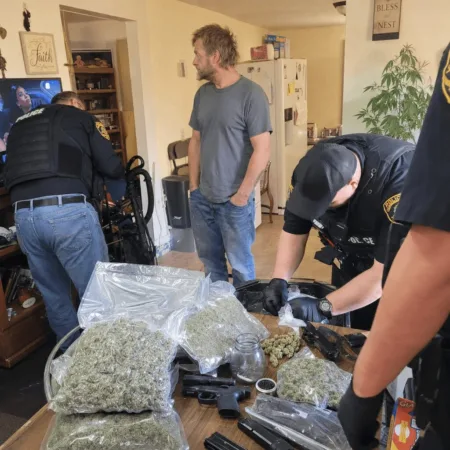
The recent Kansas fentanyl dealer bust unfolded in a typically quiet suburb, according to Hays Post. Police executed a warrant at a local residence after a months-long investigation led by state and federal agencies. Officials seized a significant quantity of fentanyl pills meant for local distribution, and arrested one primary suspect with prior convictions. Interestingly, while cannabis was reportedly present at the scene, no evidence was found to suggest large-scale cannabis trafficking or a direct link between the marijuana and fentanyl supply—sparking renewed attention about the lines between substances. For a deeper look at the consequences when gun charges and cannabis intersect in legal proceedings, see this related legal case in Maine.
Investigators stressed that the bust was part of a broader campaign responding to Kansas’s sharp rise in fentanyl overdoses—a crisis that, according to the U.S. Drug Enforcement Administration, is now a leading cause of accidental death statewide. Authorities received praise for swift action, though discussions once again turned to whether law enforcement resources should target the most dangerous substances or focus more on harm reduction and changing cannabis laws. Legal proceedings are ongoing, and updates from Hays Post continue as the community digests the full impact of this Kansas fentanyl dealer bust.
Cannabis, Fentanyl, and Policy Clarity: Expert Insights—and Broader State Comparisons
What does this Kansas fentanyl dealer bust reveal about current drug policy debates? It highlights Kansas’s ongoing struggle to distinguish between low-risk cannabis offenses and dangerous drug trafficking. Industry experts stress that failing to draw these lines perpetuates confusion and undermines harm reduction. In fact, a broader national look at how psychedelics and cannabis laws are shifting underscores the need for better policy clarity everywhere. As Marijuana Moment recently noted, “Cannabis enforcement should be re-prioritized, focusing law enforcement on actual public health dangers like synthetic opioids, not the responsible adult use of marijuana.” (Eric Altieri, Executive Director, NORML).
National trends reinforce this view; as the Pew Research Center reports, nearly 88% of Americans now support some form of cannabis legalization—a statistic that mirrors rising curiosity and changing sentiments in Kansas. For Kansas lawmakers, crafting transparent policies that clearly separate cannabis from synthetic opioids has become an urgent task, especially as neighboring states implement progressive reforms.
Looking Forward: Cannabis Reform and Safer Communities
While the Kansas fentanyl dealer bust has sparked fresh anxiety, it also offers an unexpected opportunity: a chance to rethink the state’s approach to cannabis regulation and public health. With medical cannabis reform gaining momentum across the region, Kansas policymakers face growing calls for evidence-based, compassionate, and transparent drug laws. According to Leafly, momentum is shifting as more states modernize their policies, driving down incarceration rates and focusing enforcement on substances that truly harm communities.
The cannabis community in Kansas remains optimistic. If the conversation moves beyond simplistic “war on drugs” narratives, there’s hope for progress that delivers both greater public safety and respect for personal freedom. The Kansas fentanyl dealer bust should inspire—not paralyze—our resolve to demand fair, smart, and humane regulation for all Kansans.
Originally reported by: hayspost.com

1 Comment
Pingback: GOP Farm Bill Hemp Shake-Up: What The New Legislation Means